Sponsored
In Stock
Sponsored
About this item
Highlights
- Uncovers Canada's methods of appropriating Indigenous land hidden beneath its history.
- About the Author: Éléna Choquette is associate professor in the Department of Social Sciences at the Université du Québec en Outaouais.
- 232 Pages
- Political Science, History & Theory
Description
About the Book
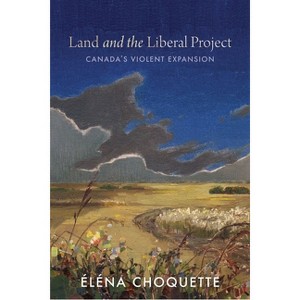
"In 1867, Canada was a small country flanking the St. Lawrence River and Great Lakes, but within a few years its claims to sovereignty spanned the continent. With Confederation had come the vaunting ambition to create an empire from sea to sea. How did Canada seize the land so swiftly? Land and the Liberal Project examines the political, legal, and rhetorical tactics deployed by Canadian officialdom in the cause of nation making, from the first articulation of expansionism in the 1857 Gradual Civilization Act to the consolidation of authority over the prairies following the North-West Resistance of 1885. Drawing on numerous archival sources, Elena Choquette contends that although the dominion purported to favour a gentle absorption of Indigenous lands through constitutionalism, administration, and law, it resorted to police repression and military force in the face of Indigenous resistance. She investigates the liberal concept that underpinned land appropriation and legitimized violence: Indigenous territory and people were to be "improved," the former by agrarian capitalism, the latter by so-called protection and enforced schooling. By rethinking this tainted approach to building a transcontinental state, Choquette's clear-eyed expose of the Canadian expansionist project offers new ways to understand colonization."--
Book Synopsis
Uncovers Canada's methods of appropriating Indigenous land hidden beneath its history.
Canada was a small country in 1867, but within twenty years its claims to sovereignty spanned the continent. With Confederation came the vaunting ambition to create an empire from sea to sea. How did Canada lay claim to land so swiftly?
Land and the Liberal Project examines the tactics deployed by Canadian officialdom from the first articulation of expansionism in 1857 to the consolidation of authority following the 1885 North-West Resistance. Éléna Choquette contends that although the dominion purported to absorb Indigenous lands through constitutionalism, administration, and law, it often resorted to force in the face of Indigenous resistance. She investigates the liberal concept that underpinned land appropriation and legitimized violence: Indigenous territory and people were to be "improved," the former by agrarian capitalism, the latter by enforced schooling.
By rethinking this tainted approach to nation-making, Choquette's clear-eyed exposé of the Canadian expansionist project offers new ways to understand colonization.
Review Quotes
"Land and the Liberal Project is an excellent and much-needed accounting of colonialism during the period surrounding Confederation. It challenges nationalistic narratives regarding the formation of Canada."-- "Daniel Sims, associate professor, First Nations Studies, University of Northern British Columbia"
"Éléna Choquette challenges the collective perception Canada has of itself as a peaceable kingdom. Her scholarship sets a new standard on the political history of the Canadian Northwest."-- "Matthew Wildcat, assistant professor, Native Studies, University of Alberta"
About the Author
Éléna Choquette is associate professor in the Department of Social Sciences at the Université du Québec en Outaouais. She held a postdoctoral fellowship at Cambridge University and has been published in the Canadian Journal of Political Science, Settler Colonial Studies, and the Journal of Political Ideologies.
Shipping details
Return details
Frequently bought together




Trending Non-Fiction






Discover more options