Sponsored
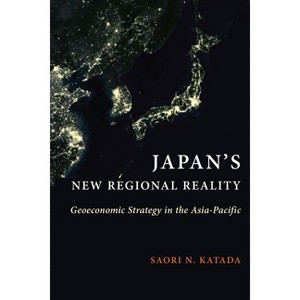
Japan's New Regional Reality - (Contemporary Asia in the World) by Saori N Katada (Paperback)
In Stock
Sponsored
About this item
Highlights
- Since the mid-1990s, Japan's regional economic strategy has transformed.
- About the Author: Saori N. Katada is professor of international relations at the University of Southern California.
- 344 Pages
- Political Science, World
- Series Name: Contemporary Asia in the World
Description
About the Book
Japan's New Regional Reality offers a comprehensive analysis of Japan's geoeconomic strategy that reveals the country's role in shaping regional economic order in the Asia-Pacific. Saori N. Katada explains Japanese foreign economic policy in light of both international and domestic dynamics.
Book Synopsis
Since the mid-1990s, Japan's regional economic strategy has transformed. Once characterized by bilateralism, informality, and neomercantilism, Japanese policy has shifted to a new liberal strategy emphasizing regional institution building and rule setting. As two major global powers, China and the United States, wrestle over economic advantages, Japan currently occupies a pivotal position capable of tipping the geoeconomic balance in the region.
Japan's New Regional Reality offers a comprehensive analysis of Japan's geoeconomic strategy that reveals the country's role in shaping regional economic order in the Asia-Pacific. Saori N. Katada explains Japanese foreign economic policy in light of both international and domestic dynamics. She points out the hurdles to implementing a state-led liberal strategy, detailing how domestic political and institutional changes have been much slower and stickier than the changing regional economics. Katada highlights state-market relations and shows how big businesses have responded to the country's interventionist policies. The book covers a wide range of economic issues including trade, investment, finance, currency, and foreign aid. Japan's New Regional Reality is a meticulously researched study of the dynamics that have contributed to economic and political realities in the Asia-Pacific today, with significant implications for future regional trends.
Review Quotes
This book provides a much-needed analysis of changes in Japan's regional economic strategy. In giving agency to the Japanese state, Katada makes a major contribution to our understanding not just of contemporary Japan, but of the region as a whole and the potential shape of the world order to come.--Saadia Pekkanen, editor of Asian Designs: Governance in the Contemporary World Order
At a time when the future of Asia is narrowly seen through the prism of U.S.-China great power competition, Katada persuasively demonstrates that Japan's quiet transformation--less mercantilist, more champion of liberalism--will shape the regional order. Her command of the nuanced evolution of Japan's foreign economic policy across diverse tracks--trade and investment, finance, and development aid--is unparalleled. Essential reading for anyone interested in Asian geoeconomics.--Mireya Solís, author of Dilemmas of a Trading Nation: Japan and the United States in the Evolving Asia-Pacific Order
This important book provides a convincing account of the remarkable shift by Japan to lead regional initiatives for liberal economic policy. Katada melds theory and empirical tests to explain how state-led liberalism arose to replace mercantilist industrial policies with a new era of Japanese foreign economic policy. Looking inside domestic decision-making processes and reflecting on the challenge of China's growing strength, the book offers a comprehensive synthesis.--Christina L. Davis, author of Why Adjudicate?: Enforcing Trade Rules in the WTO
About the Author
Saori N. Katada is professor of international relations at the University of Southern California. She is the author of Banking on Stability: Japan and the Cross-Pacific Dynamics of International Financial Crisis Management (2001) and coauthor of The BRICS and Collective Financial Statecraft (2017) and Taming Japan's Deflation: The Debate Over Unconventional Monetary Policy (2018), among other works.
Shipping details
Return details
Frequently bought together





Trending Non-Fiction