Sponsored
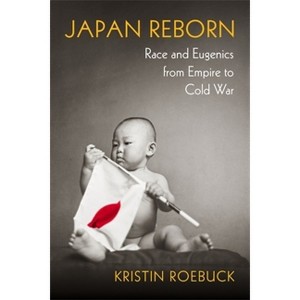
Japan Reborn - by Kristin Roebuck
In Stock
Sponsored
About this item
Highlights
- At the peak of imperial expansion in World War II, Japan touted itself as a multiracial paradise.
- About the Author: Kristin Roebuck is an assistant professor of history at Cornell University.
- 320 Pages
- History, Asia
Description
About the Book
Tracing changing views of the "mixed blood" child, Japan Reborn reveals how notions of racial mixture and purity reshaped Japanese identity.
Book Synopsis
At the peak of imperial expansion in World War II, Japan touted itself as a multiracial paradise. The state, eugenicists, and media supported intermarriage and adoption as tools of empire, encouraging "blood mixing" to fuse diverse populations into one harmonious family. Yet after defeat in World War II, a chorus of Japanese policy makers, journalists, and activists railed against Japanese women who consorted with occupying American men and their mixed-race children. Why did Japan embrace "mixed blood" as an authoritarian empire yet turn to xenophobic racial nationalism as a postwar democracy?
Tracing changing views of the "mixed blood" child, Japan Reborn reveals how notions of racial mixture and purity reshaped Japanese identity. Kristin Roebuck unravels the politics of sex and reproduction in Japan from the invasion of Manchuria in the 1930s to the dawn of US-Japan alliance in the 1950s, uncovering eugenic ideas and policies that policed the boundaries of kinship and country. She shows how the trauma of defeat sparked an abhorrence of interracial sex and caused a profound devolution in the social status of "mixed" children and their Japanese mothers. She also unpacks how Japan's postwar identity crisis put pressure on the United States to bring Japanese brides and "mixed blood" children into the Cold War American family. Shedding light on the sexual and racial tensions of empire, occupation, and the Cold War, this book offers new ways to understand the shifting terrain of Japanese nationalism and international relations.
Review Quotes
Based on impressive research in a remarkable range of original sources and a rigorous engagement with current scholarship, this is a carefully historicized and ambitious work that puts to rest well-worn cliches about "Japanese" views of race, eugenics, and sex in the twentieth century. An essential read for those interested in the transnational and transwar history of racism and biopolitics.--Takashi Fujitani, author of Race for Empire: Koreans as Japanese and Japanese as Americans During World War II
In Imperial Japan, marriage between Japanese and colonial populations in Asia and the Pacific was encouraged for the sake of eugenically and ideologically strengthening the empire. After the defeat in 1945, the issue of "mixed-race children"--now between Japanese and US military personnel--engendered a moral panic, which resulted in the advocacy of 'pure blood' as the true strength of the nation. This incisive account shows, in sparkling prose, that whatever the target of this moral panic and wherever it was implemented, the underlying force remained nationalism and the object of sexual sovereignty was always the women--in Japan and almost everywhere else.--Carol Gluck, coeditor of Words in Motion: Toward a Global Lexicon
A brilliant book--both stylish and incisive. It made me rethink my assumptions about race, sex, and gender in wartime and postwar Japan.--Amy Stanley, author of Stranger in the Shogun's City: A Japanese Woman and Her World
About the Author
Kristin Roebuck is an assistant professor of history at Cornell University.
Shipping details
Return details
Frequently bought together


Trending Non-Fiction



Discover more options