Sponsored
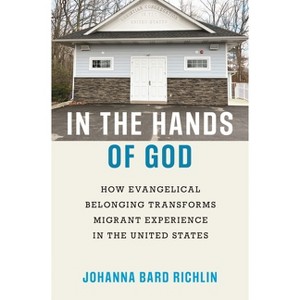
In the Hands of God - by Johanna Bard Richlin (Paperback)
In Stock
Sponsored
About this item
Highlights
- How evangelical churches in the United States convert migrant distress into positive religious devotion Why do migrants become more deeply evangelical in the United States and how does this religious identity alter their self-understanding?
- About the Author: Johanna Bard Richlin is assistant professor of anthropology at the University of Oregon.
- 272 Pages
- Social Science, Sociology of Religion
Description
About the Book
"How evangelical churches in the United States convert migrant distress into positive religious devotionWhy do migrants become more deeply evangelical in the United States and how does this religious identity alter their self-understanding? In the Hands of God examines this question through a unique lens, foregrounding the ways that churches transform what migrants feel. Drawing from her extensive fieldwork among Brazilian migrants in the Washington D.C. area, Johanna Bard Richlin shows that affective experience is key to comprehending migrants' turn toward intense religiosity, and their resulting evangelical commitment.The conditions of migrant life-family separation, geographic isolation, legal precariousness, workplace vulnerability, and deep uncertainty about the future-shape specific affective maladies, including loneliness, despair, and feeling stuck. These feelings in turn trigger novel religious yearnings. Evangelical churches deliberately and deftly articulate, manage, and reinterpret migrant distress through affective therapeutics, the strategic "healing" of migrants' psychological pain. Richlin offers insights into the affective dimensions of migration, the strategies pursued by evangelical churches to attract migrants, and the ways in which evangelical belonging enables migrants to feel better, emboldening them to improve their lives.Looking at the ways evangelical churches help migrants navigate negative emotions, In the Hands of God sheds light on the versatility and durability of evangelical Christianity"--
Book Synopsis
How evangelical churches in the United States convert migrant distress into positive religious devotion
Why do migrants become more deeply evangelical in the United States and how does this religious identity alter their self-understanding? In the Hands of God examines this question through a unique lens, foregrounding the ways that churches transform what migrants feel. Drawing from her extensive fieldwork among Brazilian migrants in the Washington, DC, area, Johanna Bard Richlin shows that affective experience is key to comprehending migrants' turn toward intense religiosity, and their resulting evangelical commitment.
The conditions of migrant life--family separation, geographic isolation, legal precariousness, workplace vulnerability, and deep uncertainty about the future--shape specific affective maladies, including loneliness, despair, and feeling stuck. These feelings in turn trigger novel religious yearnings. Evangelical churches deliberately and deftly articulate, manage, and reinterpret migrant distress through affective therapeutics, the strategic "healing" of migrants' psychological pain. Richlin offers insights into the affective dimensions of migration, the strategies pursued by evangelical churches to attract migrants, and the ways in which evangelical belonging enables migrants to feel better, emboldening them to improve their lives.
Looking at the ways evangelical churches help migrants navigate negative emotions, In the Hands of God sheds light on the versatility and durability of evangelical Christianity.
Review Quotes
"In engaging, clear prose and rich ethnographic descriptions, Richlin guides us through the often-harrowing lives of migrants who come to the United States from Brazil."---Sophie Bjork-James, American Ethnologist
""[In the Hands of God] is well-written and shares migrant stories that are personal, heart-warming and relatable. The personalities highlighted are well-developed and weaved throughout the book, giving the reader the feeling of getting to know the families and their plight."---Philip Wingeier-Rayo, Politics, Religion & Ideology
"A needed contribution. . . . Richlin's ethnographic and qualitative research [are] both engaging and heartening."---Philip Letizia, Reading Religion
About the Author
Johanna Bard Richlin is assistant professor of anthropology at the University of Oregon.
Shipping details
Return details
Frequently bought together





Trending Non-Fiction






Discover more options