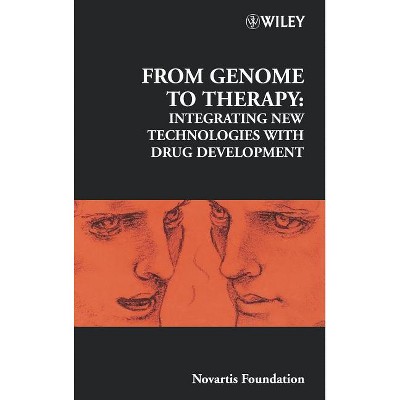
The astounding diversity of the immune system and the complexity of its regulatory pathways makes immunology a combinatorial science.
About the Author: The Novartis Foundation is an international scientific and educational charity which promotes the study and general knowledge of science and in particular encourages international co-operation in scientific research.
272 Pages
Science, Life Sciences
Series Name: Novartis Foundation Symposia
Description
Book Synopsis
The astounding diversity of the immune system and the complexity of its regulatory pathways makes immunology a combinatorial science. Computational analysis has therefore become an essential element of immunology research and this has led to the creation of the emerging field of immunoinformatics. This book is the first to feature thorough coverage of this new field.
Immunoinformatics facilitates the understanding of immune function by modelling the interactions among immunological components. Biological research provides ever deeper insights into the complexity of living organisms while computer science provides an effective means to store and analyse large volumes of complex data. Combining the two fields increases the efficiency of biological research and offers the potential for major advances in the study of biological systems.
This book encompasses key developments in immunoinformatics, including immunological databases, sequence analysis, structure modelling, mathematical modelling of the immune system, simulation of laboratory experiments, statistical support for immunological experimentation and immunogenomics.
The difficulties in effective application of bioinformatic tools in immunology arise at both ends of the spectrum: most immunologists have only a limited comprehension of sophisticated data analysis and applicability and limitations, while the average computer scientist lacks knowledge of the depth and complexity of biological data. The purpose of this book, therefore, is to present contributions from a multidisciplinary team of biologists and computer scientists to explore the issues related to better understanding of immune function and, in particular, to help apply new computer science methods to immunological research.
Related Novartis Foundation symposia
247 In Silico Simulation of Biological Processes Chair: Denis Noble
252 Generation and effector functions of regulatory lymphocytes Chair: Jean-François Bach
From the Back Cover
The astounding diversity of the immune system and the complexity of its regulatory pathways makes immunology a combinatorial science. Computational analysis has therefore become an essential element of immunology research and this has led to the creation of the emerging field of immunoinformatics. This book is the first to feature thorough coverage of this new field.
Immunoinformatics facilitates the understanding of immune function by modelling the interactions among immunological components. Biological research provides ever deeper insights into the complexity of living organisms while computer science provides an effective means to store and analyse large volumes of complex data. Combining the two fields increases the efficiency of biological research and offers the potential for major advances in the study of biological systems.
This book encompasses key developments in immunoinformatics, including immunological databases, sequence analysis, structure modelling, mathematical modelling of the immune system, simulation of laboratory experiments, statistical support for immunological experimentation and immunogenomics.
The difficulties in effective application of bioinformatic tools in immunology arise at both ends of the spectrum: most immunologists have only a limited comprehension of sophisticated data analysis and applicability and limitations, while the average computer scientist lacks knowledge of the depth and complexity of biological data. The purpose of this book, therefore, is to present contributions from a multidisciplinary team of biologists and computer scientists to explore the issues related to better understanding of immune function and, in particular, to help apply new computer science methods to immunological research.
Related Novartis Foundation symposia:
247 In Silico Simulation of Biological Processes
Chair: Denis Noble
252 Generation and effector functions of regulatory lymphocytes
Chair: Jean-François Bach
About the Author
The Novartis Foundation is an international scientific and educational charity which promotes the study and general knowledge of science and in particular encourages international co-operation in scientific research.
Dimensions (Overall): 9.21 Inches (H) x 6.14 Inches (W) x .63 Inches (D)
Weight: 1.23 Pounds
Suggested Age: 22 Years and Up
Number of Pages: 272
Genre: Science
Sub-Genre: Life Sciences
Series Title: Novartis Foundation Symposia
Publisher: Wiley
Format: Hardcover
Author: Gregory R Bock & Jamie A Goode
Language: English
Street Date: November 21, 2003
TCIN: 1008776562
UPC: 9780470853566
Item Number (DPCI): 247-09-1906
Origin: Made in the USA or Imported
If the item details aren’t accurate or complete, we want to know about it.
Shipping details
Estimated ship dimensions: 0.63 inches length x 6.14 inches width x 9.21 inches height
Estimated ship weight: 1.23 pounds
We regret that this item cannot be shipped to PO Boxes.
This item cannot be shipped to the following locations: American Samoa (see also separate entry under AS), Guam (see also separate entry under GU), Northern Mariana Islands, Puerto Rico (see also separate entry under PR), United States Minor Outlying Islands, Virgin Islands, U.S., APO/FPO
Return details
This item can be returned to any Target store or Target.com.
This item must be returned within 90 days of the date it was purchased in store, shipped, delivered by a Shipt shopper, or made ready for pickup.