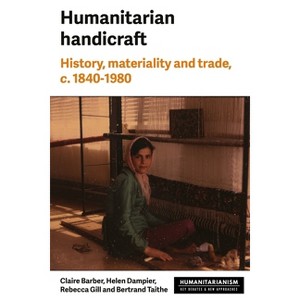
This book explores the neglected history of textile crafts in projects of social and moral reform and considers how historical processes have become materialised in contemporary humanitarian craft-work.
About the Author: Claire Barber is Senior Lecturer in Textiles at the University of HuddersfieldHelen Dampier is Reader in Social and Cultural History at Leeds Beckett UniversityRebecca Gill is Reader in Modern History at the University of HuddersfieldBertrand Taithe is Professor of History at the Humanitarian and Conflict Response Institute, University of Manchester
304 Pages
Political Science, International Relations
Series Name: Humanitarianism: Key Debates and New Approaches
Description
About the Book
This book explores the neglected history of textile crafts in projects of social and moral reform and considers how historical processes have become materialised in contemporary humanitarian craft-work.
Book Synopsis
This book explores the neglected history of textile crafts in projects of social and moral reform and considers how historical processes have become materialised in contemporary humanitarian craft-work.
From the Back Cover
Handcrafted textiles hold a central place in humanitarian aesthetics, ethics, and campaigning, from Oxfam projects to refugee workshops. These crafts evoke images of creativity and resilience but also stand as symbols of labour exploitation. Textile production, particularly in piecework and 'sweated industries', has long been a site of protest against poor pay, exploitation, and the erosion of traditional skills. Despite this dual significance, the history of philanthropic interventions in textile craft remains underexplored.
This book delves into the intricate connections between craft, labour, and humanitarianism, examining the historical role of textiles in European and imperial humanitarian efforts. Through a series of case studies, it explores how philanthropic organisations and individuals have engaged with handicrafts to address social and economic challenges. Crucially, the book interrogates the complexities of humanitarian craftwork, balancing narratives of empowerment with critical analyses of control, agency, and commodification.
Engaging with contemporary socially-engaged textile artists, the contributors reflect on how knowledge of craft practice can reshape historical understandings of humanitarianism. In doing so, it bridges past and present, showing how historical processes become materialised in modern craftwork. This is an essential contribution to the history of labour, material culture, and humanitarian practice, offering fresh perspectives on the intersections of craft and care.
About the Author
Claire Barber is Senior Lecturer in Textiles at the University of Huddersfield Helen Dampier is Reader in Social and Cultural History at Leeds Beckett University Rebecca Gill is Reader in Modern History at the University of Huddersfield Bertrand Taithe is Professor of History at the Humanitarian and Conflict Response Institute, University of Manchester
Dimensions (Overall): 9.21 Inches (H) x 6.14 Inches (W) x .69 Inches (D)
Weight: 1.33 Pounds
Suggested Age: 22 Years and Up
Number of Pages: 304
Genre: Political Science
Sub-Genre: International Relations
Series Title: Humanitarianism: Key Debates and New Approaches
If the item details aren’t accurate or complete, we want to know about it.
Shipping details
Estimated ship dimensions: 0.69 inches length x 6.14 inches width x 9.21 inches height
Estimated ship weight: 1.33 pounds
We regret that this item cannot be shipped to PO Boxes.
This item cannot be shipped to the following locations: American Samoa (see also separate entry under AS), Guam (see also separate entry under GU), Northern Mariana Islands, Puerto Rico (see also separate entry under PR), United States Minor Outlying Islands, Virgin Islands, U.S., APO/FPO
Return details
This item can be returned to any Target store or Target.com.
This item must be returned within 90 days of the date it was purchased in store, shipped, delivered by a Shipt shopper, or made ready for pickup.