Sponsored
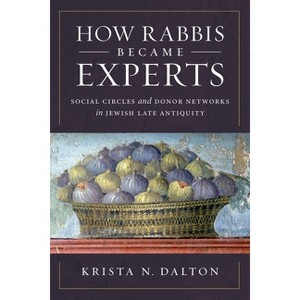
How Rabbis Became Experts - by Krista N Dalton Hardcover
In Stock
Sponsored
About this item
Highlights
- How rabbinic expertise was socially constructed, performed, and defended in Roman Palestine At the turn of the common era, the Jewish communities of Roman Palestine saw the organization of a small group of literate Jewish men who devoted their lives to the interpretation and teaching of their sacred ancestral texts.
- About the Author: Krista N. Dalton is associate professor of religious studies at Kenyon College.
- 264 Pages
- Social Science, Jewish Studies
Description
About the Book
"How rabbinic expertise was socially constructed, performed, and defended in Roman Palestine at the turn of the common era. The Jewish communities of Roman Palestine saw the organization of a small group of literate Jewish men who devoted their lives to the interpretation and teaching of their sacred ancestral texts. In this groundbreaking study, Krista Dalton shows that these early rabbis were not an insular specialist group but embedded in a landscape of Jewish piety. Drawing on the writings of rabbis in Roman Palestine from from the second through fifth centuries CE, Dalton illuminates the significance of social relationships in the production of rabbinic expertise. She traces the social interactions-everyday instances of mutual exchange, from dinner parties to tithes and patronages-that fostered the perception of rabbis as experts.Dalton shows how the knowledge derived from the rabbis' technical skills was validated and recognized by others. Rabbis socialized and noshed with neighbors and offered advice and legal favors to friends. In exchange for their expert judgments, they received invitations, donations, appointments, and recognition. She argues that their status as Torah experts did not arise by virtue of being scholars but from their ability to persuade others that their mobilization of Jewish cultural resources was beneficial. Dalton describes the relational processes that made rabbinic expertise possible as well as the accompanying tensions; social interactions shaped the rabbis' domain of knowledge while also imposing expectations of reciprocity that had to be managed. Dalton's authoritative analysis demonstrates that a focus on friendship and exchange provides a fuller understanding of how rabbis claimed and defended their distinct expertise"--
Book Synopsis
How rabbinic expertise was socially constructed, performed, and defended in Roman Palestine
At the turn of the common era, the Jewish communities of Roman Palestine saw the organization of a small group of literate Jewish men who devoted their lives to the interpretation and teaching of their sacred ancestral texts. In this groundbreaking study, Krista Dalton shows that these early rabbis were not an insular specialist group but embedded in a landscape of Jewish piety. Drawing on the writings of rabbis in Roman Palestine from the second through fifth centuries CE, Dalton illuminates the significance of social relationships in the production of rabbinic expertise. She traces the social interactions--everyday instances of mutual exchange, from dinner parties to tithes and patronages--that fostered the perception of rabbis as experts.
Dalton shows how the knowledge derived from the rabbis' technical skills was validated and recognized by others. Rabbis socialized and noshed with neighbors and offered advice and legal favors to friends. In exchange for their expert judgments, they received invitations, donations, appointments, and recognition. She argues that their status as Torah experts did not arise by virtue of being scholars but from their ability to persuade others that their mobilization of Jewish cultural resources was beneficial. Dalton describes the relational processes that made rabbinic expertise possible as well as the accompanying tensions; social interactions shaped the rabbis' domain of knowledge while also imposing expectations of reciprocity that had to be managed. Dalton's authoritative analysis demonstrates that a focus on friendship and exchange provides a fuller understanding of how rabbis claimed and defended their distinct expertise.
Review Quotes
"Dalton does an excellent job explaining the changes that occurred during this time period and how the ancient rabbis were able to successfully attain the position of expert, even when their rulings were not universally accepted by Jews. Anyone interested in the development of rabbinic Judaism will want to read this work."---Rabbi Rachel Esserman, The Reporter Group
"Winner of the Jordan Schnitzer First Book Publication Award, Association for Jewish Studies"
About the Author
Krista N. Dalton is associate professor of religious studies at Kenyon College.
Shipping details
Return details
Frequently bought together




Trending Non-Fiction




Discover more options