Sponsored
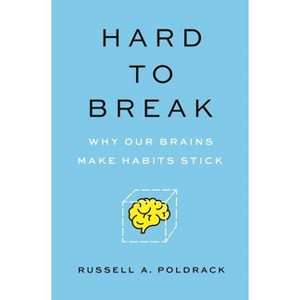
Hard to Break - by Russell a Poldrack
In Stock
Sponsored
About this item
Highlights
- The neuroscience of why bad habits are so hard to break--and how evidence-based strategies can help us change our behavior more effectively We all have habits we'd like to break, but for many of us it can be nearly impossible to do so.
- About the Author: Russell A. Poldrack is the Albert Ray Lang Professor of Psychology at Stanford University.
- 232 Pages
- Science, Life Sciences
Description
About the Book
"Well-publicized research in psychology tells us that over half of our attempts to change habitual behavior fail within one year. Even without reading the research, most of us will intuitively sense the truth in this, as we have all tried and failed to rid ourselves of one bad habit or another. The human story of habits and the difficulty of change has been told in many books--most of which will make only a quick reference to dopamine or the 'lizard brain' before moving on to practical tips and tricks for behavior change. In contrast, [this book] will tell the brain's story about why behavior is so hard to change"--
Book Synopsis
The neuroscience of why bad habits are so hard to break--and how evidence-based strategies can help us change our behavior more effectively
We all have habits we'd like to break, but for many of us it can be nearly impossible to do so. There is a good reason for this: the brain is a habit-building machine. In Hard to Break, leading neuroscientist Russell Poldrack provides an engaging and authoritative account of the science of how habits are built in the brain, why they are so hard to break, and how evidence-based strategies may help us change unwanted behaviors.
Hard to Break offers a clear-eyed tour of what neuroscience tells us about habit change and debunks "easy fixes" that aren't backed by science. It explains how dopamine is essential for building habits and how the battle between habits and intentional goal-directed behaviors reflects a competition between different brain systems. Along the way, we learn how cues trigger habits; why we should make rules, not decisions; how the stimuli of the modern world hijack the brain's habit machinery and lead to drug abuse and other addictions; and how neuroscience may one day enable us to hack our habits. Shifting from the individual to society, the book also discusses the massive habit changes that will be needed to address the biggest challenges of our time.
Moving beyond the hype to offer a deeper understanding of the biology of habits in the brain, Hard to Break reveals how we might be able to make the changes we desire--and why we should have greater empathy with ourselves and others who struggle to do so.
Review Quotes
"As he explores why humans evolved to be so habit-driven, Poldrack considers dopamine, which is crucial in forming habits for its impacts on brain plasticity; questions the efficacy of mindfulness (now a 'billion-dollar industry'); and covers the formation of addictions, which he calls 'habits gone bad.' Poldrack's study is strongest when he describes experiments on interrupting habit formation on a cellular level, which can potentially help one shed such undesirable behaviors as smoking and overeating. . . . This is a worthy intellectual adventure, one that's well articulated for readers looking for rigorous study."-- "Publishers Weekly"
About the Author
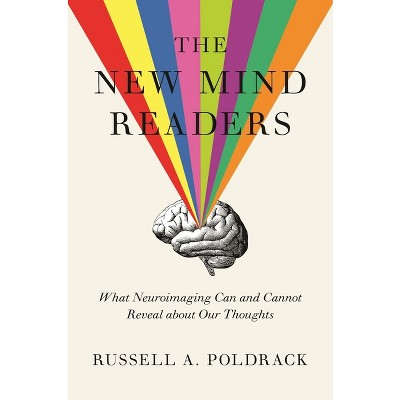
Russell A. Poldrack is the Albert Ray Lang Professor of Psychology at Stanford University. He is the author of The New Mind Readers: What Neuroimaging Can and Cannot Reveal about Our Thoughts (Princeton). He lives in San Francisco. Twitter @russpoldrack
Shipping details
Return details
Frequently bought together



Trending Non-Fiction




Discover more options