Sponsored
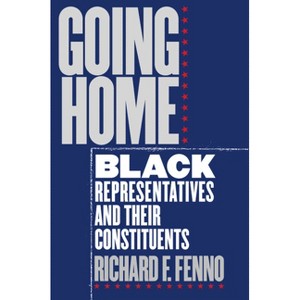
Going Home - 2nd Edition by Richard F Fenno Paperback
In Stock
Sponsored
About this item
Highlights
- Thirty years ago there were nine African Americans in the U.S. House of Representatives.
- About the Author: Richard F. Fenno is a Distinguished University Professor and William J. Kenan Professor of Political Science at the University of Rochester.
- 272 Pages
- Political Science, American Government
Description
Book Synopsis
Thirty years ago there were nine African Americans in the U.S. House of Representatives. Today there are four times that number. In Going Home, the dean of congressional studies, Richard F. Fenno, explores what representation has meant-and means today-to black voters and to the politicians they have elected to office.
Fenno follows the careers of four black representatives-Louis Stokes, Barbara Jordan, Chaka Fattah, and Stephanie Tubbs Jones-from their home districts to the halls of the Capitol. He finds that while these politicians had different visions of how they should represent their districts (in part based on their individual preferences, and in part based on the history of black politics in America), they shared crucial organizational and symbolic connections to their constituents. These connections, which draw on a sense of "linked fates," are ones that only black representatives can provide to black constituents.
His detailed portraits and incisive analyses will be important for anyone interested in the workings of Congress or in black politics.
From the Back Cover
Thirty years ago there were nine African Americans in the U.S. House of Representatives. Today there are four times that number. In Going Home, the dean of congressional studies, Richard F. Fenno, explores what representation has meant--and means today--to black voters and to the politicians they have elected to office.
Fenno follows the careers of four black representatives--Louis Stokes, Barbara Jordan, Chaka Fattah, and Stephanie Tubbs Jones--from their home districts to the halls of the Capitol. He finds that while these politicians had different visions of how they should represent their districts (in part based on their individual preferences, and in part based on the history of black politics in America), they shared crucial organizational and symbolic connections to their constituents. These connections, which draw on a sense of "linked fates," are ones that only black representatives can provide to black constituents.
His detailed portraits and incisive analyses will be important for anyone interested in the workings of Congress or in black politics.
About the Author
Richard F. Fenno is a Distinguished University Professor and William J. Kenan Professor of Political Science at the University of Rochester. He is the author of a dozen books, including the classic Home Style: House Members in Their Districts and, most recently, Congress at the Grassroots: Representational Change in the South, 1970-1998.
Shipping details
Return details
Frequently bought together



Trending Non-Fiction




Discover more options