The modern world is, in the authors' view, undergoing the process of meltdown--global meltdown.
About the Author: JOSEPH WAYNE SMITH is Senior Research Fellow at The Unversity of Adelaide, Australia.
192 Pages
Political Science, Political Process
Series Name: History of Cartography
Description
About the Book
The modern world is, in the authors' view, undergoing the process of meltdown--global meltdown. Having argued in an earlier book that humankind is headed for an environmental catastrophe that will either eliminate the human species or greatly reduce our numbers, the authors now focus on the breakdown of organized social order that will occur when the ecological crisis happens. Believing that civilization as we know it will not last, even without a definitive environmental cataclysm, they explore here the social, political, and philosophical ramifications of this vision.
After outlining the interaction of the forces of environmental destruction, economic rationalism, and technological revolution, this book shows their impact on social problems such as immigration, racial and ethnic conflict, and the loss of personal, spiritual, and religious meaning. In the first chapter, the authors consider the effects of these social conflicts in both the non-Western and the Western world, concluding that the global meltdown theory is supported by the worldwide rise of terrorism. Chapter 2 discusses the technological and ecological forces they believe will led to a new world disorder. The work then goes on to use Australia as a case study illustrating the collision of population and environment. In the concluding chapter, the authors support their thesis further with a review of the literature on the subject.
Book Synopsis
The modern world is, in the authors' view, undergoing the process of meltdown--global meltdown. Having argued in an earlier book that humankind is headed for an environmental catastrophe that will either eliminate the human species or greatly reduce our numbers, the authors now focus on the breakdown of organized social order that will occur when the ecological crisis happens. Believing that civilization as we know it will not last, even without a definitive environmental cataclysm, they explore here the social, political, and philosophical ramifications of this vision.
After outlining the interaction of the forces of environmental destruction, economic rationalism, and technological revolution, this book shows their impact on social problems such as immigration, racial and ethnic conflict, and the loss of personal, spiritual, and religious meaning. In the first chapter, the authors consider the effects of these social conflicts in both the non-Western and the Western world, concluding that the global meltdown theory is supported by the worldwide rise of terrorism. Chapter 2 discusses the technological and ecological forces they believe will led to a new world disorder. The work then goes on to use Australia as a case study illustrating the collision of population and environment. In the concluding chapter, the authors support their thesis further with a review of the literature on the subject.
Review Quotes
"When a judicious list is made of the most important analyses of the survival problems bequeathed to us by the entire 20th century, I predict that Global Meltdown will be near the top of it. This book is clear, it is profound, and it gives us hopeful and imaginative views of what may be done about our situation. The rest is up to us."-Garrett Hardin Professor Emeritus of Human Ecology University of California, Santa Barbara
?This book would be useful as a stimulating and provocative reader for courses in future studies. It also makes a valuable contribution to other programs in social sciences through its presentation of ecological and political economic perspectives on sustainable development and societal change.?-Urban Geography
?This is a powerful book which deserves to be widely read....?-The Social Contract
"This is a powerful book which deserves to be widely read...."-The Social Contract
"This book would be useful as a stimulating and provocative reader for courses in future studies. It also makes a valuable contribution to other programs in social sciences through its presentation of ecological and political economic perspectives on sustainable development and societal change."-Urban Geography
About the Author
JOSEPH WAYNE SMITH is Senior Research Fellow at The Unversity of Adelaide, Australia.
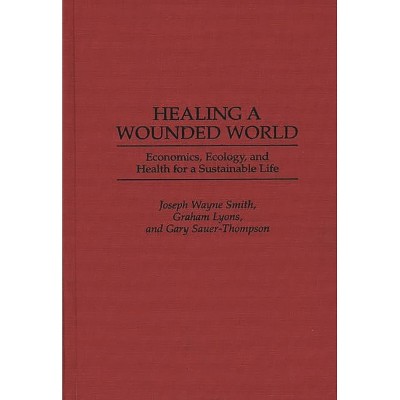
GRAHAM LYONS is a leading South Australian businessman, agriculturist, and environmentalist. He coauthored Healing a Wounded World: Economics, Ecology, and Health for a Sustainable Life (Praeger) with Joseph Wayne Smith in 1997.
EVONNE MOORE is a research assistant at The University of Adelaide.
Dimensions (Overall): 9.56 Inches (H) x 6.42 Inches (W) x .78 Inches (D)
Weight: 1.08 Pounds
Suggested Age: 22 Years and Up
Number of Pages: 192
Genre: Political Science
Sub-Genre: Political Process
Series Title: History of Cartography
Publisher: Praeger
Theme: General
Format: Hardcover
Author: Graham Lyons & Evonne Moore & Joseph Smith
Language: English
Street Date: April 30, 1998
TCIN: 1008774624
UPC: 9780275956004
Item Number (DPCI): 247-04-3245
Origin: Made in the USA or Imported
If the item details aren’t accurate or complete, we want to know about it.
Shipping details
Estimated ship dimensions: 0.78 inches length x 6.42 inches width x 9.56 inches height
Estimated ship weight: 1.08 pounds
We regret that this item cannot be shipped to PO Boxes.
This item cannot be shipped to the following locations: American Samoa (see also separate entry under AS), Guam (see also separate entry under GU), Northern Mariana Islands, Puerto Rico (see also separate entry under PR), United States Minor Outlying Islands, Virgin Islands, U.S., APO/FPO
Return details
This item can be returned to any Target store or Target.com.
This item must be returned within 90 days of the date it was purchased in store, shipped, delivered by a Shipt shopper, or made ready for pickup.