Sponsored
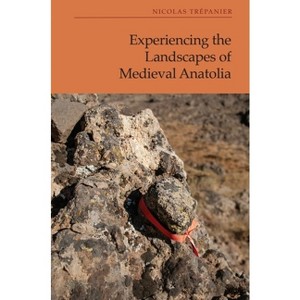
Experiencing the Landscapes of Medieval Anatolia - by Nicolas Trépanier Hardcover
In Stock
Sponsored
About this item
Highlights
- What does it mean to be somewhere?
- Author(s): Nicolas Trépanier
- 256 Pages
- History, Europe
Description
About the Book
Utilises landscape phenomenology to investigate medieval Anatolian social history.
Book Synopsis
What does it mean to be somewhere? To what extent, and in which specific ways, is the way we experience the land historically--and therefore culturally--specific?
In Landscape and Experience in Medieval Anatolia, Nicolas Trépanier explores how travellers, urban elites and peasants related to the rural territory of medieval Anatolia, revealing how the same land could generate profoundly different experiences in a time of transition from Byzantine to Muslim rule.
Through its use of landscape phenomenology, the book offers historians not only an alternative to the 'Spatial Turn' that concentrates on historical subjectivities, but also an epistemologically-grounded way to integrate fieldwork into their research. It also proposes a new perspective on the phenomenological approaches that have polarized landscape archaeology over the recent decades. More than anything else, however, this book shows readers of any background how history can provide fresh perspectives on our own modern experiences of the land.
Review Quotes
Trépanier masterfully bridges the conceptual frameworks of archaeology and historical inquiry, offering a bold and innovative approach to the study of medieval Anatolia and the early Ottoman Empire. This book is not only a groundbreaking intervention for specialists in these fields but also a vital contribution to historians, archaeologists, and scholars of landscape studies more broadly. His incisive analysis extends beyond the medieval past, illuminating how both medieval and modern humans perceive and navigate spaces and landscapes. The result is a revelatory work that challenges conventional narratives and invites new avenues of scholarship, reshaping the ways in which we think about built and natural environments of the past and the present.--Rachel Goshgarian, Lafayette College
Shipping details
Return details
Frequently bought together





Trending Non-Fiction