With the prevalence of smartphones, massive data storage, and search engines, we might think of today as the height of the information age.
About the Author: Seth David Long is assistant professor of English at the University of Nebraska.
248 Pages
History, General
Description
About the Book
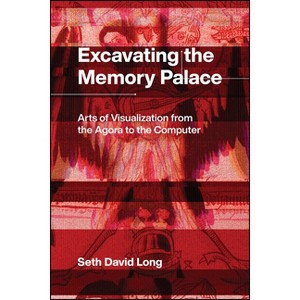
"From ancient oratorical handbooks to medieval and Renaissance arts of memory and the digital databases of today, humans have constantly been concerned with how best to organize and retrieve knowledge. A common feature in this transhistorical pursuit has been the use of visualization methods to facilitate the ordering and easy location of memories. Seth Long's Excavating the Memory Palace traces the history of the "memory palace technique" from its ancient origins to its contemporary forms in present-day technology. Today, we have amassed unprecedented amounts of data and information, and there seems to be no end in sight to this accumulation. Long argues that we can fuel knowledge production in the present by revisiting the classical memory arts, the techniques of which reveal connections between memory and creativity and have innovative implications for contemporary data visualization, information processing, and digital communication practices. Excavating the Memory Palace reaches to the past in order to chart a new way forward, providing orientation and guidance as we navigate our way through the digital agora"--
Book Synopsis
With the prevalence of smartphones, massive data storage, and search engines, we might think of today as the height of the information age. In reality, every era has faced its own challenges of storing, organizing, and accessing information. While they lacked digital devices, our ancestors, when faced with information overload, utilized some of the same techniques that underlie our modern interfaces: they visualized and spatialized data, tying it to the emotional and sensory spaces of memory, thereby turning their minds into a visual interface for accessing information.
In Excavating the Memory Palace, Seth David Long mines the history of Europe's arts of memory to find the origins of today's data visualizations, unearthing how ancient constructions of cognitive pathways paved the way for modern technological interfaces. Looking to techniques like the memory palace, he finds the ways that information has been tied to sensory and visual experience, turning raw data into lucid knowledge. From the icons of smart phone screens to massive network graphs, Long shows us the ancestry of the cyberscape and unveils the history of memory as a creative act.
Review Quotes
"Long's book is a timely reminder that there are both great promises and great dangers lurking in new technologies, but that these cannot be appreciated without a historical sensibility. No matter how new-fangled technologies may seem, they will raise similar questions as in the past about what it is for us, as humans, to know."-- "International Journal of Law in Context"
"Long investigates the rhetorical canon of memory in a fascinating way that pushes the boundaries in both theory and method. He offers rich examples and anecdotes, ranging from ancient Greece and the Middle Ages to the present, and he breathes new life into how we conceive of memory, initiating a welcome empirical methodology for rhetorical theory that a range of researchers will find refreshing." --John R. Gallagher, author of Update Culture and the Afterlife of Digital Writing
"Just what happened to ars memoria? Long takes readers on an investigative journey of research and recovery, starting at the twilight of the Roman agora and ending with present-day digital networks. He tells the story of how the iconoclasts and their imageless memory systems changed the way rhetoricians recall the fourth canon and the significant social and historical implications for today's digital world of visualized data. In an era of rapidly circulating news, Long's book is a must read for humanists and pedagogues interested in questions about where, how, why, and what we remember."--Jim Ridolfo, coeditor of Rhet Ops: Rhetoric and Information Warfare
"This project fills a gap in the current scholarship on the canon of memory, its fascinating inception and history, and implications for re-theorizing it within our contemporary technological context. Long's argument is historically deep and complex, building upon the iconic historical work of luminaries such as Carruthers, Yates, and others. He presents a theory that sees memory not as the isolated processes of brains in jars, but as the dynamic, social, outward-facing practice that has informed rhetorical output since antiquity, and continues to do so today. This is an insightful critique of today's data-driven practices of digital rhetoric, reminding the reader of the subjective, highly malleable set of choices that go into the selection, juxtaposition, combination, and scale of data manipulation."--Ben McCorkle, author of Rhetorical Delivery as Technological Discourse: A Cross-Historical Study
About the Author
Seth David Long is assistant professor of English at the University of Nebraska.
Dimensions (Overall): 9.0 Inches (H) x 6.0 Inches (W) x .63 Inches (D)
Weight: 1.12 Pounds
Suggested Age: 22 Years and Up
Number of Pages: 248
Genre: History
Sub-Genre: General
Publisher: University of Chicago Press
Format: Hardcover
Author: Seth Long
Language: English
Street Date: December 14, 2020
TCIN: 1008783063
UPC: 9780226695143
Item Number (DPCI): 247-25-2684
Origin: Made in the USA or Imported
If the item details aren’t accurate or complete, we want to know about it.
Shipping details
Estimated ship dimensions: 0.63 inches length x 6 inches width x 9 inches height
Estimated ship weight: 1.12 pounds
We regret that this item cannot be shipped to PO Boxes.
This item cannot be shipped to the following locations: American Samoa (see also separate entry under AS), Guam (see also separate entry under GU), Northern Mariana Islands, Puerto Rico (see also separate entry under PR), United States Minor Outlying Islands, Virgin Islands, U.S., APO/FPO
Return details
This item can be returned to any Target store or Target.com.
This item must be returned within 90 days of the date it was purchased in store, shipped, delivered by a Shipt shopper, or made ready for pickup.