Sponsored
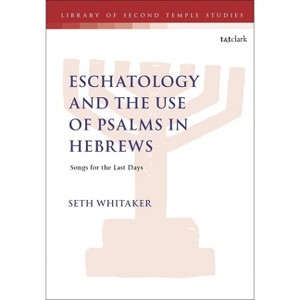
Eschatology and the Use of Psalms in Hebrews - (Library of Second Temple Studies) by Seth Whitaker (Hardcover)
In Stock
Sponsored
About this item
Highlights
- Seth Whitaker argues that the Psalm texts function as the structural and theological backbone of Hebrews from start to finish, and that few scholars have examined the use of Psalms outside of quotations or connected the author of Hebrews' use of Psalms with his broader eschatological outlook.
- About the Author: Seth Whitaker is a recent graduate of the University of St Andrews, UK.
- 200 Pages
- Religion + Beliefs, Biblical Studies
- Series Name: Library of Second Temple Studies
Description
About the Book
This book examines Hebrews' use of scripture in light of rabbinic scholar Alexander Samely's underlying exegetical presuppositions, in comparison with other Second Temple and early Jewish writers.
Book Synopsis
Seth Whitaker argues that the Psalm texts function as the structural and theological backbone of Hebrews from start to finish, and that few scholars have examined the use of Psalms outside of quotations or connected the author of Hebrews' use of Psalms with his broader eschatological outlook. Whitaker suggests that the author's eschatology is his dominating exegetical assumption, allowing numerous psalms to be read with multiple meanings.
Whitaker further suggests that Psalms, for the author of Hebrews, not only provide messianic material for his exegetical commentary, but also speak to a deeper interpretive tradition that is detectable through scriptural allusions, shared motifs, and narrative structures. Whitaker examines three passages of Hebrews, 1:5-13, 12:18-28 and 13:15, which correspond to three perceived gaps in scholarship: the relationship between quoted texts, the author's cultural encyclopedia, and the function of scriptural allusions. By focusing on Psalms and the eschatological nature of the author of Hebrews' exegesis, Whitaker concludes that readers will be better suited to situate Hebrews in relation to other Second Temple and early Jewish interpretive traditions.
About the Author
Seth Whitaker is a recent graduate of the University of St Andrews, UK.
Shipping details
Return details
Frequently bought together





Trending Non-Fiction