Sponsored
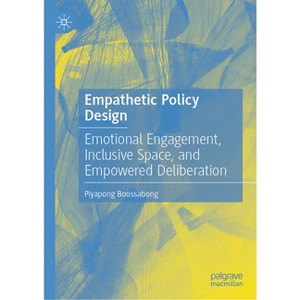
Empathetic Policy Design - (International Public Policy) by Piyapong Boossabong (Hardcover)
In Stock
Sponsored
About this item
Highlights
- This book sets out to develop a policy design process that is more inclusive by creating space for emotions and feelings.
- About the Author: Piyapong Boossabong is a critical policy pracademic and Associate Professor in the School of Public Policy, Chiang Mai University, Thailand.
- 192 Pages
- Political Science, Public Policy
- Series Name: International Public Policy
Description
Book Synopsis
This book sets out to develop a policy design process that is more inclusive by creating space for emotions and feelings. Rather than focus solely on expert knowledge, it places the fears and hopes of citizens at the heart of policy design, to facilitate meaningful interactions between policymakers and the citizens they serve. Focusing particularly on evidence from Thailand, but drawing on case studies from around the world, the book argues that empathetic policy design is crucial to foster social learning and better-informed policies. It also focuses on how emotions can be incorporated into policy design, and how policymakers of the future might use these design processes to create and implement policies that will benefit all. The book will appeal to all those interested in public policy and policy design.
From the Back Cover
"This book provides a comprehensive and nuanced synthesis of the myriad efforts to bring emotion and empathy into policy analysis."
-Deborah Stone, Professor Emerita, Brandeis University, USA.
"Piyapong Boossabong has emerged in a relatively short period of time as a leading public policy scholar. This work emphasizes the importance of emotions in policymaking processes that have been largely ignored by conventional policy approaches."
-Frank Fischer, Professor, Humboldt University, Germany, and Professor Emeritus, Rutgers University, USA.
"Emotions are much discussed but little analysed in policy analysis. Piyapong Boossabong's book not only fills this gap but also provides us with a practical framework for integrating affect and empathy in policy design."
-Hendrik Wagenaar, Fellow, Institute for Advanced Studies in Vienna, Austria, and Adjunct Professor, University of Canberra, Australia.
This book sets out to develop a policy design process that is more inclusive by creating space for emotions and feelings. Rather than focus solely on expert knowledge, it places the fears and hopes of citizens at the heart of policy design, to facilitate meaningful interactions between policymakers and the citizens they serve. Focusing particularly on evidence from Thailand, but drawing on case studies from around the world, the book argues that empathetic policy design is crucial to foster social learning and better-informed policies. It also focuses on how emotions can be incorporated into policy design, and how policymakers of the future might use these design processes to create and implement policies that will benefit all. The book will appeal to all those interested in public policy, policy design, and emotions and public policy.
Piyapong Boossabong is a critical policy pracademic and Associate Professor in the School of Public Policy, Chiang Mai University, Thailand.
Review Quotes
"This book is valuable for researchers, academics, practitioners, policymakers and students - especially those focusing on international public policy studies. It offers critical insights that can add new methods in thinking about public policy design by emphasising emotionality and empathy. Researchers need to explore further the practical application of the methods and theories presented to improve the findings. In addition, integrating the book's ideas into practice could enhance both the impact and relevance of public policy in the future." (Astri Kusmarianti, Abdan Syakura and Irene Berta Meida Zalukhu, International Review of Education, Vol. 71 (4), 2025)
About the Author
Piyapong Boossabong is a critical policy pracademic and Associate Professor in the School of Public Policy, Chiang Mai University, Thailand.
Shipping details
Return details
Frequently bought together



Trending Non-Fiction





Discover more options