Sponsored
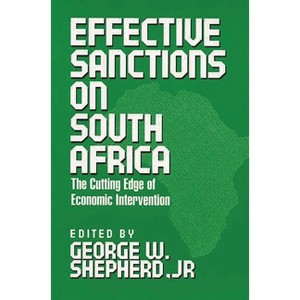
Effective Sanctions on South Africa - by George W Shepherd Jr Paperback
In Stock
Sponsored
About this item
Highlights
- This work, as its title suggests, is a testament to the fact that economic sanctions are effective instruments of change in South Africa.
- About the Author: GEORGE W. SHEPHERD, JR. is Professor of International Relations and Director of the Consortium on Human Rights Development at the Graduate School of International Studies, University of Denver.
- 160 Pages
- Business + Money Management, International
Description
About the Book
This work, as its title suggests, is a testament to the fact that economic sanctions are effective instruments of change in South Africa. George W. Shepherd, Jr. and the other contributing writers provide us with a glimpse inside South Africa, as well as a reflection of the emerging humanitarian global system. Shepherd and the others demonstrate, both theoretically and empirically, important lessons in the use and effectiveness of international and nongovernmental economic sanctions in influencing the internal affairs of other nations in order to limit human rights violations.
After an introductory chapter on effective sanctions and the economic impact in South Africa, contributed chapters demonstrate that the international legal basis for racial equality in the world is not spent. Others point to the role of nongovernmental organizations in pressuring corporations and banks, the possibility of influencing ruling elites, the shift in U.S. policy to include sanctions in its anti-apartheid stance, and the replacement of Western military support of apartheid by growing international economic prohibition of new investments and limitations of trade. Most significantly, this book shows how the economy and politics of South Africa have been moved toward negotiations by both external and internal anti-apartheid pressures. This important new book concludes with a thorough bibliography and helpful indices that document the actions taken against South Africa.
Book Synopsis
This work, as its title suggests, is a testament to the fact that economic sanctions are effective instruments of change in South Africa. George W. Shepherd, Jr. and the other contributing writers provide us with a glimpse inside South Africa, as well as a reflection of the emerging humanitarian global system. Shepherd and the others demonstrate, both theoretically and empirically, important lessons in the use and effectiveness of international and nongovernmental economic sanctions in influencing the internal affairs of other nations in order to limit human rights violations.
After an introductory chapter on effective sanctions and the economic impact in South Africa, contributed chapters demonstrate that the international legal basis for racial equality in the world is not spent. Others point to the role of nongovernmental organizations in pressuring corporations and banks, the possibility of influencing ruling elites, the shift in U.S. policy to include sanctions in its anti-apartheid stance, and the replacement of Western military support of apartheid by growing international economic prohibition of new investments and limitations of trade. Most significantly, this book shows how the economy and politics of South Africa have been moved toward negotiations by both external and internal anti-apartheid pressures. This important new book concludes with a thorough bibliography and helpful indices that document the actions taken against South Africa.
Review Quotes
?This is a well-written, well-organized, and clearly focused book. The message is brief, direct, and comprehensive: sanctions against South Africa will work if the right conditions prevail; unilateral sanctions are less likely to succeed than multilateral ones; and superpowers and conservative countries have tended to favor unilateral and military actions, rather than economic sanctions. Sanctions against South Africa have come piecemeal and therefore have tended to be vague and difficult to enforce, especially since the US and Britain have been opposed to mandatory sanctions. The analyses by the various authors suggest that the success of the sanctions has depended to a large extent on the internal movement against apartheid and by the changing international environment in favor of human rights, both of which raised the costs of apartheid to the white South African government and made it easier for individual countries to comply with the sanctions. Finally there is evidence that the costs to the US of sanctions against South Africa have been exaggerated, and could have been offset easily by substitute inputs, different technology, or changed demand composition. Thus, US resistance to sanctions could not have been justified on macroeconomic terms because the macro-costs were not in any way formidable. Highly recommended on grounds of relevance, good analysis, clarity, and timeliness. Upper-division and graduate collections.?-Choice
"This is a well-written, well-organized, and clearly focused book. The message is brief, direct, and comprehensive: sanctions against South Africa will work if the right conditions prevail; unilateral sanctions are less likely to succeed than multilateral ones; and superpowers and conservative countries have tended to favor unilateral and military actions, rather than economic sanctions. Sanctions against South Africa have come piecemeal and therefore have tended to be vague and difficult to enforce, especially since the US and Britain have been opposed to mandatory sanctions. The analyses by the various authors suggest that the success of the sanctions has depended to a large extent on the internal movement against apartheid and by the changing international environment in favor of human rights, both of which raised the costs of apartheid to the white South African government and made it easier for individual countries to comply with the sanctions. Finally there is evidence that the costs to the US of sanctions against South Africa have been exaggerated, and could have been offset easily by substitute inputs, different technology, or changed demand composition. Thus, US resistance to sanctions could not have been justified on macroeconomic terms because the macro-costs were not in any way formidable. Highly recommended on grounds of relevance, good analysis, clarity, and timeliness. Upper-division and graduate collections."-Choice
About the Author
GEORGE W. SHEPHERD, JR. is Professor of International Relations and Director of the Consortium on Human Rights Development at the Graduate School of International Studies, University of Denver. He has published widely in the fields of African Studies and Human Rights, including Emerging Human Rights (Greenwood, 1990) and The Trampled Grass: Tributary States and Self-Reliance in the Indian Ocean Zone of Peace (Praeger, 1987).
Shipping details
Return details
Trending Non-Fiction






Discover more options