Sponsored
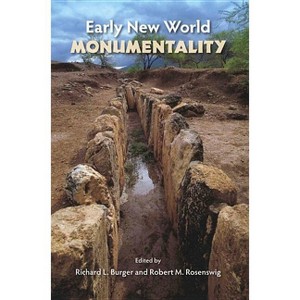
Early New World Monumentality - by Richard L Burger & Robert M Rosenswig Paperback
$42.95
In Stock
Eligible for registries and wish lists
Sponsored
About this item
Highlights
- "Offers a number of interesting case studies of New World monumentality that expand our comparative understanding of the phenomenon.
- About the Author: Richard L. Burger, professor of anthropology at Yale University, is the author of several books on South American prehistory, including Chavin and the Origins of Andean Civilization.
- 502 Pages
- Social Science, Archaeology
Description
Book Synopsis
"Offers a number of interesting case studies of New World monumentality that expand our comparative understanding of the phenomenon."--Dean J. Saitta, University of Denver "Brings together important essays that analyze the context, nature, and impact of early monuments in the Americas. Early New World Monumentality should be read by everyone interested in monumentality anywhere in the world."-- Michael Love, California State University In studies of ancient civilizations, the focus is often on the temples, palaces, and buildings created and then left behind, both because they survive and because of the awe they still inspire today. From the Mississippian mounds in the United States to the early pyramids of Peru, these monuments have been well-documented, but less attention has been paid to analyzing the logistical complexity involved in their creation. In this collection, prominent archaeologists explore the sophisticated political and logistical organizations that were required to plan and complete these architectural marvels. They discuss the long-term political, social, and military impacts these projects had on their respective civilizations, and illuminate the significance of monumentality among early complex societies in the Americas. Early New World Monumentality is ultimately a study of labor and its mobilization, as well as the long-term spiritual awe and political organization that motivated and were enhanced by such undertakings. Mounds and other impressive monuments left behind by earlier civilizations continue to reveal their secrets, offering profound insights into the development of complex societies throughout the New World. Richard L. Burger, professor of anthropology at Yale University, is the author of several books on South American prehistory. Robert M. Rosenswig, associate professor of archaeology at the University of Albany-SUNY, is the author of The Beginnings of Mesoamerican Civilization: Inter-Regional Interaction and the Olmec.
From the Back Cover
"This richly detailed and carefully written book provides fourteen select case studies. Each case details the special ways in which the fundamental drive toward monumentality played out amidst specific opportunities, environmental constraints, and historical contingencies."--Dean R. Snow, Pennsylvania State University "Brings together important essays that analyze the context, nature, and impact of early monuments in the Americas. "Early New World Monumentality" should be read by everyone interested in monumentality anywhere in the world."--Michael Love, California State University "Offers a number of interesting case studies of New World monumentality that expand our comparative understanding of the phenomenon."--Dean J. Saitta, University of Denver In studies of ancient civilizations, the focus is often on the temples, palaces, and buildings created and then left behind, both because they survive and because of the awe they still inspire today. New World monuments from the Mississippian mounds in the United States to the early pyramids of Peru have been well documented, but less attention has been paid to analyzing the logistical complexity involved in their creation.In this collection, prominent archaeologists explore the sophisticated political and logistical organizations that were required to plan and complete these architectural marvels. They discuss the long-term political, social, and military impacts these projects had on their respective civilizations and illuminate the significance of monumentality among early complex societies in the Americas."Early New World Monumentality" is ultimately a study of labor and its mobilization, as well as the long-term spiritual awe and political organization that motivated and were enhanced by such undertakings. Mounds and other impressive monuments left behind by earlier civilizations continue to reveal their secrets, offering profound insights into the development of complex societies throughout the New World. Richard L. Burger, professor of anthropology at Yale University, is the author of several books on South American prehistory. Robert M. Rosenswig, associate professor of archaeology at the University of Albany-SUNY, is the author of "The Beginnings of Mesoamerican Civilization: Inter-Regional Interaction and the Olmec."""
Review Quotes
"Compare[s] and synthesize[s] "monumentality" during the North American Archaic and Latin American Formative periods. The term connotes a built environment with one or more characteristics: religious and administrative structures, public works, agricultural terracing, and irrigation systems, as well as political power, centralized decision making, social stratification, and labor organization and expenditure. . . . Highly recommended."--Choice
About the Author
Richard L. Burger, professor of anthropology at Yale University, is the author of several books on South American prehistory, including Chavin and the Origins of Andean Civilization. Robert M. Rosenswig, associate professor of archaeology at the University at Albany--SUNY, is the author of The Beginnings of Mesoamerican Civilization: Inter-Regional Interaction and the Olmec.
Dimensions (Overall): 9.21 Inches (H) x 6.14 Inches (W) x 1.12 Inches (D)
Weight: 1.68 Pounds
Suggested Age: 22 Years and Up
Number of Pages: 502
Genre: Social Science
Sub-Genre: Archaeology
Publisher: University Press of Florida
Format: Paperback
Author: Richard L Burger & Robert M Rosenswig
Language: English
Street Date: May 15, 2015
TCIN: 1008779863
UPC: 9780813061443
Item Number (DPCI): 247-21-2463
Origin: Made in the USA or Imported
If the item details aren’t accurate or complete, we want to know about it.
Shipping details
Estimated ship dimensions: 1.12 inches length x 6.14 inches width x 9.21 inches height
Estimated ship weight: 1.68 pounds
We regret that this item cannot be shipped to PO Boxes.
This item cannot be shipped to the following locations: American Samoa (see also separate entry under AS), Guam (see also separate entry under GU), Northern Mariana Islands, Puerto Rico (see also separate entry under PR), United States Minor Outlying Islands, Virgin Islands, U.S., APO/FPO
Return details
This item can be returned to any Target store or Target.com.
This item must be returned within 90 days of the date it was purchased in store, shipped, delivered by a Shipt shopper, or made ready for pickup.
See the return policy for complete information.
Trending Non-Fiction



Highly rated
$18.28
was $19.58 New lower price
Save $5 when you spend $25 on select books
4.8 out of 5 stars with 23 ratings



Discover more options
$93.99
MSRP $95.00