Sponsored
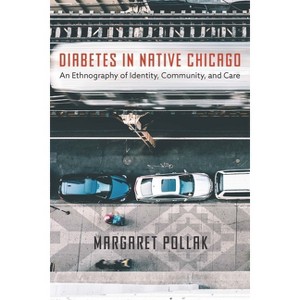
Diabetes in Native Chicago - by Margaret Pollak Hardcover
In Stock
Sponsored
About this item
Highlights
- In Diabetes in Native Chicago Margaret Pollak explores experiences, understandings, and care of diabetes in a Native American community made up of individuals representing more than one hundred tribes from across the United States and Canada.
- About the Author: Margaret Pollak is an assistant professor of anthropology at Indiana University-Northwest.
- 242 Pages
- Medical, Health Care Delivery
Description
About the Book
Margaret Pollak explores experiences, understandings, and care of diabetes in a Native urban community in Chicago made up of individuals representing more than one hundred tribes from across the United States and Canada.
Book Synopsis
In Diabetes in Native Chicago Margaret Pollak explores experiences, understandings, and care of diabetes in a Native American community made up of individuals representing more than one hundred tribes from across the United States and Canada. Today Indigenous Americans have some of the highest rates of diabetes worldwide. While rates of diabetes climbed in reservation areas, they also grew in cities, where the majority of Native people live today.
Pollak's central argument is that the relationship between human culture and human biology is a reciprocal one: colonial history has greatly contributed to the diabetes epidemic in Native populations, and the diabetes epidemic is being incorporated into contemporary discussions of ethnic identity in Native Chicago, where a vulnerability to the development of diabetes is described as a distinctly Native trait.
This work is based upon ethnographic research in Native Chicago conducted between 2007 and 2017, with ethnographic and oral history interviews, observations, surveys, and archival research. Diabetes in Native Chicago illustrates how local understandings of diabetes are shaped by what community members observe in cases of the disease among family and friends. Pollak shows that in the face of this epidemic, care for disease is woven into the everyday lives of community members. Diabetes is not merely a physical disease but a social one, perpetuated by social policies and practices, and can only be thwarted by changing society.
Review Quotes
"Pollak's book is an important and valuable addition to medical historiography. It will be beneficial to a wide audience in the field of history as well as for medical professionals and clinicians. The use of oral history is important in a study like this to give voice to those who have been previously hidden from history. The book is extremely well written and has an excellent flow. It was an enjoyable read and covers a fascinating scope."--Lauren Young, H-Sci-Med-Tech
"Drawing on extensive ethnographic interviews, observations, informal conversations, surveys, and field literature, Pollak offers a rich exploration of indigenous Chicagoans' experiences, care, and cultural understandings, noting how diabetes shapes beliefs and practices among those living with the disease and care providers. The study concludes by broadly examining historical and contemporary factors that led to the ongoing epidemic, and subsequently formulated indigenous lay perceptions of illness and health, and how that knowledge may be incorporated into the health-care system to strengthen outcomes, making this book an important contribution."--G. R. Campbell, Choice-- (6/1/2022 12:00:00 AM)
"The interdisciplinary approach to this subject makes an important contribution not only to medical anthropology and Native American studies but also to public health, medical humanities, American studies, and cultural studies. Pollak deftly and simply lays out the discursive turns of biomedical explanations about diabetes within historical context and also demonstrates the structural injustices that complicate biomedical interventions."--Sandra L. Garner, author of To Come to a Better Understanding: Medicine Men and Clergy Meetings on the Rosebud Reservation, 1973-1978
About the Author
Margaret Pollak is an assistant professor of anthropology at Indiana University-Northwest.
Shipping details
Return details
Trending Non-Fiction




Discover more options