Target New ArrivalsGift Ideas for MomClothing, Shoes & AccessoriesHome & DecorKitchen & DiningOutdoor Living & GardenGroceryHousehold EssentialsBabyBeautyPersonal CareHealthWellnessLuggageSports & OutdoorsToysElectronicsVideo GamesMovies, Music & BooksSchool & Office SuppliesParty SuppliesGift IdeasGift CardsPetsUlta Beauty at TargetShop by CommunityTarget OpticalDealsClearanceNew ArrivalsSpring OutfitsGift Ideas for MomWomen’s Festival OutfitsTop DealsTarget Circle DealsWeekly AdShop Order PickupShop Same Day DeliveryRegistryRedCardTarget CircleFind Stores
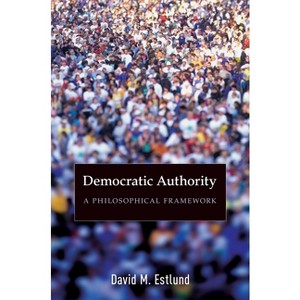
Democratic Authority - by  David Estlund (Paperback) - 1 of 1

Democratic Authority - by David Estlund (Paperback)

$40.49Save $4.51 (10% off)

In Stock

Free & easy returns

Free & easy returns

Return this item by mail or in store within 90 days for a full refund.
Eligible for registries and wish lists

About this item

Highlights

  • Democracy is not naturally plausible.
  • About the Author: David M. Estlund is professor of philosophy at Brown University.
  • 312 Pages
  • Political Science, Political Ideologies

Description


Book Synopsis


Democracy is not naturally plausible. Why turn such important matters over to masses of people who have no expertise? Many theories of democracy answer by appealing to the intrinsic value of democratic procedure, leaving aside whether it makes good decisions. In Democratic Authority, David Estlund offers a groundbreaking alternative based on the idea that democratic authority and legitimacy must depend partly on democracy's tendency to make good decisions.

Just as with verdicts in jury trials, Estlund argues, the authority and legitimacy of a political decision does not depend on the particular decision being good or correct. But the "epistemic value" of the procedure--the degree to which it can generally be accepted as tending toward a good decision--is nevertheless crucial. Yet if good decisions were all that mattered, one might wonder why those who know best shouldn't simply rule.

Estlund's theory--which he calls "epistemic proceduralism"--avoids epistocracy, or the rule of those who know. He argues that while some few people probably do know best, this can be used in political justification only if their expertise is acceptable from all reasonable points of view. If we seek the best epistemic arrangement in this respect, it will be recognizably democratic--with laws and policies actually authorized by the people subject to them.


From the Back Cover


"A brilliant book, and indispensable reading for anyone interested in democratic theory. Estlund's careful treatment of the 'wisdom of crowds' and the idea of deliberative democracy stands out as a particularly large advance. One of the very few truly major contributions to democratic theory in the last quarter century."--Cass R. Sunstein, Harvard Law School

"David Estlund defends democracy for its ability to make good decisions without handing things over to experts. This book is original, imaginative, and filled with subtle and compelling philosophical argument. A wonderful book, and an important one."--Joshua Cohen, Stanford University

"This book breaks new ground, developing an overall view of democratic procedure, in particular of its legitimacy, that really has no precedent in the literature. It will stand as the canonical defense of epistemic proceduralism."--Philip Pettit, Princeton University

"David Estlund's book is original, ambitious, thoughtful, and thought-provoking. It is an important and philosophically nuanced contribution to democratic theory."--Christian List, London School of Economics and Political Science


Review Quotes


"Democratic Authority is a rich book. Anyone working on political philosophy in general will find much of interest in it."---Peter S. C. Chau, Journal of Value Inquiry

"Estlund offers a thoughtful, philosophically dense discussion arguing for the legitimacy of democratic order. . . . Estlund argues that epistemic proceduralism is a superior justification for democracy because it shows that democracies have the capacity to achieve good decisions that have legitimacy. His comparison of the decisions of a democracy to those of a jury is particularly illuminating. The work includes careful discussion of many prominent democratic and liberal theorists, such as Kenneth Arrow and John Rawls."---M. Coulter, Grove City College, for, Choice


About the Author


David M. Estlund is professor of philosophy at Brown University.
Dimensions (Overall): 9.1 Inches (H) x 6.0 Inches (W) x .9 Inches (D)
Weight: 1.05 Pounds
Suggested Age: 22 Years and Up
Number of Pages: 312
Genre: Political Science
Sub-Genre: Political Ideologies
Publisher: Princeton University Press
Theme: Democracy
Format: Paperback
Author: David Estlund
Language: English
Street Date: August 23, 2009
TCIN: 1010774081
UPC: 9780691143248
Item Number (DPCI): 247-28-8620
Origin: Made in the USA or Imported
If the item details aren’t accurate or complete, we want to know about it.

Shipping details

Estimated ship dimensions: 0.9 inches length x 6 inches width x 9.1 inches height
Estimated ship weight: 1.05 pounds
We regret that this item cannot be shipped to PO Boxes.
This item cannot be shipped to the following locations: American Samoa (see also separate entry under AS), Guam (see also separate entry under GU), Northern Mariana Islands, Puerto Rico (see also separate entry under PR), United States Minor Outlying Islands, Virgin Islands, U.S., APO/FPO, Alaska, Hawaii

Return details

This item can be returned to any Target store or Target.com.
This item must be returned within 90 days of the date it was purchased in store, delivered to the guest, delivered by a Shipt shopper, or picked up by the guest.
See the return policy for complete information.

Q: How many pages does the book contain?

submitted by AI Shopping Assistant - 14 days ago
  • A: The book contains a total of 312 pages.

    submitted byAI Shopping Assistant - 14 days ago
    Ai generated

Q: What is 'epistemic proceduralism' as described in the book?

submitted by AI Shopping Assistant - 14 days ago
  • A: Epistemic proceduralism is the theory that democratic authority must consider democracy's tendency to make good decisions.

    submitted byAI Shopping Assistant - 14 days ago
    Ai generated

Q: What is the main theme of this book?

submitted by AI Shopping Assistant - 14 days ago
  • A: The main theme of the book is democracy, particularly its authority and legitimacy in making good decisions.

    submitted byAI Shopping Assistant - 14 days ago
    Ai generated

Q: Who is the author of this book?

submitted by AI Shopping Assistant - 14 days ago
  • A: The author of the book is David M. Estlund, a professor of philosophy at Brown University.

    submitted byAI Shopping Assistant - 14 days ago
    Ai generated

Q: What genre does this book belong to?

submitted by AI Shopping Assistant - 14 days ago
  • A: The book falls under the genre of Political Science, specifically focusing on Political Ideologies.

    submitted byAI Shopping Assistant - 14 days ago
    Ai generated

Additional product information and recommendations

Discover more options

Trending Current Affairs & Politics

Get top deals, latest trends, and more.

Privacy policy