Sponsored
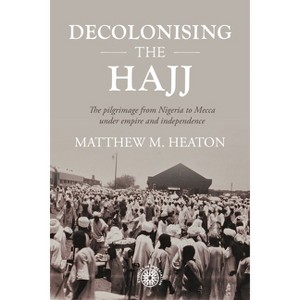
Decolonising the Hajj - (Studies in Imperialism) by Matthew Heaton (Hardcover)
In Stock
Sponsored
About this item
Highlights
- Muslims from the region that is now Nigeria have been undertaking the Hajj for hundreds of years.
- About the Author: Matthew M. Heaton is an Associate Professor in the Department of History at Virginia Tech
- 248 Pages
- History, Africa
- Series Name: Studies in Imperialism
Description
About the Book
This book recounts the effects of British colonial rule and decolonization on the transformation of the pilgrimage to Mecca (Hajj) from Nigeria over the course of the twentieth century. In so doing, it incorporates Nigeria into broader historical understanding of one of the most important transnational processes in the world.
Book Synopsis
Muslims from the region that is now Nigeria have been undertaking the Hajj for hundreds of years. But the process of completing the pilgrimage changed dramatically in the twentieth century as state governments became heavily involved in its organization and management. Under British colonial rule, a minimalist approach to pilgrimage control facilitated the journeys of many thousands of mostly overland pilgrims. Decolonization produced new political contexts, with nationalist politicians taking a more proactive approach to pilgrimage management for both domestic and international reasons. The Hajj, which had previously been a life-altering journey undertaken slowly and incrementally over years, became a shorter, safer, trip characterized by round trip plane rides. In examining the transformation of the Nigerian Hajj, this book demonstrates how the Hajj became ever more intertwined with Nigerian politics and governance as the country moved from empire to independence.
From the Back Cover
Decolonising the Hajj explores the transformation of the pilgrimage to Mecca (Hajj) from Nigeria over the course of the twentieth century.
What for centuries had been a long, perilous overland journey from which many never returned, by the early 1960s, Hajj had become a short, highly regulated airlift to and from Saudi Arabia. This book argues that British colonial efforts to control the pilgrimage were minimalist in nature, largely centred on funnelling pilgrims toward agricultural labour in Sudan and repatriating destitute pilgrims from the Hijaz in ways that generally preserved the traditional overland pilgrimage. More significant transformations occurred in the context of decolonisation, when Nigerian nationalist politicians took over the internal mechanisms of the state at the same time that the European imperial order was unravelling globally. The outcome was a more proactive approach to pilgrimage management that slowly but surely directed the pilgrim traffic away from the overland routes and toward air travel as the most politically, economically, and diplomatically expedient way to conduct the Hajj in a post-colonial world of independent nation-states.
In charting this trajectory in the specific context of Nigeria, the book demonstrates the importance of decolonisation as a transformational force in the history of the Hajj while simultaneously situating Hajj as a valuable case study for examining transnational implications of global decolonisation.
Review Quotes
CHOICE: Highly recommended
About the Author
Matthew M. Heaton is an Associate Professor in the Department of History at Virginia Tech
Shipping details
Return details
Frequently bought together



Trending Non-Fiction