Sponsored
In Stock
Sponsored
About this item
Highlights
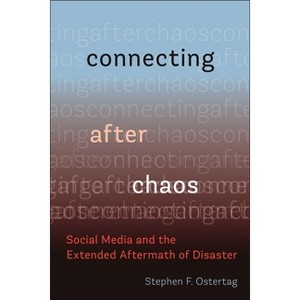
- A riveting portrait of how one community used the power of culture to restore their lives and socialconnections in the years after a devastating natural disaster Natural disasters and other such catastrophes typically attract large-scale media attention and public concern in their immediate aftermath.
- About the Author: Stephen F. Ostertag is Associate Professor of Sociology at Tulane University.
- 240 Pages
- Social Science, Media Studies
Description
About the Book
"Connecting After Chaos tells the story of how people restore their lives and society in the months and years after disaster, and the power of culture when reality and truth are built upon quicksand."--
Book Synopsis
A riveting portrait of how one community used the power of culture to restore their lives and social
connections in the years after a devastating natural disaster
Natural disasters and other such catastrophes typically attract large-scale media attention and public concern in their immediate aftermath. However, rebuilding efforts can take years or even decades, and communities are often left to repair physical and psychological damage on their own once public sympathy fades away. Connecting After Chaos tells the story of how people restored their lives and society in the months and years after disaster, focusing on how New Orleanians used social media to cope with trauma following Hurricane Katrina.
Stephen F. Ostertag draws on almost a decade of research to create a vivid portrait of life in "settling times," a term he defines as a distinct social condition of prolonged insecurity and uncertainty after disasters. He portrays this precarious state through the story of how a group of strangers began blogging in the wake of Katrina, and how they used those blogs to put their lives and their city back together. In the face of institutional failure, weak authority figures, and an abundance of chaos, the people of New Orleans used social media to gain information, foster camaraderie, build support networks, advocate for and against proposed policies, and cope with trauma. In the efforts of these bloggers, Ostertag finds evidence of the capacity of this and other forms of cultural work to motivate, guide, and energize collective action aimed at weathering the constant instability of extended recovery periods. Connecting After Chaos is both a compelling story of a community in crisis and a broader argument for the power of social media and cultural cooperation to create order when chaos abounds.
Review Quotes
"One important contribution Ostertag makes to the literature is that disasters are followed by what he calls a settling period, in which survivors struggle to make sense of what they are experiencing, develop coping strategies, and ultimately endeavor to move toward a more settled future ... Readers will also benefit from his extensive discussions of what culture is and how it operates as a causal force."-- "Social Forces"
"Ostertag offers a remarkably nuanced and accessible view on the role that established and emerging bloggers played in the cultural work of rebuilding post-Hurricane Katrina New Orleans."-- "CHOICE"
"Connecting After Chaos is a major contribution to cultural sociology, highly original theoretically, deeply researched, and compelling in its empirical discoveries. To explain what happened in the wake of Hurricane Katrina, Ostertag brings elegantly together a vast range of writing about blogging, cultural structures and archetypes, and emotions, weaving them into a new way of thinking about social trauma as cultural action. Not to be ignored is Ostertag's flowing, beautiful prose. This is a wonderful book that is not only intellectually stimulating but a pleasure to read."-- "Jeffrey C. Alexander, author of What Makes a Social Crisis?: The Societalization of Social Problems"
"A must-read that asks a new question: How do unsettled times become settled? Ostertag uses data covering over ten years to introduce us to 'the settling period.' Ostertag argues modern times jump so quickly from crisis to crisis that we live perpetually in settling times. To cope, we must understand how we all create cultural work"-- "Gaye Tuchman, author of Making News: A Study in the Construction of Reality"
"How do you find strength in a world crumbling around you? In Connecting After Chaos, Stephen Ostertag takes us to the world of DYI news production during Katrina and its aftermath, to show how collective action can result from desperation. Very accessible and yet original in how to think about issues of trust, authority, and cultural production in the digital era. This engaging book tells an illuminating story of what moves us and makes the case for the importance of understanding how culture works after the deluge."-- "Claudio E. Benzecry, author of The Perfect Fit: Creative Work in the Global Shoe Industry"
"Stephen Ostertag writes about devastation--a time when everyone and everything that has meaning for you is destroyed. He is speaking about New Orleanians after Hurricane Katrina and he uses the frame of culture and action to better understand the strategies--collective blogging in particular-- one uses to survive an extended period of loss. It is a timely and eye-opening analysis that has many important implications for our changing world."-- "Karen A. Cerulo, author of Never Saw It Coming: Cultural Challenges to Envisioning the Worst"
About the Author
Stephen F. Ostertag is Associate Professor of Sociology at Tulane University.
Shipping details
Return details
Frequently bought together




Trending Non-Fiction






Discover more options