Sponsored
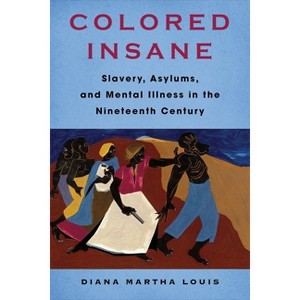
Colored Insane - Race, Inequality, and Health by Diana Martha Louis
In Stock
Sponsored
About this item
Highlights
- The nineteenth century in the United States witnessed the end of slavery and the expansion of another form of confinement: the asylum.
- About the Author: Diana Martha Louis is an assistant professor of women's and gender studies at the University of Michigan.
- 320 Pages
- History, African American
- Series Name: Race, Inequality, and Health
Description
About the Book
"Diana Martha Louis explores Black experiences and views of mental disability in the nineteenth century, shedding light on the lives and struggles of the 'colored insane.' She demonstrates that even as white medical professionals pathologized the enslaved, portrayed slavery as beneficial to Black mental health, or cast African-derived spiritual beliefs and practices as signs of madness, Black people developed their own complex perspectives on mental disability. Louis considers the lives and writings of Black intellectuals and cultural figures including James McCune Smith, Harriet Jacobs, Harriet Tubman, and Charles Chesnutt, as well as a group of Black women who were incarcerated in Georgia Lunatic Asylum. Showing how mental disability was entangled with questions of freedom, spirituality, and self-determination, Colored Insane is a rich account of nineteenth-century Black Americans' experiences of mental illness and wellness."--
Book Synopsis
The nineteenth century in the United States witnessed the end of slavery and the expansion of another form of confinement: the asylum. How did enslaved and free Black people encounter psychiatric institutions? How were notions of mental disability used to reinforce slavery and Jim Crow? And how did Black people express alternative ideas about individual and communal mental health?
Diana Martha Louis explores Black experiences and views of mental disability in the nineteenth century, shedding light on the lives and struggles of the "colored insane." She demonstrates how psychiatric discourses made Blacks "mad" both by inflicting real psychological harm within asylums, plantations, jails, and society writ large and by constructing mental disorders according to prevailing notions of race, class, gender, and sanity. Yet even as white medical professionals pathologized the enslaved as suffering from "drapetomania" (runaway slave syndrome), portrayed slavery as beneficial to Black mental health, or cast African-derived spiritual beliefs and practices as signs of madness, Black people developed their own complex perspectives on mental disability.
Louis considers the lives and writings of Black intellectuals and cultural figures including James McCune Smith, Harriet Jacobs, Harriet Tubman, and Charles Chesnutt, as well as a group of Black women who were incarcerated in Georgia Lunatic Asylum, showing how mental disability was entangled with questions of freedom, spirituality, and self-determination. Combining literary and historical analysis, Colored Insane is a rich account of nineteenth-century Black Americans' experiences of mental illness and wellness.
Review Quotes
I couldn't stop reading this book. Writing in a thrilling voice and centering Black knowledge-makers, Diana Louis uncovers countless surprises as she explores histories of Black mental disability. Her archival research and astute analysis respond to critical questions about "mental illness" and "disability" in the context of enslavement, freedom, and human experience itself. Colored Insane is necessary reading for anyone teaching, writing, and thinking about disability and Black histories.--Margaret Price, author of Crip Spacetime: Access, Failure, and Accountability in Academic Life
Bringing together an impressive array of primary sources ranging from medical case studies and asylum records to literary fiction and nonfiction, Colored Insane offers a unique narrative that centers the perspectives of marginalized patients that have largely been absent from the established discourse on asylums.--Michael Ra-shon Hall, author of Freedom Beyond Confinement: Travel and Imagination In African American Cultural History and Letters
About the Author
Diana Martha Louis is an assistant professor of women's and gender studies at the University of Michigan.
Shipping details
Return details
Frequently bought together




Trending Non-Fiction




Discover more options