Sponsored
In Stock
Sponsored
About this item
Highlights
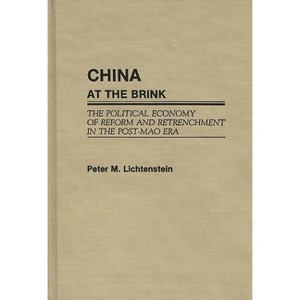
- As a Western economist studying and working abroad, Peter M. Lichtenstein witnessed first-hand China's tumultuous cycle of reform and retrenchment in the 1980s.
- About the Author: PETER M. LICHTENSTEIN is Chairman of the Economics Department and Professor of Economics at Boise State Unviersity.
- 176 Pages
- Business + Money Management, Development
Description
About the Book
As a Western economist studying and working abroad, Peter M. Lichtenstein witnessed first-hand China's tumultuous cycle of reform and retrenchment in the 1980s. From the early euphoric stage to the last and most brutal episode, Lichtenstein's book describes and explains the economics behind this cycle and ties together the economic, political, and cultural aspects of the reform era. The book also chronicles the achievements, problems, events and political controversies that led up to the Tiananmen Square debacle and the subsequent retrenchment away from the broad goals of reform.
Organized chronologically, this work begins by detailing the reasons for the economic reform movement upon the death of Mao in 1976. In the mid-1980s those reforms began to encounter serious difficulties--Lichtenstein explains what these difficulties were and why they arose. He also describes how, in the summer of 1988, the conservative hardliners were able to regain political power from the reformers, setting the stage for what would happen eight months later in Tiananmen Square. Following this is an analysis of the development of the basic positions of the Chinese left and right, and Lichtenstein's first-hand observations of the retrenchment following Tiananmen. Concluding with a retrospective look at the reforms and retrenchment, this work will be of interest to professors and students of political science, international relations, economics, contemporary Asian history, and China in particular. It will also appeal to the intelligent layperson with an interest in current affairs.
Book Synopsis
As a Western economist studying and working abroad, Peter M. Lichtenstein witnessed first-hand China's tumultuous cycle of reform and retrenchment in the 1980s. From the early euphoric stage to the last and most brutal episode, Lichtenstein's book describes and explains the economics behind this cycle and ties together the economic, political, and cultural aspects of the reform era. The book also chronicles the achievements, problems, events and political controversies that led up to the Tiananmen Square debacle and the subsequent retrenchment away from the broad goals of reform.
Organized chronologically, this work begins by detailing the reasons for the economic reform movement upon the death of Mao in 1976. In the mid-1980s those reforms began to encounter serious difficulties--Lichtenstein explains what these difficulties were and why they arose. He also describes how, in the summer of 1988, the conservative hardliners were able to regain political power from the reformers, setting the stage for what would happen eight months later in Tiananmen Square. Following this is an analysis of the development of the basic positions of the Chinese left and right, and Lichtenstein's first-hand observations of the retrenchment following Tiananmen. Concluding with a retrospective look at the reforms and retrenchment, this work will be of interest to professors and students of political science, international relations, economics, contemporary Asian history, and China in particular. It will also appeal to the intelligent layperson with an interest in current affairs.
Review Quotes
?The collapse of the Marxist-Leninist regimes in Eastern Europe and the end of the Cold War have moved economic policies into the forefront of discussion and analysis. In most countries, especially in those run by the consent of the governed, top priorities in economic policies include a well-managed economy with high rates of growth and development, full employment, price stability, and concern for the environment. To attain them, governments use fiscal, monetary, income, industrial, regulatory, and trade policies. This volume, the first in a series of comparative economics studies designed to compare and evaluate these policies and their effects, is authored by 17 scholars, mostly economists. In the first chapter, the editor provides a general overview of national economic policies. Six chapters are devoted to industrial countries: the US, Japan, India, the now dissolved Soviet Union, China, and Poland. The remaining five chapters deal with economic policies of homogeneous groupings of nations: the European Economic Community, newly industrialized countries, other major OECD (Organization for Economic Cooperation and Development) countries, Latin America, and Africa. This excellently written and documented anthology meets the need for a systematic evaluation of economic policies in this transitionary period toward a global economy. Highly recommended for upper-division undergraduate and graduate students, professionals, and the general public.?-Choice
"The collapse of the Marxist-Leninist regimes in Eastern Europe and the end of the Cold War have moved economic policies into the forefront of discussion and analysis. In most countries, especially in those run by the consent of the governed, top priorities in economic policies include a well-managed economy with high rates of growth and development, full employment, price stability, and concern for the environment. To attain them, governments use fiscal, monetary, income, industrial, regulatory, and trade policies. This volume, the first in a series of comparative economics studies designed to compare and evaluate these policies and their effects, is authored by 17 scholars, mostly economists. In the first chapter, the editor provides a general overview of national economic policies. Six chapters are devoted to industrial countries: the US, Japan, India, the now dissolved Soviet Union, China, and Poland. The remaining five chapters deal with economic policies of homogeneous groupings of nations: the European Economic Community, newly industrialized countries, other major OECD (Organization for Economic Cooperation and Development) countries, Latin America, and Africa. This excellently written and documented anthology meets the need for a systematic evaluation of economic policies in this transitionary period toward a global economy. Highly recommended for upper-division undergraduate and graduate students, professionals, and the general public."-Choice
About the Author
PETER M. LICHTENSTEIN is Chairman of the Economics Department and Professor of Economics at Boise State Unviersity. He was a Fulbright Scholar in the People's Republic of China during 1986 and 1987, living and working at Nankai University, Tianjin. He returned to China three times as a World Bank program consultant, once during the pro-democracy movement in 1989. He specializes in comparative economic systems.
Shipping details
Return details
Trending Non-Fiction