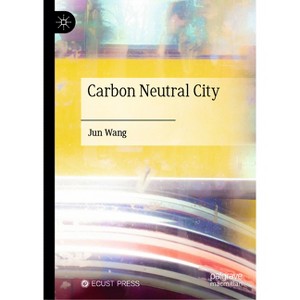
This book introduces the ecological, low-carbon, and sustainable concept of ideal cities from different views.
About the Author: Jun Wang is a professor and the dean of School of Art Design and Media, East China University of Science and Technology, Shanghai, China.
325 Pages
Social Science, Sociology
Description
Book Synopsis
This book introduces the ecological, low-carbon, and sustainable concept of ideal cities from different views. With beliefs and practices of scholars in the past in pursuit of ideal cities, it is written with historical events in the development of low-carbon cities. In this way, activities about carbon peaking and carbon neutrality happening worldwide at present can be shown, and efforts variety countries have paid off can be exhibited. Besides, as for the centralized and the distributed space structure in urban evolution, the book discusses their trends and comes up with an ideal model, the distributed city, to realize carbon neutrality based on the distributed structure. Therefore, with a practical example in planning, the feasibility of the distributed city is analyzed in several fields, including space, energy, traffic, water, waste disposal, etc. The book can be used as materials for professionals in city planning and construction, low-carbon development and other fields, as well as a way for ordinary people to learn about the complex city.
From the Back Cover
This book introduces the ecological, low-carbon, and sustainable concept of ideal cities from different views. With beliefs and practices of scholars in the past in pursuit of ideal cities, it is written with historical events in the development of low-carbon cities. In this way, activities about carbon peaking and carbon neutrality happening worldwide at present can be shown, and efforts variety countries have paid off can be exhibited. Besides, as for the centralized and the distributed space structure in urban evolution, the book discusses their trends and comes up with an ideal model, the distributed city, to realize carbon neutrality based on the distributed structure. Therefore, with a practical example in planning, the feasibility of the distributed city is analyzed in several fields, including space, energy, traffic, water, waste disposal, etc. The book can be used as materials for professionals in city planning and construction, low-carbon development and other fields, as well as a way for ordinary people to learn about the complex city.
Jun Wang is a professor and the dean of School of Art Design and Media, East China University of Science and Technology, Shanghai, China.
About the Author
Jun Wang is a professor and the dean of School of Art Design and Media, East China University of Science and Technology, Shanghai, China.
Dimensions (Overall): 8.27 Inches (H) x 5.83 Inches (W) x .81 Inches (D)
Weight: 1.27 Pounds
Suggested Age: 22 Years and Up
Number of Pages: 325
Genre: Social Science
Sub-Genre: Sociology
Publisher: Palgrave MacMillan
Theme: Urban
Format: Hardcover
Author: Jun Wang
Language: English
Street Date: August 24, 2025
TCIN: 1006610502
UPC: 9789819674534
Item Number (DPCI): 247-51-7100
Origin: Made in the USA or Imported
If the item details aren’t accurate or complete, we want to know about it.
Shipping details
Estimated ship dimensions: 0.81 inches length x 5.83 inches width x 8.27 inches height
Estimated ship weight: 1.27 pounds
We regret that this item cannot be shipped to PO Boxes.
This item cannot be shipped to the following locations: American Samoa (see also separate entry under AS), Guam (see also separate entry under GU), Northern Mariana Islands, Puerto Rico (see also separate entry under PR), United States Minor Outlying Islands, Virgin Islands, U.S., APO/FPO
Return details
This item can be returned to any Target store or Target.com.
This item must be returned within 90 days of the date it was purchased in store, shipped, delivered by a Shipt shopper, or made ready for pickup.