Sponsored
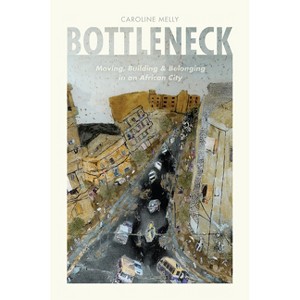
Bottleneck - by Caroline Melly (Paperback)
In Stock
Sponsored
About this item
Highlights
- In Bottleneck, anthropologist Caroline Melly uses the problem of traffic bottlenecks to launch a wide-ranging study of mobility in contemporary urban Senegal-a concept that she argues is central to both citizens' and the state's visions of a successful future.
- About the Author: Caroline Melly is associate professor of anthropology at Smith College.
- 224 Pages
- Social Science, Anthropology
Description
About the Book
The age of globalization is generally understood as involving the massive movement of people and goods on a scale never before seen in human history. In Mobile Fixations, anthropologist Caroline Melly examines mobility as a cultural value in urban Senegal, paying close attention to the points at which the ideal of mobility meets obstructive realities. Specifically, she conceptualizes embouteillage - the traffic bottleneck - as a symbol for the fraught attempts of Dakar's citizens to construct their own mobile futures. Through case studies of investment agencies, cab companies, investors, state workers, and return migrants, Melly pays keen attention to the chronic uncertainty brought on by structural adjustment and how transnational networks might stand as models of inclusion and exclusion in contemporary Senegalese society. Melly also guides us beyond West Africa's shores, to the rickety, Europe-bound fishing boats upon which so many immigrants embark to see a different kind of 'mobile future' abroad, one that too often ends in tragedy. In so doing, the author shows how the consequences of local transformations reach well beyond a country's or even a continent's borders. Mobile Fixations is an engaging and accessible work of cultural anthropology, one that will be an invaluable read for anyone interested in contemporary African society and the global implications of urban development.
Book Synopsis
In Bottleneck, anthropologist Caroline Melly uses the problem of traffic bottlenecks to launch a wide-ranging study of mobility in contemporary urban Senegal-a concept that she argues is central to both citizens' and the state's visions of a successful future.
Melly opens with an account of the generation of urban men who came of age on the heels of the era of structural adjustment, a diverse cohort with great dreams of building, moving, and belonging, but frustratingly few opportunities to do so. From there, she moves to a close study of taxi drivers and state workers, and shows how bottlenecks-physical and institutional-affect both. The third section of the book covers a seemingly stalled state effort to solve housing problems by building large numbers of concrete houses, while the fourth takes up the thousands of migrants who attempt, sometimes with tragic results, to cross the Mediterranean on rickety boats in search of new opportunities. The resulting book offers a remarkable portrait of contemporary Senegal and a means of theorizing mobility and its impossibilities far beyond the African continent.
Review Quotes
"Bottleneck is a joy to read and a sophisticated ethnography. Melly's examination of globalization situates Dakar and Senegal at the crossroads of long-standing relations of migration and mobility. She examines the implications of the well known Muriddiya from a completely fresh perspective, working within Senegal's national development administration in order to grasp movement and mobility at a range of levels--as a national value, a total social fact, and a material condition. Melly's ability to wed these perspectives makes for a unique contribution to our understanding of these processes. This book is a significant accomplishment."-- "Brad Weiss, author of Street Dreams and Hip Hop Barbershops"
"Using the phenomenon of embouteillages--or bottlenecks--as a literal and metaphorical entry point, Melly shows how overlapping circuitries of movement and the blockages that impede them are central to political-economic and cultural processes in this African city. She combines rich ethnography with innovative theorizing to produce superb scholarship in anthropology and African studies, and contributes significantly to understanding a range of intersecting issues including statecraft, development, urbanization, migration, gender, and an emerging anthropology of infrastructure."-- "Daniel Jordan Smith, author of To Be a Man Is Not a One-Day Job"
About the Author
Caroline Melly is associate professor of anthropology at Smith College.