Sponsored
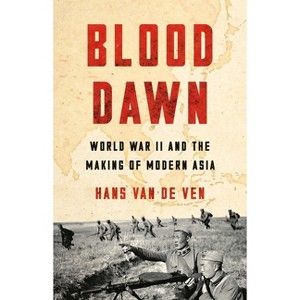
Blood Dawn - by Hans Van de Ven Hardcover
Pre-order
Sponsored
About this item
Highlights
- A major new history of Asia's Second World War Blood Dawn offers a momentous new history of World War II in Asia.
- About the Author: Hans van de Ven is a professor of modern Chinese history at Cambridge University and a visiting chair professor in history at Peking University.
- 464 Pages
- History,
Description
About the Book
"Blood Dawn offers a momentous new history of World War II in Asia. Drawing on deep archival research across continents, historian Hans van de Ven tells the dramatic story of how Asia's people mobilized to defeat both Japanese aggression and European imperialism, forging modern Asia in the process. By the early twentieth century, from India to China, Western imperial powers dominated Asia. Then, in the 1930s, Japan began to tear down this old order in pursuit of its own imperial ambitions-first by invading China, and then by launching its assault against British, Dutch, and American outposts across Asia and the Pacific in December 1941. As Japanese forces seized vast swaths of territory and pressed toward India, the brutal fighting cost millions of lives across the continent. Simultaneously, the war's chaos and suffering supercharged anti-colonial movements from British India to Dutch Indonesia. Ultimately, it was the charismatic leaders of these movements-Mao, Nehru, Sukarno-who built the new Asia of independent nation-states that emerged in the war's bloody wake. Blood Dawn is a powerful new perspective, revealing how Asia's Second World War was absolutely central in creating the postwar order"-- Provided by publisher.
Book Synopsis
A major new history of Asia's Second World War
Blood Dawn offers a momentous new history of World War II in Asia. Drawing on deep archival research across continents, historian Hans van de Ven tells the dramatic story of how Asia's people mobilized to defeat both Japanese aggression and European imperialism, forging modern Asia in the process.
By the early twentieth century, from India to China, Western imperial powers dominated Asia. Then, in the 1930s, Japan began to tear down this old order in pursuit of its own imperial ambitions--first by invading China, and then by launching its assault against British, Dutch, and American outposts across Asia and the Pacific in December 1941. As Japanese forces seized vast swaths of territory and pressed toward India, the brutal fighting cost millions of lives across the continent. Simultaneously, the war's chaos and suffering supercharged anti-colonial movements from British India to Dutch Indonesia. Ultimately, it was the charismatic leaders of these movements--Mao, Nehru, Sukarno--who built the new Asia of independent nation-states that emerged in the war's bloody wake.
Blood Dawn is a powerful new perspective, revealing how Asia's Second World War was absolutely central in creating the postwar order.
About the Author
Hans van de Ven is a professor of modern Chinese history at Cambridge University and a visiting chair professor in history at Peking University. He is the author or editor of ten previous books on Chinese history and the history of warfare. A fellow of the British Academy, he lives in Meldreth, UK.
Shipping details
Return details
Trending Non-Fiction