Sponsored
In Stock
Sponsored
About this item
Highlights
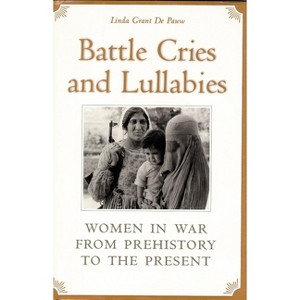
- In this groundbreaking work, which covers thousands of years and spans the globe, Linda Grant De Pauw depicts women as victims and as warriors; as nurses, spies, sex workers, and wives and mothers of soldiers; as warrior queens leading armies into battle; and as baggage carriers marching in the rear.Beginning with the earliest archaeological evidence of warfare and ending with the dozens of wars in progress today, Battle Cries and Lullabies demonstrates that warfare has always and everywhere involved women.
- Author(s): Linda Grant de Pauw
- 432 Pages
- Social Science, Women's Studies
Description
Book Synopsis
In this groundbreaking work, which covers thousands of years and spans the globe, Linda Grant De Pauw depicts women as victims and as warriors; as nurses, spies, sex workers, and wives and mothers of soldiers; as warrior queens leading armies into battle; and as baggage carriers marching in the rear.
Beginning with the earliest archaeological evidence of warfare and ending with the dozens of wars in progress today, Battle Cries and Lullabies demonstrates that warfare has always and everywhere involved women. Following an introductory chapter on the questions raised about women's participation in warfare, the book presents a documented, chronological survey linked to familiar models of military history.
De Pauw provides historical context for current public policy debates over the role of women in the military. "Whether one applauds or deplores their presence and their actions, women have always been part of war. To ignore this fact grossly distorts our understanding of human history."
From the Back Cover
IN THIS GROUNDBREAKING WORK, covering thousands of years of history and spanning the globe, Linda Grant De Pauw explores the varied roles women have played in war. De Pauw depicts women as victims and as warriors; as nurses, spies, sex workers, and wives and mothers of soldiers; as warrior queens leading armies into battle, and as baggage carriers marching in the rear. Her historical survey provides context for current public policy debates over women in the military.
Review Quotes
"The analytical framework on which De Pauw hangs the narrative and anecdotes ... allows [her] to cover not just women in combat, disguised and not, but also women as spies, nurses, and camp followers". -- Booklist
Shipping details
Return details
Trending Non-Fiction






Discover more options