Sponsored
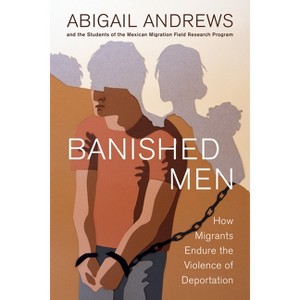
Banished Men - by Abigail Leslie Andrews (Paperback)
In Stock
Sponsored
About this item
Highlights
- A free ebook version of this title is available through Luminos, University of California Press's Open Access publishing program.
- About the Author: Abigail Andrews is Associate Professor of Urban Studies and Planning at the University of California, San Diego, and Director of the Mexican Migration Field Research Program.
- 216 Pages
- Social Science, Emigration & Immigration
Description
About the Book
"What becomes of men the US locks up and kicks out? From 2009 to 2020, the US deported more than five million people-over 90 percent of them men. Banished Men tells 186 of their stories. How, it asks, does forced expulsion shape men's lives and sense of themselves? In this book, a team of thirty-one Latinx students and an award-winning scholar of gender and migrant exclusion uncover a harrowing system that weaves together policing, prison, detention, removal, and border militarization-and overwhelmingly targets men. Guards and gangs beat them down, both literally and metaphorically, as if they are no more than vermin or livestock. Their ties with family are severed. In Mexico, they end up banished: in limbo and stripped of humanity. They do not go "home." Their fight for new ways of belonging, as people of both "here" and "there," forms a devastating, humane, and clear-eyed critique of the violence of deportation"--
Book Synopsis
A free ebook version of this title is available through Luminos, University of California Press's Open Access publishing program. Visit www.luminosoa.org to learn more.
What becomes of men the U.S. locks up and kicks out? From 2009 to 2020, the U.S. deported more than five million people--over 90 percent of them men. In Banished Men, Abigail Andrews and her students tell 186 of their stories. How, they ask, does expulsion shape men's lives and sense of themselves? The book uncovers a harrowing carceral system that weaves together policing, prison, detention, removal, and border militarization to undermine migrants as men. Guards and gangs beat them down, till they feel like cockroaches, pigs, or dogs. Many lose ties with family. They do not go "home." Instead, they end up in limbo: stripped of their very humanity. Against the odds, they fight for new ways to belong. At once devastating and humane, Banished Men offers a clear-eyed critique of the violence of deportation.
From the Back Cover
"Banished Men is a beautifully written book, bringing deported men to life in all their misery and hopes. It is a timely contribution to immigration and Latinx sociology literatures, as well as an intervention in how to do collective social-justice-oriented research. Banished Men adds to our understanding of the current historical moment in vivid form."--Nancy Plankey-Videla, Professor of Sociology and Coordinator of Latino/a and Mexican American Studies at Texas A&M University
"Banished Men asks what becomes of men--their emotions, relationships, family ties, economic opportunities, and very sense of self--as they are forced to live through US detention, imprisonment, and deportation. This powerful book delves into how banishment upends men's lives and shapes their humanity."--Jennifer Randles, author of Essential Dads
Review Quotes
"For Andrews, this book, her second, cements her status as a foundational scholar in the sociology of migration and the interdisciplinary field of illegality studies. For those studying deportation and illegality, Banished Men is mandatory reading."-- "Social Forces"
"A powerful contribution to the field of Latinos and immigration."-- "Gender & Society"
"A remarkable achievement. . . .Banished Men is mandatory reading."-- "Social Forces"
About the Author
Abigail Andrews is Associate Professor of Urban Studies and Planning at the University of California, San Diego, and Director of the Mexican Migration Field Research Program. She researched this book together with thirty-one Latinx students.
The Mexican Migration Field Research Program (mmfrp.org) is a yearlong series of courses at UCSD in which students do original, trauma-informed fieldwork in collaboration with immigrant rights organizations at the US-Mexico border. More than 90 percent of the team are first-generation Latinx college students.
Shipping details
Return details
Frequently bought together

Trending Non-Fiction