Sponsored
In Stock
Sponsored
About this item
Highlights
- For more than a century, banana plantations and farms in Latin America have defined the landscape and economies wherever these fruits are grown--toxic chemicals, exploited workers, and fragile monocultures are their legacy.
- About the Author: Ben Brisbois is an Assistant Professor in the Department of Social and Preventive Medicine of the Université de Montréal's School of Public Health.
- 368 Pages
- Social Science, Agriculture & Food
- Series Name: Digestions
Description
About the Book
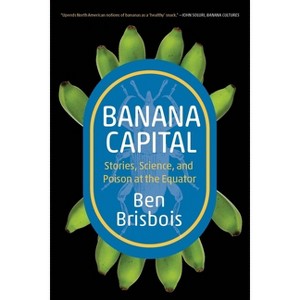
"Explores the far-reaching impacts of pesticides in Ecuador's banana industry, tracing their roots through more than a century of history in the banana-producing Americas. At the southern end of Ecuador's la costa region lies the city of Machala, the self-described 'Banana Capital' of the world. There, farmers and workers experience alarming health effects associated with widespread pesticide use in banana production, compounded by precarious and unsafe working conditions. Banana Capital: Stories, Science, and Poison at the Equator reveals the often grim realities of daily life in banana-producing parts of the world and, beyond that, seeks to understand and address these challenges. Ben Brisbois's search for solutions leads him back to the 19th-century origins of banana production in the Americas and through over a century of imperialism, bloodshed, ecological devastation, diverse workforces, and not-so-diverse bananas. Along the way, however, attempts by powerful Northern corporations and their government allies to extract wealth from Latin American territories and bodies prove vulnerable when met with resistance mounted by workers, Latin American nations, and the ever-unpredictable natural world. Banana Capital issues an urgent call to action, unveiling the power dynamics of life in the banana industry--dynamics vividly experienced by workers in ways that are rooted in significant relationships to communities, the land, and neocolonial power structures. Ultimately, the book provides a roadmap toward social justice and sustainability in the uncertain future of banana production."
Book Synopsis
For more than a century, banana plantations and farms in Latin America have defined the landscape and economies wherever these fruits are grown--toxic chemicals, exploited workers, and fragile monocultures are their legacy.
At the southern end of Ecuador's la costa region lies the city of Machala, the self-described "Banana Capital" of the world. There, farmers and workers experience alarming rates of negative health effects associated with widespread pesticide use along with precarious and unsafe working conditions. Banana Capital: Stories, Science, and Poison at the Equator reveals the grim realities of daily life for banana farmers and, beyond that, seeks to understand and address these challenges.
Ben Brisbois's search for understanding leads him back to the 19th-century origins of banana production in the Americas and through over a century of imperialism, bloodshed, and ecological devastation. Along the way, he uncovers how worker-led resistances and the ever-unpredictable ecosystem thwart repeated attempts by powerful multinationals and their government allies to extract more and more wealth from banana plantations at the cost of Latin American health and lives.
Banana Capital reveals the power dynamics of life in the banana industry-- dynamics vividly experienced by workers caught in a struggle against corporations prioritizing profit over the health of the land and the community.
Review Quotes
"A deeply thoughtful exploration of global change, and what it might take to transform one of the most unjust industries in the world."-- "Steve Striffler, co-editor of Banana Wars"
"A grim reminder of how plantation ecologies reverberate in human bodies in devastatingly unequal ways."-- "Julie Guthman"
"This is an eye-opening and engaging exploration of one of the world's most popular fruits. Brisbois exposes the social and ecological consequences of the modern industrial banana."-- "Lenore Newman, author of Speaking in Cod Tongues"
"Weaving together the science of banana production with realities of pesticides and poison, Banana Capital is a timely critique of the social, public health, political, and economic realities of the contemporary banana industry."-- "Kees Jansen, editor of the Journal of Agrarian Change"
"Banana Capital upends North American notions of bananas as a "healthy" snack by revealing to readers the precarious lives of farm labour in Ecuador--the world's leading exporter of bananas for more than half a century--whose work is marked by social inequalities and exposure to hazardous pesticides. What's more, the author compels readers to find ways to achieve meaningful changes that go beyond virtuous consumption."-- "John Soluri, author of Banana Cultures"
About the Author
Ben Brisbois is an Assistant Professor in the Department of Social and Preventive Medicine of the Université de Montréal's School of Public Health. He lives in Montreal.
Shipping details
Return details
Frequently bought together



Trending Non-Fiction






Discover more options