Sponsored
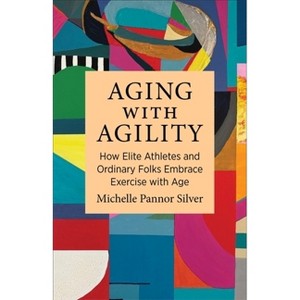
Aging with Agility - by Michelle Pannor Silver
In Stock
Sponsored
About this item
Highlights
- Today, global life expectancy is well over seventy years--a dramatic increase from historical norms.
- About the Author: Michelle Pannor Silver is professor and chair of the Department of Health and Society at the University of Toronto.
- 248 Pages
- Social Science, Gerontology
Description
About the Book
"How do you imagine spending the last few chapters of your life? For most of human history, life expectancy has been around 35 years old. Now, global life expectancy is over 70 years old. In less than 200 years, we have more than doubled our life expectancy and in places like Canada, Japan, and much of Europe, there are more adults over 65 than children under ten. Living longer requires that we spend more time thinking about how we want to live out our later years, and it will be different from what our parents and grandparents experienced. Aging with agility is Michelle Panor Silver's effort to understand how we, as individuals and as a society, can embrace active aging by looking to the stories of a remarkable set of people, gathered over the course of roughly a decade so as to capture the process of aging in progress. Using a group of former elite athletes as her subjects--a group of people that have had to come to terms with what their bodies can and can no longer do--she argues that the most effective way to do this is to find the best, most sustainable fitness for your body at every age. The book's chapters focus on a particular individual and their effort to come to terms with their physical aging. Each of the chapters teach a thematic lesson essential for active aging--focus, confidence, motivation, resilience, optimism, commitment, and concludes with the rules for the endgame"--
Book Synopsis
Today, global life expectancy is well over seventy years--a dramatic increase from historical norms. Living longer means we need to think about how to keep aging bodies healthy. Evidence suggests that regular exercise is the most important modifiable factor that can increase the chances of aging with agility. But what motivates some of us to engage in exercise enthusiastically and others to avoid it like the plague?
Through rich storytelling and nuanced analysis, Michelle Pannor Silver shows how our perceptions of aging shape the way we take care of our bodies. Based on interviews conducted over the course of nearly a decade, this book shares the stories of people who embody the notion of aging with agility. Their life experiences vary widely, including former elite athletes and coaches, people living with chronic pain, those leading sedentary lives, and some who came to be in peak shape later in life. Each person's story offers valuable insights on how we can adjust our habits and embrace aging with vitality and purpose.
Engaging and conversational, Aging with Agility brings together personal narratives and rigorous research to challenge common assumptions about exercise and longevity. This book will inspire readers to find new models of healthy aging--and collectively rethink social norms about the later stages of life.
Review Quotes
Michelle Silver's engaging profiles of elders and their exercise careers prompted me to rethink my own efforts to maintain the body that I will depend on over the days and years ahead. As one ex-athlete advised: "Take care of your body like you're gonna need it for a long time."--David Ekerdt, author of Downsizing: Confronting Our Possessions in Later Life
An expert on the relationship between aging and health, Michelle Silver uses compelling and thoroughly researched longitudinal cases to offer valuable insight into the habits and routines that everyone can adopt to improve their well-being as they age, no matter their life circumstances.--Roger G. Baldwin, editor of Reinventing Academic Retirement
About the Author
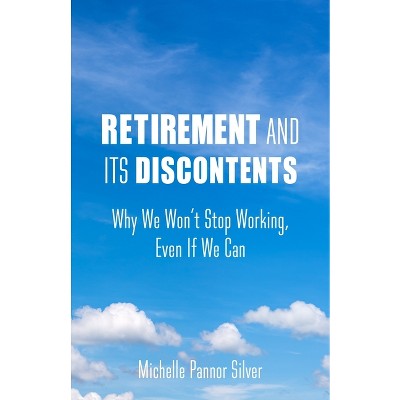
Michelle Pannor Silver is professor and chair of the Department of Health and Society at the University of Toronto. She is the author of Retirement and Its Discontents: Why We Won't Stop Working, Even If We Can (Columbia, 2018).