Sponsored
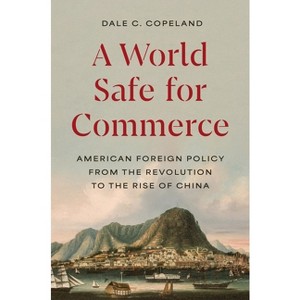
A World Safe for Commerce - (Princeton Studies in International History and Politics) by Dale C Copeland
In Stock
Sponsored
About this item
Highlights
- An Economist Biggest Book of the Year How commerce determines whether America preserves the peace or goes to war When the Cold War ended, many believed that expanding trade would usher in an era of peace.
- About the Author: Dale C. Copeland is professor of international relations at the University of Virginia.
- 504 Pages
- Political Science, Political Economy
- Series Name: Princeton Studies in International History and Politics
Description
About the Book
"How commerce determines whether America preserves the peace or goes to war. When the Cold War ended, many believed that expanding trade would usher in an era of peace. Yet today the United States finds itself confronting not just Russia in Europe but China in the Indo-Pacific, Africa, and Latin America. Shedding new light on how trade both reduces and increases the risks of international crisis, A World Safe for Commerce traces how, since the nation's founding, the United States has consistently moved from peace to conflict when the commerce needed for national security is under threat. Dale Copeland shows how commerce pushes the United States and its rivals to expand their spheres of influence for access to goods even as they worry about provoking a breakdown in trade relations that could spiral into military conflict. Taking readers from the wars with Britain in 1776 and 1812 to World War II and the Cold War, he describes how America's leaders have grappled with this inherent tension, and why they have shifted, sometimes dramatically, from peaceful, mutually beneficial policies to coercion and force in order to increase control over vital trade and prevent economic decline. A World Safe for Commerce reveals how trade competition could lead the United States and China into full-scale confrontation. But it also offers hope that both sides can work to improve their overall trade expectations and foster the confidence needed for long-term peace and stability."--
Book Synopsis
An Economist Biggest Book of the Year
How commerce determines whether America preserves the peace or goes to war
When the Cold War ended, many believed that expanding trade would usher in an era of peace. Yet today the United States finds itself confronting not just Russia in Europe but China in the Indo-Pacific, Africa, and Latin America. Shedding new light on how trade both reduces and increases the risks of international crisis, A World Safe for Commerce traces how, since the nation's founding, the United States has consistently moved from peace to conflict when the commerce needed for national security is under threat.
Dale Copeland shows how commerce pushes the United States and its rivals to expand their spheres of influence for access to goods even as they worry about provoking a breakdown in trade relations that could spiral into military conflict. Taking readers from the wars with Britain in 1776 and 1812 to World War II and the Cold War, he describes how America's leaders have grappled with this inherent tension, and why they have shifted, sometimes dramatically, from peaceful, mutually beneficial policies to coercion and force in order to increase control over vital trade and prevent economic decline.
A World Safe for Commerce reveals how trade competition could lead the United States and China into full-scale confrontation. But it also offers hope that both sides can work to improve their overall trade expectations and foster the confidence needed for long-term peace and stability.
Review Quotes
"
[M]agisterial... a comprehensive examination of U.S. foreign policy from the Revolution to China's rise.
"---Michael Holmes, Responsible Statecraft"[A] fine historical analysis of America's foreign-trade policies, from the pre-Independence years until the Cold War. . . . A World Safe for Commerce is an important work."---Paul Kennedy, Wall Street Journal
"[A] valuable book."---Jessica T. Mathews, Foreign Affairs
"An Economist Biggest Book of the Year"
"Magisterial."---Bronwen Everill, Foreign Policy
"Top Ten Global Affairs Reads of 2024, Chicago Council on Global Affairs"
About the Author
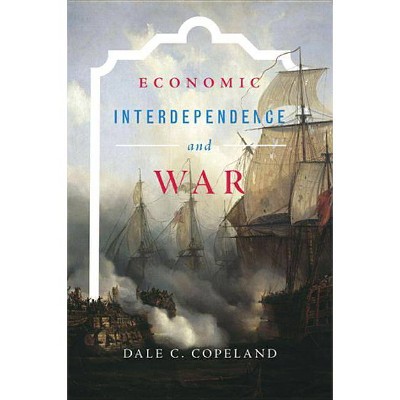
Dale C. Copeland is professor of international relations at the University of Virginia. He is the author of Economic Interdependence and War (Princeton) and The Origins of Major War.
Shipping details
Return details
Frequently bought together

Trending Non-Fiction






Discover more options