Sponsored
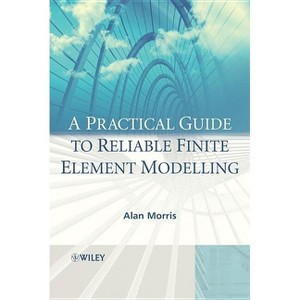
A Practical Guide to Reliable Finite Element Modelling - by Alan Morris Hardcover
In Stock
Sponsored
About this item
Highlights
- Many books have been written about the finite element method; little however has been written about procedures that assist a practicing engineer in undertaking an analysis in such a way that errors and uncertainties can be controlled.
- About the Author: Alan Morris has recently retired from his post at Cranfield University in the UK as Professor of Structural Analysis.
- 384 Pages
- Science, Mechanics
Description
Book Synopsis
Many books have been written about the finite element method; little however has been written about procedures that assist a practicing engineer in undertaking an analysis in such a way that errors and uncertainties can be controlled. In A Practical Guide to Reliable Finite Element Modelling, Morris addresses this important area. His book begins by introducing the reader to finite element analysis (FEA), covering the fundamental principles of the method, whilst also outlining the potential problems involved. He then establishes consistent methods for carrying out analyses and obtaining accurate and reliable results, concluding with a new method for undertaking error control led analyses which is illustrated by means of two case studies.
The book addresses a number of topics that:
- Systematically cover an introduction to FEA, how computers build linear-static and linear-dynamic finite element models, the identification of error sources, error control methods and error-controlled analyses.
- Enable the reader to support the design of complex structures with reliable, repeatable analyses using the finite element method.
- Provide a basis for establishing good practice that could underpin a legal defence in the event of a claim for negligence.
A Practical Guide to Reliable Finite Element Modelling will appeal to practising engineers engaged in conducting regular finite element analyses, particularly those new to the field. It will also be a resource for postgraduate students and researchers addressing problems associated with errors in the finite element method.
This book is supported by an author maintained website at http: //www.femec.co.uk
From the Back Cover
Many books have been written about the finite element method; little however has been written about procedures that assist a practicing engineer in undertaking an analysis in such a way that errors and uncertainties can be controlled. In A Practical Guide to Reliable Finite Element Modelling, Morris addresses this important area. His book begins by introducing the reader to finite element analysis (FEA), covering the fundamental principles of the method, whilst also outlining the potential problems involved. He then establishes consistent methods for carrying out analyses and obtaining accurate and reliable results, concluding with a new method for undertaking error control led analyses.
The book addresses a number of topics that:
Systematically cover an introduction to FEA, how computers build linear-static and linear-dynamic finite element models, the identification of error sources, error control methods and error-control led analyses.
Enable the reader to support the design of complex structures with reliable, repeatable analyses using the finite element method.
Provide a basis for establishing good practice, thereby providing a legal grounding for the structural reliability of a product.
Demonstrate the method with a final case study involving two illustrative problems.
A Practical Guide to Reliable Finite Element Modelling will hold appeal to practising engineers engaged in conducting regular finite element analyses, particularly those new to the field of FE analysis. It will also be a resource for postgraduate students and researchers addressing problems associated with errors in the finite element method.
Review Quotes
"The book is highly recommended for all engineering students, researchers and practicing engineers involved in developing/ utilising finite element techniques. I have confidence that even an experienced analyst would benefit from a review of this material!" (The Aeronautical Journal, March 2010)
About the Author
Alan Morris has recently retired from his post at Cranfield University in the UK as Professor of Structural Analysis. His range of expertise covers the development and application of optimal design and analysis systems, with special emphasis on the finite element methods and structural optimisation programs. Previously, he was a Principal Research Officer in the Royal Aircraft Establishment (now QinetiQ) at Farnborough and was head of the Structures and Optimization Sections at the Advanced Concepts Section.
Shipping details
Return details
Trending Non-Fiction