Sponsored
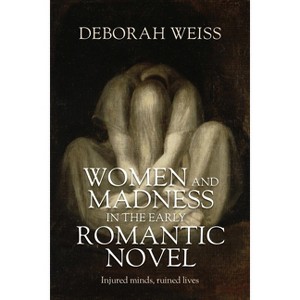
Women and Madness in the Early Romantic Novel - by Deborah Weiss
Pre-order
Sponsored
About this item
Highlights
- Women and madness in the early Romantic novel returns madness to a central role in feminist literary criticism through an updated exploration of hysteria, melancholia, and love-madness in novels by Mary Wollstonecraft, Eliza Fenwick, Mary Hays, Maria Edgeworth, and Amelia Opie.
- About the Author: Deborah Weiss is Professor of English at the University of Alabama
- 248 Pages
- Literary Criticism, Modern
Description
About the Book
This book argues that early Romantic-Period women novelists used female madness to critique patriarchal structures of control and to revise misogynistic medical and popular sentimental models that blamed inherent female weakness and the aberrant female body for women's mental and emotional afflictions.
Book Synopsis
Women and madness in the early Romantic novel returns madness to a central role in feminist literary criticism through an updated exploration of hysteria, melancholia, and love-madness in novels by Mary Wollstonecraft, Eliza Fenwick, Mary Hays, Maria Edgeworth, and Amelia Opie. This book argues that these early Romantic-period novelists revised medical and popular sentimental models for female madness that made inherent female weakness and the aberrant female body responsible for women's mental afflictions. The book explores how the more radical authors -- Wollstonecraft, Fenwick and Hays -- blamed men and patriarchal structures of control for their characters' hysteria and melancholia, while the more mainstream writers -- Edgeworth and Opie -- located causality in less gendered and less victimized accounts. Taken as a whole, the book makes a powerful case for focusing on women's mental health in eighteenth- and nineteenth- century literary criticism.
From the Back Cover
Women and madness in the early Romantic novel returns madness to a central role in feminist literary criticism by offering a close look at the novels of five early Romantic-period women authors.
In an updated exploration of hysteria, melancholia, and love-madness, Weiss maintains that Mary Wollstonecraft, Eliza Fenwick, and Mary Hays created novels that exposed how medical models for mental disease and the popular sentimental figure of the love-mad maid (the woman who loses her mind when she loses her man) made it possible for men to hide their culpability for injuring women. Weiss demonstrates that in their novels, patriarchal structures of control are responsible for the protagonists' bouts of hysteria and their dangerous melancholia. Making careful and important distinctions between authors, Weiss shows how the popular and more mainstream authors such as Maria Edgeworth and Amelia Opie explored less gendered and less victimised models of causality, such as the shock of traumatic experience on the human psyche, misplaced passions, erroneous associations, and remorse.
Taken as a whole, the book demonstrates that these authors' treatment of female madness played a key role in the development of the psychologically complex female heroine of the nineteenth-century novel. In so doing, Weiss makes a powerful case for focusing on women's mental health in eighteenth- and nineteenth- century literary criticism.
Review Quotes
'Deborah Weiss explores the representation of madness as a culturally contingent expression using the trope of the "love-mad maid"'.
SEL: Thematic Review
About the Author
Deborah Weiss is Professor of English at the University of Alabama
Shipping details
Return details
Trending Book Pre-Orders


Discover more options