Sponsored

Winslow Homer in the Adirondacks - (New York State) by David Tatham (Paperback)
In Stock
Sponsored
About this item
Highlights
- In this lavishly illustrated volume, David Tatham turns his eye to Winslow Homer's Adirondack oils, drawings, prints, and watercolors--more than a hundred pieces from the artist's many visits to the region between 1870 and 1910.
- About the Author: David Tatham is professor emeritus of fine arts at Syracuse University.
- 158 Pages
- Art, History
- Series Name: New York State
Description
Book Synopsis
In this lavishly illustrated volume, David Tatham turns his eye to Winslow Homer's Adirondack oils, drawings, prints, and watercolors--more than a hundred pieces from the artist's many visits to the region between 1870 and 1910. Homer's affinity for this remote region of New York State lasted for forty years. No other place--not even Prout's Neck in Maine--held his attention as an artist for so long a period. Nearly every time he set out for the Adirondacks he went to the same two places--the environs of Keene Valley and a group of rustic buildings in a forest clearing in the Essex County township of Minerva, south of the High Peaks.
Tatham casts Homer's early Adirondack works as postbellum pastorals and explores the impact of Darwinian thought on Homer's later works. He examines the concepts of landscape and wilderness, the development of the Adirondack park, and the forest preservation movement, as well as Homer's contemporaneous work in Maine, the Caribbean, and England.
From the Back Cover
In this lavishly illustrated volume, David Tatham turns his eye to Winslow Homer's Adirondack oils, drawings, prints, and watercolors - more than a hundred pieces from the artist's many visits to the region between 1870 and 1910. Homer's affinity for this remote region of New York State lasted for forty years. No other place - not even Prout's Neck in Maine - held his attention as an artist for so long a period. Nearly every time he set out for the Adirondacks he went to the same two places - the environs of Keene Valley and a group of rustic buildings in a forest clearing in the Essex County township of Minerva, south of the High Peaks. Tatham casts Homer's early Adirondack works as postbellum pastorals and explores the impact of Darwinian thought on Homer's later works. He examines the concepts of landscape and wilderness, the development of the Adirondack park, and the forest preservation movement, as well as Homer's contemporaneous work in Maine, the Caribbean, and England.
Review Quotes
The visual focus is upon the artist's twenty-four Adirondack oils and watercolors that are superbly reproduced in full color. . . . An impressive work that is fully worthy of its subject.-- "New York History"
[Tatham] . . . explores the influence of Darwinism and [Homer's] residence in England on his perception of nature. The author notes the success of the artist's watercolours on his return to the Adirondacks in 1889, explores his use of hunting imagery, and the repeated appearance of Beaver Mountain in his work until his death in 1910.-- "ARTbibliographies"
About the Author
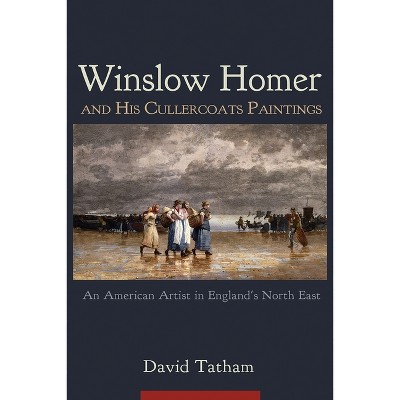
David Tatham is professor emeritus of fine arts at Syracuse University. He is the author of several books including Winslow Homer in London: A New York Artist Abroad, Winslow Homer and the Illustrated Book, and Winslow Homer and His Cullercoats Paintings: An American Artist in England's North East.
Shipping details
Return details
Frequently bought together





Guests also viewed





Discover more options