Sponsored
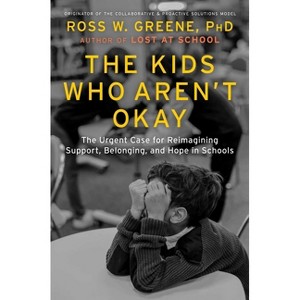
The Kids Who Aren't Okay - by Ross W Greene (Hardcover)
Pre-order
Sponsored
About this item
Highlights
- From a New York Times bestselling authority on education and children's mental health comes a groundbreaking guide to navigating classroom challenges through an approach that is aimed at meeting kids where they're at and being responsive to the developmental variability inherent in every classroom.
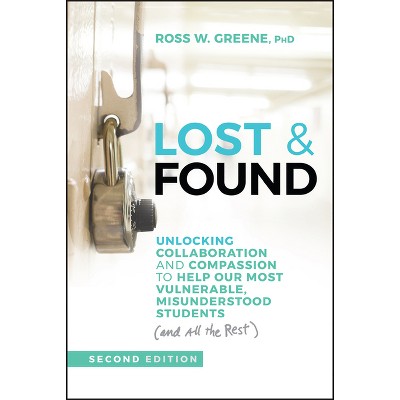
- About the Author: Ross W. Greene, PhD, is a clinical psychologist and the originator of the innovative, evidence-based approach called Collaborative & Proactive Solutions (CPS), as described in his influential books The Explosive Child, Lost at School, Lost & Found, and Raising Human Beings.
- 240 Pages
- Education, Administration
Description
Book Synopsis
From a New York Times bestselling authority on education and children's mental health comes a groundbreaking guide to navigating classroom challenges through an approach that is aimed at meeting kids where they're at and being responsive to the developmental variability inherent in every classroom.
Over the past two decades, a wide array of societal changes have made it much harder to be a kid. While lots of kids are still doing okay, many more than ever are not. The Kids Who Aren't Okay opens with sobering statistics on children's mental health: higher than ever rates of concerning behaviors at school, anxiety, depression, chronic absenteeism, and suicidality. And educators--who have never felt less safe at school, have experienced significant decreases in job satisfaction, and have left the profession in droves--aren't doing very well, either.
Child psychologist Dr. Ross Greene, renowned for his pioneering work in education and originator of the evidence-based Collaborative & Proactive Solutions model (which has transformed practices in countless families, schools, psychiatric units, and residential and juvenile detention settings), has worked in and with schools across the globe for decades. He argues that the moment demands that we renew our focus on developmental variability and meeting every student where they're at, and that we take a hard look at our structures, practices, and mentalities at school and make practical, actionable, realistic changes that benefit all kids and educators. These changes must include shifting to interventions that are proactive (early) rather than reactive (late), solutions that are collaborative rather than unilateral, and focused on the problems that are causing concerning behaviors (and solving them) rather than behaviors (and modifying them).
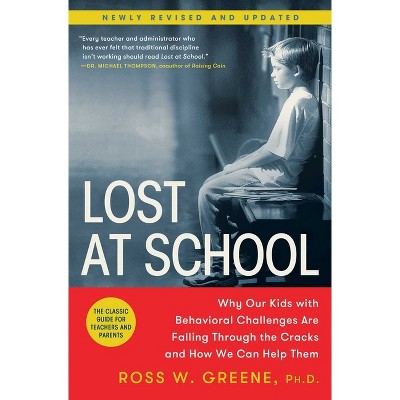
Building on the principles introduced in his landmark, bestselling book, Lost at School, Greene equips educators and caregivers with the tools to foster safer, more supportive, inclusive learning environments. In easy-to-understand, practical terms, Greene provides a clear road map for turning things around, complete with vignettes, case studies, and the voices of educators who've done it. The Kids Who Aren't Okay is a vital resource, providing hope and guidance as schools navigate the new normal.
Review Quotes
"A powerful exhortation to get teachers more involved in student success." --Kirkus
"This model ultimately saves time and effort, and is supported by a significant research base showing its effectiveness in reducing behavioral issues and improving student success. The book will appeal to parents, educators, and policymakers." --Booklist
"This critical book reminds us that, now more than ever, we must address the growing issue of students struggling with trauma and social/emotional challenges. Working together as parents and educators we can change things for the better and make a real impact on children's lives." --Yvonne Johnson, National PTA President
"This book is a gift to educators who are feeling stuck and overwhelmed. It's practical, based on the realities teachers face today, but also visionary and hopeful. If all schools were to adopt this approach to understanding and supporting students who are struggling, their success rates would soar and children would thrive. This may be Ross Greene's best book yet." --Joan Durrant, Ph.D., Professor Emerita of Community Health Sciences, University of Manitoba
"The Kids Who Aren't Okay resonated with me deeply, and puts into words what so many of us see every day: punitive systems don't help kids whose struggles come from lagging skills and unmet needs. This honest, deeply compassionate work offers hope, and a practical path forward. I wholeheartedly recommend it to anyone who wants to build school communities where every child feels safe, understood, and truly supported." --Robyn Linscott, Director of Education and Family Policy for The Arc of the United States
"Dr. Greene says things many of us would like to say but don't (or can't) in our polarized society. The Kids Who Aren't Okay is an invaluable resource for everyone working in our education system; an engaging and powerful presentation of a practical, effective and evidenced-based methodology. As a psychologist who has worked for decades with youth who are blamed and punished for their unlucky frustration responses, I'll refer to this book often and readily recommend it to others." --Bobbi Beale, PsyD, Director, Center for Innovative Practices, Case Western Reserve University, Cleveland, OH
About the Author
Ross W. Greene, PhD, is a clinical psychologist and the originator of the innovative, evidence-based approach called Collaborative & Proactive Solutions (CPS), as described in his influential books The Explosive Child, Lost at School, Lost & Found, and Raising Human Beings. He developed and executive produced the award-winning documentary film The Kids We Lose. Dr. Greene was on the faculty at Harvard Medical School for over twenty years and is now founding director of the nonprofit Lives in the Balance. He is also currently adjunct Professor in the Department of Psychology at Virginia Tech. Dr. Greene has worked with several thousand kids with concerning behaviors and their caregivers, and he and his colleagues have overseen implementation and evaluation of the CPS model in countless schools, inpatient psychiatry units, and residential and juvenile detention facilities, with dramatic effect: significant reductions in recidivism, discipline referrals, detentions, suspensions, and use of restraint and seclusion. Dr. Greene lectures throughout the world and lives in Freeport, Maine.
Shipping details
Return details
Frequently bought together

Guests also viewed
![The Explosive Child [Sixth Edition] - by Ross W Greene (Paperback)](https://target.scene7.com/is/image/Target/GUEST_e0b83b98-5746-470c-8e36-b008437e9e3f)

Discover more options