Sponsored
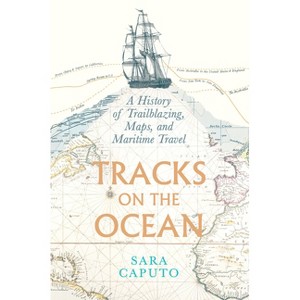
Tracks on the Ocean - by Sara Caputo
In Stock
Sponsored
About this item
Highlights
- An engaging look at ocean routes' complicated beginnings and elusive impact.
- About the Author: Sara Caputo is a senior research fellow and director of studies in history at Magdalene College, University of Cambridge.
- 352 Pages
- History, Social History
Description
Book Synopsis
An engaging look at ocean routes' complicated beginnings and elusive impact.
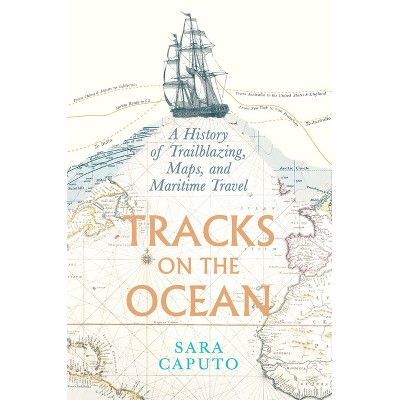
Sara Caputo's Tracks on the Ocean is a sweeping history of how we have understood routes of travel over the ocean and how we came to represent that movement as a cartographical line. Focusing on the representation of sea journeys in the Western world from the early sixteenth century to the present, Caputo deftly argues that the depiction of these lines is inextricable from European imperialism, the rise of modernity, and attempts at mastery over nature. Caputo recounts the history of ocean tracks through an array of lively stories and characters, from the expeditions of Captain James Cook in the eighteenth century to tracks depicted in Moby Dick and popular culture of the nineteenth century to the use of navigational techniques by the British navy. She discusses how tracks evolved from tools of surveying into tools of surveillance and, eventually, into paths of environmental calamity. The impulse to record tracks on the ocean is, Caputo argues, reflective of an ongoing desire for order, schematization, and personal visibility, as well as occupation and permanent ownership--in this case over something that is unoccupiable and impossible to truly possess. Both beautifully written and deeply researched, Tracks on the Ocean shares how the lines drawn on maps tell the audacious and often tragic and violent stories of ocean voyages.
Review Quotes
"Lines on maps have real power to influence the world, defining claims of ownership and entitlement. In Tracks on the Ocean, maritime historian Sara Caputo looks at the inky threads made on sea charts to showcase examples of navigational prowess, or sometimes, how they inadvertently record a lack thereof. Caputo reveals that, while there has been a long history of outlining routes, tracing individual journeys via such lines appears to have only started in the 16th century."-- "Dialogue Earth"
"Sara Caputo's work, Tracks on the Ocean, should join the bibliography of works that will significantly change how scholars and students conceptualize not just the past but how people in the past viewed their own lives and ideas . . . From her argument, to her use of examples, to her conclusions, Caputo provides an exemplary intellectual history of mapping and the concept of the world."-- "Pacific Historical Review"
"Supported by extensive notes, this volume leaves no stone unturned in the author's quest to document a unique view of cartography. Photos and illustrations illuminate this fascinating study of an interesting development in world maritime history."-- "Choice"
"Tracks on the Ocean, by the maritime historian Sara Caputo, is an erudite and accomplished account of such human wayfaring. Tracks are not just useful tools for the gathering of knowledge, but for making claims and for telling stories."-- "The New Statesman"
"Tracks On The Ocean is an enthralling account of how we have conceptualised and imagined marine wayfaring through time, from Odysseus to Magellan to GPS. It is also a model of how history should be written: accessible and entertaining as well as deeply erudite and constantly mind-expanding."--Philip Ball, author of 'Beautiful Experiments: An Illustrated History of Experimental Science'
"A triumph . . . an act of impressive scholarship."-- "BBC History Magazine"
About the Author
Sara Caputo is a senior research fellow and director of studies in history at Magdalene College, University of Cambridge. She is the author of Foreign Jack Tars: The British Navy and Transnational Seafarers during the Revolutionary and Napoleonic Wars.
Shipping details
Return details
Frequently bought together





Discover more options