New ArrivalsValentine’s DayHealth & WellnessClothing, Shoes & AccessoriesHomeKitchen & DiningGroceryHousehold EssentialsFurnitureOutdoor Living & GardenBabyToysVideo GamesElectronicsMovies, Music & BooksBeautyPersonal CareGift IdeasParty SuppliesCharacter ShopSports & OutdoorsBackpacks & LuggageSchool & Office SuppliesPetsUlta Beauty at TargetTarget OpticalGift CardsBullseye’s PlaygroundDealsClearanceTarget New Arrivals Target Finds #TargetStyleStore EventsAsian-Owned Brands at TargetBlack-Owned or Founded Brands at TargetLatino-Owned Brands at TargetWomen-Owned Brands at TargetLGBTQIA+ ShopTop DealsTarget Circle DealsWeekly AdShop Order PickupShop Same Day DeliveryRegistryRedCardTarget CircleFind Stores
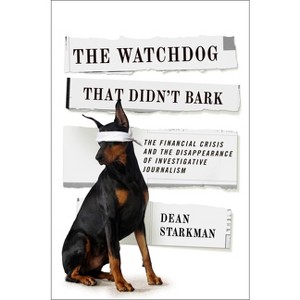
The Watchdog That Didn't Bark - (Columbia Journalism Review Books) by  Dean Starkman (Hardcover) - 1 of 1

The Watchdog That Didn't Bark - (Columbia Journalism Review Books) by Dean Starkman (Hardcover)

$15.18Save $9.77 (39% off)

In Stock

Eligible for registries and wish lists

About this item

Highlights

  • In this sweeping, incisive post mortem, Dean Starkman exposes the critical shortcomings that softened coverage in the business press during the mortgage era and the years leading up to the financial collapse of 2008.
  • About the Author: Dean Starkman is based in New York and covers Wall Street as a staff writer for the Los Angeles Times.
  • 368 Pages
  • Language + Art + Disciplines, Journalism
  • Series Name: Columbia Journalism Review Books

Description


About the Book


How mainstream business news failed its readers and what it means for the future of the profession.


Book Synopsis


In this sweeping, incisive post mortem, Dean Starkman exposes the critical shortcomings that softened coverage in the business press during the mortgage era and the years leading up to the financial collapse of 2008. He locates the roots of the problem in the origin of business news as a market messaging service for investors in the early twentieth century. This access-dependent strain of journalism was soon opposed by the grand, sweeping work of the muckrakers. Propelled by the innovations of Bernard Kilgore, the great postwar editor of the Wall Street Journal, these two genres merged when mainstream American news organizations institutionalized muckraking in the 1960s, creating a powerful guardian of the public interest. Yet as the mortgage era dawned, deep cultural and structural shifts--some unavoidable, some self-inflicted--eroded journalism's appetite for its role as watchdog. The result was a deafening silence about systemic corruption in the financial industry. Tragically, this silence grew only more profound as the mortgage madness reached its terrible apogee from 2004 through 2006.

Starkman frames his analysis in a broad argument about journalism itself, dividing the profession into two competing approaches--access reporting and accountability reporting--which rely on entirely different sources and produce radically different representations of reality. As Starkman explains, access journalism came to dominate business reporting in the 1990s, a process he calls "CNBCization," and rather than examining risky, even corrupt, corporate behavior, mainstream reporters focused on profiling executives and informing investors. Starkman concludes with a critique of the digital-news ideology and corporate influence, which threaten to further undermine investigative reporting, and he shows how financial coverage, and journalism as a whole, can reclaim its bite.


Review Quotes


The Watchdog That Didn't Bark adds greatly to our understanding of business journalism and the country's most recent financial meltdown. Starkman writes that it is intended for lay readers, but journalism students and historians will find much value here as well.--H-Net

As fair and balanced as a solar-plexus punch can be.--Kirkus Reviews

Compelling... Starkman offers an excellent and clear theoretical explanation for some of the problems with watchdog journalism generally.--International Journal of Communication

Detailed and fully satisfying...--Criminal Law and Criminal Justice Books

Starkman provides keen analysis of how the media failed in its mission at a crucial time for the U.S. economy.--Booklist

The Watchdog That Didn't Bark, given its in-depth analysis across the landscape, steeped in history, and Starkman's keen understanding of the business of journalism, can stand as a potentially enduring case study of what went wrong and why.--Alec Klein, director of the Medill Justice Project and award-winning investigative reporter formerly with the Washington Post

Here is the missing piece in the financial-crisis mystery: how did our vaunted business-journalism sector manage to miss the problem with mortgage-backed investments? The answer, as Dean Starkman shows us in this amazing autopsy, is that the business outweighs the journalism and that it is getting worse, not better, as we go forward.--Thomas Frank, author of Pity the Billionaire: The Hard-Times Swindle and the Unlikely Comeback of the Right

Journalism was complicit in the predation and corruption that brought down world financial markets and wrecked the lives of millions. Obsessed with shallow scoops, giddy from the laughing gas of access, financial journalists abjectly failed to connect dots, and left abusive, reckless, and criminal corporations free to drag the global economy into the abyss. Dean Starkman is the author we have been waiting for to tell this story. He not only puts forward a keen, subtle, and fair account of the journalistic default, he names names.--Todd Gitlin, author of Media Unlimited: How the Torrent of Images and Sounds Overwhelms Our Lives

Journalists did not miss the subprime lending that spun into the devastating financial collapse of 2008. Excellent reporting was available, from the Financial Times to the Los Angeles Times to a small alternative publication, Southern Exposure. Yet Dean Starkman shows that even reporters who were on top of things buried the lead: the story was not new financial instruments, risky investments, or high-pressured Wall Street. The story was corruption. There were old-fashioned, greedy villains. Old-fashioned moralizing was called for. It would have had the advantage of being both true and fascinating. So how did so many fine journalists miss the big story? Read Starkman's powerful and disturbing analysis of how business journalism came to write for an audience of investors, not citizens. You may not share his every judgment, but this account has the advantage of being both true and fascinating.--Michael Schudson, Columbia Journalism School, author of The Power of News

Starkman is literally a reporter's reporter. As such, he gets to the bottom of the story of how the U.S. business press could miss the most important economic implosion of the past eighty years until it was too late, and he does so with prose that is intelligent, engaging, and erudite. I recommend The Watchdog without reservation.--Eric Alterman, Brooklyn College, and media columnist, The Nation

With American journalism at sea, here comes a navigator who really knows its mission, the riptides it is facing, and the ports it must reach. Starkman tells it all with the heart, clarity, and dry wit that redeem business journalism even while showing how it lost its anchor and compass.--Jim Sleeper, former editor and columnist at Newsday and the New York Daily News


About the Author


Dean Starkman is based in New York and covers Wall Street as a staff writer for the Los Angeles Times. A reporter for two decades, he worked for eight years as a Wall Street Journal staff writer and was chief of the Providence Journal's investigative unit. He has won numerous national and regional journalism awards and helped lead the Providence Journal to the 1994 Pulitzer Prize for Investigations.
Dimensions (Overall): 9.1 Inches (H) x 6.1 Inches (W) x 1.2 Inches (D)
Weight: 1.4 Pounds
Suggested Age: 22 Years and Up
Number of Pages: 368
Series Title: Columbia Journalism Review Books
Genre: Language + Art + Disciplines
Sub-Genre: Journalism
Publisher: Columbia University Press
Format: Hardcover
Author: Dean Starkman
Language: English
Street Date: January 7, 2014
TCIN: 91874733
UPC: 9780231158183
Item Number (DPCI): 247-08-5016
Origin: Made in the USA or Imported
If the item details aren’t accurate or complete, we want to know about it.

Shipping details

Estimated ship dimensions: 1.2 inches length x 6.1 inches width x 9.1 inches height
Estimated ship weight: 1.4 pounds
We regret that this item cannot be shipped to PO Boxes.
This item cannot be shipped to the following locations: American Samoa (see also separate entry under AS), Guam (see also separate entry under GU), Northern Mariana Islands, Puerto Rico (see also separate entry under PR), United States Minor Outlying Islands, Virgin Islands, U.S., APO/FPO

Return details

This item can be returned to any Target store or Target.com.
This item must be returned within 90 days of the date it was purchased in store, shipped, delivered by a Shipt shopper, or made ready for pickup.
See the return policy for complete information.

Additional product information and recommendations

Get top deals, latest trends, and more.

Privacy policy

Footer

About Us

About TargetCareersNews & BlogTarget BrandsBullseye ShopSustainability & GovernancePress CenterAdvertise with UsInvestorsAffiliates & PartnersSuppliersTargetPlus

Help

Target HelpReturnsTrack OrdersRecallsContact UsFeedbackAccessibilitySecurity & FraudTeam Member ServicesLegal & Privacy

Stores

Find a StoreClinicPharmacyTarget OpticalMore In-Store Services

Services

Target Circle™Target Circle™ CardTarget Circle 360™Target AppRegistrySame Day DeliveryOrder PickupDrive UpFree 2-Day ShippingShipping & DeliveryMore Services
PinterestFacebookInstagramXYoutubeTiktokTermsCA Supply ChainPrivacy PolicyCA Privacy RightsYour Privacy ChoicesInterest Based AdsHealth Privacy Policy