Sponsored
In Stock
Sponsored
About this item
Highlights
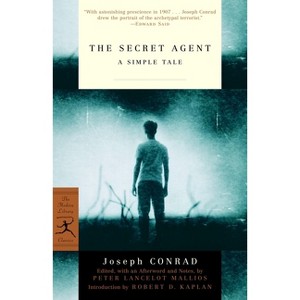
- Selected by the Modern Library as one of the 100 best novels of all time Edited and with Notes by Peter Lancelot MalliosIntroduction by Robert D. Kaplan In reexamining The Secret Agent in a post-9/11 world, Robert D. Kaplan praises Joseph Conrad's "surgical insight into the mechanics of terrorism," calling the book "a fine example of how a savvy novelist may detect the future long before a social scientist does.
- About the Author: Joseph Conrad (1857-1924) grew up amid political unrest in Russian-occupied Poland.
- 352 Pages
- Fiction + Literature Genres, Classics
- Series Name: Modern Library 100 Best Novels
Description
Book Synopsis
Selected by the Modern Library as one of the 100 best novels of all time
Edited and with Notes by Peter Lancelot Mallios
Introduction by Robert D. Kaplan
In reexamining The Secret Agent in a post-9/11 world, Robert D. Kaplan praises Joseph Conrad's "surgical insight into the mechanics of terrorism," calling the book "a fine example of how a savvy novelist may detect the future long before a social scientist does."
This intense 1907 thriller-a precursor to works by Graham Greene and John le Carré-concerns a British double agent who infiltrates a cabal of anarchists. Conrad explores political and criminal intrigue in a modern society, building to a climax that the critic F. R. Leavis deemed "one of the most astonishing triumphs of genius in fiction."
Review Quotes
"The Secret Agent is an astonishing book. It is one of the best--and certainly the most significant--detective stories ever written." --Ford Madox Ford
"The Secret Agent is an altogether thrilling 'crime story' . . . a political novel of a foreign embassy intrigue and its tragic human outcome." --Thomas Mann
"One of Conrad's supreme masterpieces." --F. R. Leavis
"[The Secret Agent] was in effect the world's first political thriller--spies, conspirators, wily policemen, murders, bombings . . . Conrad was also giving artistic expression to his domestic anxieties--his overweight wife and problem child, his lack of money, his inactivity, his discomfort in London, his uneasiness in English society, his sense of exile, of being an alien . . . The novel has the perverse logic and derangement of a dream."
--from the Introduction to the Everyman's Library edition by Paul Theroux
About the Author
Joseph Conrad (1857-1924) grew up amid political unrest in Russian-occupied Poland. After twenty years at sea with the French and British merchant navies, he settled in England in 1894. Over the next three decades he revolutionized the English novel with works such as Typhoon (1902), Youth (1902), Nostromo (1904), The Secret Agent (1907), Under Western Eyes (1911), Chance (1913), and Victory (1915).
Shipping details
Return details
Frequently bought together
Guests also viewed
Discover more options