John Canfield here presents a penetrating study of the self and self-consciousness from the point of view of contemporary analytic philosophy.
About the Author: JOHN V. CANFIELD is Professor of Philosophy at the University of Toronto.
264 Pages
Philosophy, Mind & Body
Description
About the Book
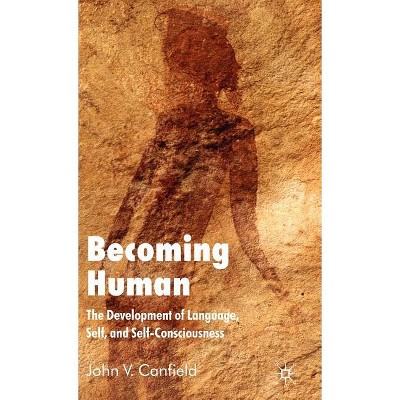
John Canfield here presents a penetrating study of the self and self-consciousness from the point of view of contemporary analytic philosophy. Taking as his starting point Wittgenstein's views on the nature of the self, Canfield explains Wittgenstein's approach to philosophy and his way of looking at language. He also explores significant non-Wittgensteinian philosophical literature including the widespread debate over criteria of personal identity and basic assumptions about the I of such expressions as I think. The second half of the book examines how we fix or ascertain certain beliefs about ourselves--a problem not previously discussed by analytic philosophers.
Canfield begins by examining traditional theories that take the self to be a fiction of some sort. He goes on to analyze our deep-seated existential belief in self--a belief that, he notes, can coexist with a theoretical denial of self's existence. A central chapter of the book attempts to delineate clearly Wittgenstein's view of the I as a grammatical fiction. In addressing the large literature on criteria of personal identity, Canfield argues that a central assumption of that work--the notion of judging by intuition in puzzle cases--is mistaken. Turning his attention to forms of self-consciousness, Canfield demonstrates that the I of gut-level belief is categorically heterogeneous and, in part, fictional. Written with a minimum of jargon, this book will interest Wittgensteinian scholars as well as philosophers, social scientists, and psychoanalysts involved in the study of the self.
Book Synopsis
John Canfield here presents a penetrating study of the self and self-consciousness from the point of view of contemporary analytic philosophy. Taking as his starting point Wittgenstein's views on the nature of the self, Canfield explains Wittgenstein's approach to philosophy and his way of looking at language. He also explores significant non-Wittgensteinian philosophical literature including the widespread debate over criteria of personal identity and basic assumptions about the I of such expressions as I think. The second half of the book examines how we fix or ascertain certain beliefs about ourselves--a problem not previously discussed by analytic philosophers.
Canfield begins by examining traditional theories that take the self to be a fiction of some sort. He goes on to analyze our deep-seated existential belief in self--a belief that, he notes, can coexist with a theoretical denial of self's existence. A central chapter of the book attempts to delineate clearly Wittgenstein's view of the I as a grammatical fiction. In addressing the large literature on criteria of personal identity, Canfield argues that a central assumption of that work--the notion of judging by intuition in puzzle cases--is mistaken. Turning his attention to forms of self-consciousness, Canfield demonstrates that the I of gut-level belief is categorically heterogeneous and, in part, fictional. Written with a minimum of jargon, this book will interest Wittgensteinian scholars as well as philosophers, social scientists, and psychoanalysts involved in the study of the self.
Review Quotes
"Because of its style, it should also command a wide audience from outside philosophy: particularly amongst psychologists and cognitive scientists. . . . The book has been beautifully written and argued. Canfield is one of Canada's leading philosophers, and one of the world's foremost authorities on Wittgenstein. He has put a tremendous amount of effort into this book, with the result that he has written what should prove to be a classic on the subject."- Stuart Shanker Professor of Philosophy Atkinson College, Toronto, Canada
"I have read the Looking-Glass Self with delight and instruction: delight in its ingenious argumentation, provocative ideas, scholarship, and lively, felicitous style; instruction in its penetrating analyses of the philosophical problem of the self and some of the more plausible theories that have been addressed to the problem. I found of particular interest [the]...elegantly presented resolution of the problem. The latter ought to stir up the philosophical community."-John O. Nelson Professor of Philosophy University of Colorado, Boulder
"It's really an impressive thing. . . . It's a great pleasure to read and shows once again that good philosophy can be beautifully written."- Roderick Chisholm Professor of Philosophy Brown University
About the Author
JOHN V. CANFIELD is Professor of Philosophy at the University of Toronto. He edited the 15-volume set The Philosophy of Wittgenstein and is author of Wittgenstein, Language and World.
Dimensions (Overall): 9.21 Inches (H) x 6.14 Inches (W) x .63 Inches (D)
Weight: 1.2 Pounds
Suggested Age: 22 Years and Up
Number of Pages: 264
Genre: Philosophy
Sub-Genre: Mind & Body
Publisher: Praeger
Format: Hardcover
Author: John V Canfield
Language: English
Street Date: November 20, 1990
TCIN: 1008776176
UPC: 9780275935863
Item Number (DPCI): 247-07-4451
Origin: Made in the USA or Imported
If the item details aren’t accurate or complete, we want to know about it.
Shipping details
Estimated ship dimensions: 0.63 inches length x 6.14 inches width x 9.21 inches height
Estimated ship weight: 1.2 pounds
We regret that this item cannot be shipped to PO Boxes.
This item cannot be shipped to the following locations: American Samoa (see also separate entry under AS), Guam (see also separate entry under GU), Northern Mariana Islands, Puerto Rico (see also separate entry under PR), United States Minor Outlying Islands, Virgin Islands, U.S., APO/FPO
Return details
This item can be returned to any Target store or Target.com.
This item must be returned within 90 days of the date it was purchased in store, shipped, delivered by a Shipt shopper, or made ready for pickup.