Sponsored
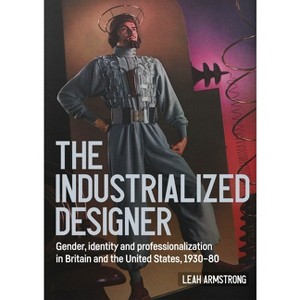
'The Industrialized Designer' - Studies in Design and Material Culture by Leah Armstrong Paperback
Pre-order
Sponsored
About this item
Highlights
- What does it mean to be called an industrial designer?
- About the Author: Leah Armstrong is FWF Elise Richter Senior Post-Doctoral Research Fellow in the department of Design History and Theory at the University of Applied Arts Vienna
- 240 Pages
- Art, History & Criticism
- Series Name: Studies in Design and Material Culture
Description
About the Book
This book contributes new perspectives on the identity of the industrial designer, particularly from a gendered perspective, through a critical interrogation of the 'heroic male designer'. It explores the professionalisation of industrial design in Britain and the US from 1930-80, a 'new profession' that emerged in the 20th century.
Book Synopsis
What does it mean to be called an industrial designer? This book traces the remarkable rise of this professional identity in historical perspective from a position of anonymity in the early twentieth century, to mid-century professionalisation, to decline and disintegration by 1980.
Drawing on new, extensive, original archival research, it uncovers the history of a profession in a state of re-invention, 1930-1980 in Britain and the United States. The book tests assumptions about the relationship between the professions in the two countries, bringing them into comparative historical perspective for the first time. The gendered dynamics of professionalisation and their interaction with the representation of the heroic male designer are interrogated and critically examined. Building on new gender perspectives to the history of the industrial design profession, the book calls for a re-examination of the limits and boundaries of what constitutes professional identity and work.
From the Back Cover
Design, it is often said, is a profession in crisis. This book revisits the history of the industrial design profession, taking a fresh look at the past in order to better understand the present.
Exploring design as a socially constructed practice, the book identifies points of transition, friction and flux that have steered the representation and identity of the field since the early twentieth century. It focuses on the period between 1930 and 1980, starting from the moment British and American industrial artists and designers chose to pursue the path to professionalization, establishinga visible public status alongside the architect and engineer. From there, the book explores the internal dramas, hopes, aspirations, insecurities and failures of men and women working as industrial designers during a period of immense cultural and social change.
Bringing new perspectives to the gendered dynamics of professionalization and the history of design, 'The industrialized designer' examines the representation of the industrial designer over time through the lens of the museum and gallery, television and film, magazines and print press, in the studio, boardroom and the home.
Review Quotes
'In this important contribution to design history scholarship, the object of study is that of the design profession itself. Armstrong deftly charts the evolution of the design industry's identity as a social construction and argues how a historiographical focus on the processes of professionalization can help in redressing the design's constitutional gender disparity.'
-- Dr Alice Twemlow, Kingston University
'a marvellous addition to the discipline of design history. It is thoroughly researched and meticulous, full of nuance and careful analysis... Armstrong's engagement with issue of gender, feminism and patriarchy are subtle and careful - she steps well beyond the older feminist narrative of uncovering "hidden" histories of women designers'
-- Dr Jesse Adams Stein, University of Technology, Sydney
About the Author
Leah Armstrong is FWF Elise Richter Senior Post-Doctoral Research Fellow in the department of Design History and Theory at the University of Applied Arts Vienna
Shipping details
Return details
Guests also viewed

Discover more options