Sponsored
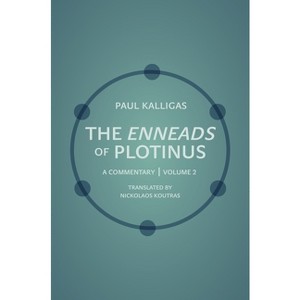
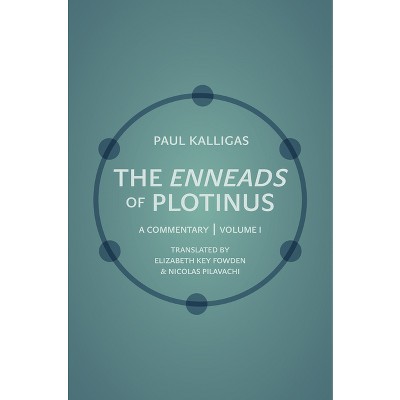
The Enneads of Plotinus - by Paul Kalligas (Paperback)
Pre-order
Sponsored
About this item
Highlights
- The second volume in a landmark commentary on an important and influential work of ancient philosophy This is the second volume of a groundbreaking commentary on one of the most important works of ancient philosophy, the Enneads of Plotinus--a text that formed the basis of Neoplatonism and had a deep influence on early Christian thought and medieval and Renaissance philosophy.
- About the Author: Paul Kalligas is director of the European Cultural Centre of Delphi in Greece and was previously professor of ancient philosophy at the National and Kapodistrian University of Athens.
- 424 Pages
- Philosophy, History & Surveys
Description
Book Synopsis
The second volume in a landmark commentary on an important and influential work of ancient philosophy
This is the second volume of a groundbreaking commentary on one of the most important works of ancient philosophy, the Enneads of Plotinus--a text that formed the basis of Neoplatonism and had a deep influence on early Christian thought and medieval and Renaissance philosophy. This volume covers Enneads IV and V, which focus on two of the principal "hypostases" of Plotinus's ontological system, namely the soul and the Intellect. Paul Kalligas provides an analytical exegesis of the arguments, along with an account of Plotinus's principal sources, references to other parts of his work, and a systematic evaluation of his overarching theoretical aspirations. A landmark contribution to Plotinus scholarship, this is the most detailed and extensive commentary ever written for the whole of the Enneads.
Review Quotes
"Kalligas's commentary deftly summarizes the state of the art for numerous philological and philosophical issues."---Lloyd P. Gerson, Bryn Mawr Classical Review
"This book is an indispensable work for anyone working or studying Plotinus."---Daniel Vazquez, Greece & Rome
About the Author
Paul Kalligas is director of the European Cultural Centre of Delphi in Greece and was previously professor of ancient philosophy at the National and Kapodistrian University of Athens.
Shipping details
Return details
Trending Book Pre-Orders






Discover more options