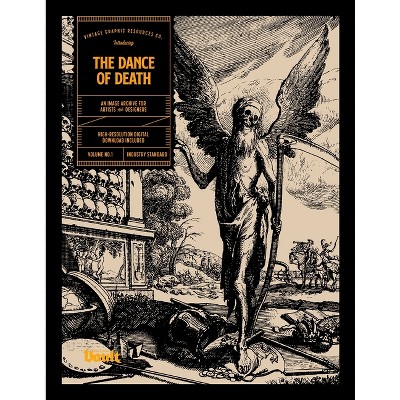
Hans Holbein the Younger (1497-1543), remembered today for his insightful portraits, was better known in his own time for his varied and extensive graphic works, the most celebrated of which was The Dance of Death.
Author(s): Hans Holbein
160 Pages
Poetry, European
Series Name: Dover Fine Art, History of Art
Description
About the Book
The most celebrated work of the 16th-century woodcut master, these 41 illustrations are a stark reminder of a dramatic motif: "Remember, you will die." Includes various quotations, depictions, and meditations on death.
Book Synopsis
Hans Holbein the Younger (1497-1543), remembered today for his insightful portraits, was better known in his own time for his varied and extensive graphic works, the most celebrated of which was The Dance of Death. This work, from the woodblocks of collaborator Hans Lützelburger, was first published in book form in 1538. The theme of the dance of death was a popular one of the sixteenth century. Holbein captured the feeling of death, the leveler, in its attack on all classes, both sexes, and all ages. A stylized skeleton seizes the child from his mother's breast. The skeleton snatches, plays, tugs, and cavorts throughout the rest of the book. The king, emperor, pope, and cardinal must cease from their functions. The skull is thrust into the face of the astrologer. The hourglass runs out onto the floor. Countess, nun, sailor, peddler, senator are all stopped by the common force. Forty-one finely cut, highly detailed woodcuts capture the single motif, Memento mori: "Remember, you will die." Although the theme is common, the variety of expressions, social groups, backgrounds, styles of dress and architecture, and calls to death are so varied that each one is unique in its power. This edition, reprinting the unabridged 1538 edition, is the first in a series reprinting great rare books from the Rosenwald Collection. Besides the woodcuts, the book contains a prefatory letter by Jean de Vauzéle and various quotations, depictions, and meditations on death, deaths of men, and the necessity of death. A repeated series of the 41 woodblocks follows the reprinted work and contains English translations of the quotations and verses. Art historians and social historians will find this to be one of the best depictions of class life caught at its fateful moment. The collector will find this to be the finest reproduction of one of Holbein's major works.
From the Back Cover
Hans Holbein the Younger (1497-1543), remembered today for his insightful portraits, was better known in his own time for his varied and extensive graphic works, the most celebrated of which was The Dance of Death. This work, from the woodblocks of collaborator Hans Lützelburger, was first published in book form in 1538. The theme of the dance of death was a popular one of the sixteenth century. Holbein captured the feeling of death, the leveler, in its attack on all classes, both sexes, and all ages. A stylized skeleton seizes the child from his mother's breast. The skeleton snatches, plays, tugs, and cavorts throughout the rest of the book. The king, emperor, pope, and cardinal must cease from their functions. The skull is thrust into the face of the astrologer. The hourglass runs out onto the floor. Countess, nun, sailor, peddler, senator are all stopped by the common force. Forty-one finely cut, highly detailed woodcuts capture the single motif, Memento mori: "Remember, you will die." Although the theme is common, the variety of expressions, social groups, backgrounds, styles of dress and architecture, and calls to death are so varied that each one is unique in its power. This edition, reprinting the unabridged 1538 edition, is the first in a series reprinting great rare books from the Rosenwald Collection. Besides the woodcuts, the book contains a prefatory letter by Jean de Vauzéle and various quotations, depictions, and meditations on death, deaths of men, and the necessity of death. A repeated series of the 41 woodblocks follows the reprinted work and contains English translations of the quotations and verses. Art historians and social historians will find this to be one of the best depictions of class life caught at its fateful moment. The collector will find this to be the finest reproduction of one of Holbein's major works. Dover unabridged republication of the original 1538 edition of Les simulachres & historiees faces de la mort.
Dimensions (Overall): 8.4 Inches (H) x 5.4 Inches (W) x .5 Inches (D)
Weight: .45 Pounds
Suggested Age: 22 Years and Up
Number of Pages: 160
Genre: Poetry
Sub-Genre: European
Series Title: Dover Fine Art, History of Art
Publisher: Dover Publications
Format: Paperback
Author: Hans Holbein
Language: English
Street Date: June 1, 1971
TCIN: 79253691
UPC: 9780486228044
Item Number (DPCI): 247-18-2604
Origin: Made in the USA or Imported
If the item details aren’t accurate or complete, we want to know about it.
Shipping details
Estimated ship dimensions: 0.5 inches length x 5.4 inches width x 8.4 inches height
Estimated ship weight: 0.45 pounds
We regret that this item cannot be shipped to PO Boxes.
This item cannot be shipped to the following locations: American Samoa (see also separate entry under AS), Guam (see also separate entry under GU), Northern Mariana Islands, Puerto Rico (see also separate entry under PR), United States Minor Outlying Islands, Virgin Islands, U.S., APO/FPO
Return details
This item can be returned to any Target store or Target.com.
This item must be returned within 90 days of the date it was purchased in store, shipped, delivered by a Shipt shopper, or made ready for pickup.