Paradise Lost was recognized as a major epic poem soon after its publication in 1667.
About the Author: TIMOTHY C. MILLER is Professor of English at Millersville University, where he teaches courses in English Renaissance literature.
360 Pages
Literary Criticism, European
Series Name: Critical Responses in Arts and Letters
Description
About the Book
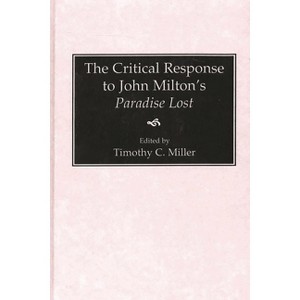
Paradise Lost was recognized as a major epic poem soon after its publication in 1667. For more than three centuries, critics have been describing, interpreting, and evaluating it. Regardless of their approaches to changing literary values, they have generally accepted it as the prime example of the epic in English. As many critics have observed, the poem brought biblical, literary, cultural, social, scientific, and political elements into such aesthetic harmony that even its detractors have been forced to recognize its greatness. And because of its complexity, it has become a test case in literary studies as a focal point for changing critical assumptions and literary values. This reference book traces the critical reception of Paradise Lost from the 17th century to the present. The volume is organized in chapters devoted to particular centuries, with each chapter presenting a selection of reviews and critical essays from that period. Thus the reader is able to chart the changing response to ^IParadise Lost^R over time. An introductory essay summarizes the reception of Milton's work, and a bibliography lists important sources of additional information.
The volume is organized in chapters devoted to particular centuries. Each chapter then presents a selection of reviews and critical essays from that period. Thus the reader is able to read the 17th-century responses of Samuel Barrow, John Dryden, and Joseph Addison; the 18th-century reactions of Alexander Pope, Samuel Johnson, and William Blake; the 19th-century reactions of British Romantic and Victorian poets; and the 20th-century contributions of major scholars such as E.M.W. Tillyard, Stanley Fish, Louis Martz, and Northrop Frye. The volume closes with a sampling of Milton's own comments about Paradise Lost and the epic, and a selected bibliography of major editions, reference works, and critical studies.
Book Synopsis
Paradise Lost was recognized as a major epic poem soon after its publication in 1667. For more than three centuries, critics have been describing, interpreting, and evaluating it. Regardless of their approaches to changing literary values, they have generally accepted it as the prime example of the epic in English. As many critics have observed, the poem brought biblical, literary, cultural, social, scientific, and political elements into such aesthetic harmony that even its detractors have been forced to recognize its greatness. And because of its complexity, it has become a test case in literary studies as a focal point for changing critical assumptions and literary values. This reference book traces the critical reception of Paradise Lost from the 17th century to the present. The volume is organized in chapters devoted to particular centuries, with each chapter presenting a selection of reviews and critical essays from that period. Thus the reader is able to chart the changing response to ^IParadise Lost^R over time. An introductory essay summarizes the reception of Milton's work, and a bibliography lists important sources of additional information.
The volume is organized in chapters devoted to particular centuries. Each chapter then presents a selection of reviews and critical essays from that period. Thus the reader is able to read the 17th-century responses of Samuel Barrow, John Dryden, and Joseph Addison; the 18th-century reactions of Alexander Pope, Samuel Johnson, and William Blake; the 19th-century reactions of British Romantic and Victorian poets; and the 20th-century contributions of major scholars such as E.M.W. Tillyard, Stanley Fish, Louis Martz, and Northrop Frye. The volume closes with a sampling of Milton's own comments about Paradise Lost and the epic, and a selected bibliography of major editions, reference works, and critical studies.
About the Author
TIMOTHY C. MILLER is Professor of English at Millersville University, where he teaches courses in English Renaissance literature. His articles have appeared in such journals as English Language Notes, ANQ, and Restoration.
Dimensions (Overall): 9.4 Inches (H) x 6.96 Inches (W) x .95 Inches (D)
Weight: 1.4 Pounds
Suggested Age: 22 Years and Up
Number of Pages: 360
Genre: Literary Criticism
Sub-Genre: European
Series Title: Critical Responses in Arts and Letters
Publisher: Greenwood
Theme: English, Irish, Scottish, Welsh
Format: Hardcover
Author: Timothy Miller
Language: English
Street Date: April 22, 1997
TCIN: 94190963
UPC: 9780313289262
Item Number (DPCI): 247-07-9849
Origin: Made in the USA or Imported
If the item details aren’t accurate or complete, we want to know about it.
Shipping details
Estimated ship dimensions: 0.95 inches length x 6.96 inches width x 9.4 inches height
Estimated ship weight: 1.4 pounds
We regret that this item cannot be shipped to PO Boxes.
This item cannot be shipped to the following locations: American Samoa (see also separate entry under AS), Guam (see also separate entry under GU), Northern Mariana Islands, Puerto Rico (see also separate entry under PR), United States Minor Outlying Islands, Virgin Islands, U.S., APO/FPO
Return details
This item can be returned to any Target store or Target.com.
This item must be returned within 90 days of the date it was purchased in store, shipped, delivered by a Shipt shopper, or made ready for pickup.