At the transition from the 20th to the 21st Century, land use planning and growth management have become two of the most controversial issues in state and local government policy.
About the Author: RANDALL G. HOLCOMBE is DeVoe Moore Professor of Economics at Florida State University.
304 Pages
Nature, Natural Resources
Series Name: Contributions in Economics and Economic History
Description
About the Book
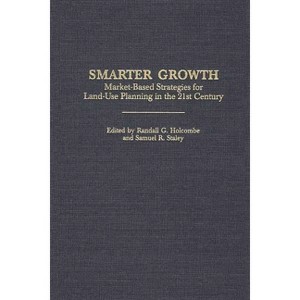
At the transition from the 20th to the 21st Century, land use planning and growth management have become two of the most controversial issues in state and local government policy. Primarily the province of local government until the 1970s, state governments have become increasingly involved in land use planning. In the 1990s Vice President Gore's promotion of Smart Growth has brought it into the national arena, while President Clinton has devoted considerable time to land use, land preservation, and urban development issues. Critically examining government land use policies and arguments supporting them, the contributors explore market alternatives to government land use planning.
Despite the apparent popularity of government restrictions on land use, the scholars writing for this volume advocate a more market-based approach. Showing that the problems of sprawling development have been misunderstood and overstated, they argue that land use policy can be better improved through market mechanisms than by the central planning of land use bureaucracies.
Book Synopsis
At the transition from the 20th to the 21st Century, land use planning and growth management have become two of the most controversial issues in state and local government policy. Primarily the province of local government until the 1970s, state governments have become increasingly involved in land use planning. In the 1990s Vice President Gore's promotion of Smart Growth has brought it into the national arena, while President Clinton has devoted considerable time to land use, land preservation, and urban development issues. Critically examining government land use policies and arguments supporting them, the contributors explore market alternatives to government land use planning.
Despite the apparent popularity of government restrictions on land use, the scholars writing for this volume advocate a more market-based approach. Showing that the problems of sprawling development have been misunderstood and overstated, they argue that land use policy can be better improved through market mechanisms than by the central planning of land use bureaucracies.
About the Author
RANDALL G. HOLCOMBE is DeVoe Moore Professor of Economics at Florida State University. He is also Chairman of the Research Advisory Council of the James Madison Institute, a Tallahassee-based think tank specializing in issues facing state governments. The author of eight books, his primary areas of research are public finance and economic analysis of policy issues.
SAMUEL R. STALEY is Director of the Urban Futures Program at Reason Public Policy Institute in Los Angeles. He is the author of The Sprawling of America: In Defense of the Dynamic City, A Line in the Land: Urban-Growth Boundaries, Smart Growth, and Housing Affordability, The Vanishing Farmland Myth and the Smart Growth Agenda.
Dimensions (Overall): 9.6 Inches (H) x 6.42 Inches (W) x 1.1 Inches (D)
Weight: 1.41 Pounds
Suggested Age: 22 Years and Up
Number of Pages: 304
Genre: Nature
Sub-Genre: Natural Resources
Series Title: Contributions in Economics and Economic History
Publisher: Praeger
Format: Hardcover
Author: Randall G Holcombe & Samuel R Staley
Language: English
Street Date: August 30, 2001
TCIN: 1007906534
UPC: 9780313315954
Item Number (DPCI): 247-09-1985
Origin: Made in the USA or Imported
If the item details aren’t accurate or complete, we want to know about it.
Shipping details
Estimated ship dimensions: 1.1 inches length x 6.42 inches width x 9.6 inches height
Estimated ship weight: 1.41 pounds
We regret that this item cannot be shipped to PO Boxes.
This item cannot be shipped to the following locations: American Samoa (see also separate entry under AS), Guam (see also separate entry under GU), Northern Mariana Islands, Puerto Rico (see also separate entry under PR), United States Minor Outlying Islands, Virgin Islands, U.S., APO/FPO
Return details
This item can be returned to any Target store or Target.com.
This item must be returned within 90 days of the date it was purchased in store, shipped, delivered by a Shipt shopper, or made ready for pickup.