When, in the third century B.C.E., the Ptolemies became rulers in Egypt, they found themselves not only kings of a Greek population but also pharaohs for the Egyptian people.
About the Author: Susan A. Stephens is Professor of Classics at Stanford University, author of Yale Papyri in the Beinecke Rare Book and Manuscript Library II (1985), and coeditor of Ancient Greek Novels: The Fragments (1995) and Didymus in Demosthenem: Commenta (1985).
311 Pages
Poetry, Ancient & Classical
Series Name: Hellenistic Culture and Society
Description
About the Book
"Susan Stephens is interested in how the poetry of Callimachus, Theocritus and Apollonius reflects the Greek engagement with Egypt, and in particular with the traditions of Egyptian kingship and mythology. The exciting rediscovery through marine archaeology of Ptolemaic Alexandria means that there is currently great interest in the nature of Alexandrian culture, especially in how Greek and Egyptian elements were mixed. Stephens brings to notice important but generally neglected Greek texts (Hecataeus of Abdera, the 'Alexander Romance') and much material previously known only to Egyptologists. . . . Modern writing about colonialism is powerfully applied to the Hellenistic situation. This book will attract wide interest, and help in the gradual process of changing perceptions about the cultural life of Alexandria."--Richard Hunter, author of "Theocritus and the Archaeology of Greek Poetry" "Susan Stephens' "Seeing Double" is the first book ever that explores comprehensively and persuasively how, in the political, social and cultural environment of Ptolemaic Egypt, the Alexandrian renewal of classical poetry leads to a new poetry. . . . In Stephens' view, the poetical dialogue between the Alexandrian poets, their intertextuality and the differences in their approaches and reactions to the colonial situation resolve the emerging duality of Greek and Egyptian cultures in a deeper intellectual unity that responds to, and reflects, the political reality."--Ludwig Koenen, author of "Eine agonistische Inschrift aus agypten und fruhptolemaische Konigsfeste" "This quietly daring research sets a new standard for the interpretation of poetry in a cultural, and most importantly in a bi-cultural, context. Stephens' exploration of Alexandrian poetry as a contact zone is a successful example of how literary interpretation can be fertilized by discontent about traditional Classics."--Alessandro Barchiesi, author of "The Poet and the Prince: Ovid and Augustan Discourse" and "Speaking Volumes: Narrative and Intertext in Ovid and Other Latin Poets" A brilliant mastery and intersection of comparative history of literature and of theories of intertextuality and intercultural contacts make of this book a most profitable text for a larger readership than classical scholars."--Marco Fantuzzi, coauthor of "Muse e Modelli: la poesia ellenistica da Alessandro Magno ad Augusto"
Book Synopsis
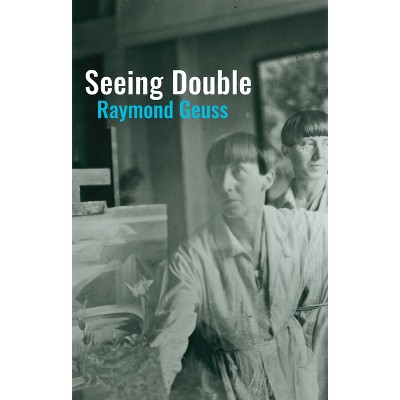
When, in the third century B.C.E., the Ptolemies became rulers in Egypt, they found themselves not only kings of a Greek population but also pharaohs for the Egyptian people. Offering a new and expanded understanding of Alexandrian poetry, Susan Stephens argues that poets such as Callimachus, Theocritus, and Apollonius proved instrumental in bridging the distance between the two distinct and at times diametrically opposed cultures under Ptolemaic rule. Her work successfully positions Alexandrian poetry as part of the dynamic in which Greek and Egyptian worlds were bound to interact socially, politically, and imaginatively.
The Alexandrian poets were image-makers for the Ptolemaic court, Seeing Double suggests; their poems were political in the broadest sense, serving neither to support nor to subvert the status quo, but to open up a space in which social and political values could be imaginatively re-created, examined, and critiqued. Seeing Double depicts Alexandrian poetry in its proper context--within the writing of foundation stories and within the imaginative redefinition of Egypt as "Two Lands"--no longer the lands of Upper and Lower Egypt, but of a shared Greek and Egyptian culture.
From the Back Cover
"Susan Stephens is interested in how the poetry of Callimachus, Theocritus and Apollonius reflects the Greek engagement with Egypt, and in particular with the traditions of Egyptian kingship and mythology. The exciting rediscovery through marine archaeology of Ptolemaic Alexandria means that there is currently great interest in the nature of Alexandrian culture, especially in how Greek and Egyptian elements were mixed. Stephens brings to notice important but generally neglected Greek texts (Hecataeus of Abdera, the 'Alexander Romance') and much material previously known only to Egyptologists. . . . Modern writing about colonialism is powerfully applied to the Hellenistic situation. This book will attract wide interest, and help in the gradual process of changing perceptions about the cultural life of Alexandria."--Richard Hunter, author of Theocritus and the Archaeology of Greek Poetry
"Susan Stephens' Seeing Double is the first book ever that explores comprehensively and persuasively how, in the political, social and cultural environment of Ptolemaic Egypt, the Alexandrian renewal of classical poetry leads to a new poetry. . . . In Stephens' view, the poetical dialogue between the Alexandrian poets, their intertextuality and the differences in their approaches and reactions to the colonial situation resolve the emerging duality of Greek and Egyptian cultures in a deeper intellectual unity that responds to, and reflects, the political reality."--Ludwig Koenen, author of Eine agonistische Inschrift aus Ägypten und frühptolemäische Königsfeste
"This quietly daring research sets a new standard for the interpretation of poetry in a cultural, and most importantly in a bi-cultural, context. Stephens' exploration of Alexandrian poetry as a contact zone is a successful example of how literary interpretation can be fertilized by discontent about traditional Classics."--Alessandro Barchiesi, author of The Poet and the Prince: Ovid and Augustan Discourse and Speaking Volumes: Narrative and Intertext in Ovid and Other Latin Poets
A brilliant mastery and intersection of comparative history of literature and of theories of intertextuality and intercultural contacts make of this book a most profitable text for a larger readership than classical scholars."--Marco Fantuzzi, coauthor of Muse e Modelli: la poesia ellenistica da Alessandro Magno ad Augusto
Review Quotes
"This is a dramatic breakthrough in our understanding of the nature and purpose of poetic production during this outstandingly creative period."--"Tls"
About the Author
Susan A. Stephens is Professor of Classics at Stanford University, author of Yale Papyri in the Beinecke Rare Book and Manuscript Library II (1985), and coeditor of Ancient Greek Novels: The Fragments (1995) and Didymus in Demosthenem: Commenta (1985).
Dimensions (Overall): 9.2 Inches (H) x 6.36 Inches (W) x 1.06 Inches (D)
Weight: 1.32 Pounds
Suggested Age: 22 Years and Up
Number of Pages: 311
Genre: Poetry
Sub-Genre: Ancient & Classical
Series Title: Hellenistic Culture and Society
Publisher: University of California Press
Format: Hardcover
Author: Susan A Stephens
Language: English
Street Date: January 27, 2003
TCIN: 1008938503
UPC: 9780520229730
Item Number (DPCI): 247-15-3520
Origin: Made in the USA or Imported
If the item details aren’t accurate or complete, we want to know about it.
Shipping details
Estimated ship dimensions: 1.06 inches length x 6.36 inches width x 9.2 inches height
Estimated ship weight: 1.32 pounds
We regret that this item cannot be shipped to PO Boxes.
This item cannot be shipped to the following locations: American Samoa (see also separate entry under AS), Guam (see also separate entry under GU), Northern Mariana Islands, Puerto Rico (see also separate entry under PR), United States Minor Outlying Islands, Virgin Islands, U.S., APO/FPO
Return details
This item can be returned to any Target store or Target.com.
This item must be returned within 90 days of the date it was purchased in store, shipped, delivered by a Shipt shopper, or made ready for pickup.