Sponsored
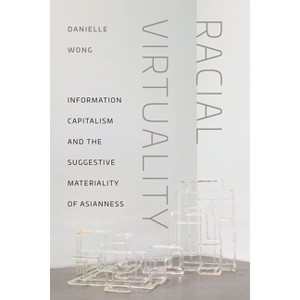
Racial Virtuality - by Danielle Wong
Pre-order
Sponsored
About this item
Highlights
- Reveals how Asianness emerges as a dynamic media materiality shaped by measurement, circulation, and calibration, amid shifting labor relations under contemporary capitalism Racial Virtuality contends that racialization not only occurs through representation in media, but also through our very interactions with media technologies and their unseen operations.
- About the Author: Danielle Wong is Assistant Professor in the Department of English Language and Literatures at the University of British Columbia
- 256 Pages
- Social Science, Ethnic Studies
Description
Book Synopsis
Reveals how Asianness emerges as a dynamic media materiality shaped by measurement, circulation, and calibration, amid shifting labor relations under contemporary capitalism
Racial Virtuality contends that racialization not only occurs through representation in media, but also through our very interactions with media technologies and their unseen operations. The racialization of Asians, who appeared to embody the model minority success story in the first decade of social media, is now implicated more in the racial logics of algorithms, interfaces, gestures, circulations, and affects, rather than individual representations of Asianness.
Racial Virtuality intervenes in existing new media discourses to approach race as virtual relation, following a rich methodology of Asian American materialist critique to investigate gendered, racial form and mediated life. Danielle Wong theorizes "racial virtuality" as the suggestive materiality of non-representational new media processes and argues that these non-figurative images, affects, textures, sounds, and gestures constitute racializing calibrations within the context of information capitalism. Extending the archive of Asianness into everyday interactions with the virtual, such as Instagram skincare stories, memes of sleeping Asians, and algorithmic choreography on TikTok, Wong considers race as a capacity for labor and capital and argues that Asianness is a specific racial form of informational capital and a mode of relational critique. She reveals the ways in which Asianness moves beyond a politics of recuperation and recognition to yield modes of fugitivity, illicit knowledge, and resistance, all of which threaten existing relationships between capital, labor and information that govern human capital.
By putting memes, social media apps, and digital platforms in conversation with more traditional cultural productions like film, literature, and theatre, Racial Virtuality broadens our understanding of racialization in the digital age and challenges traditional notions of cultural production and subject formation. In doing so, it demonstrates how Asianness circulates as a new media form in a digital marketplace of commodified affects, senses, gestures, and tastes.
Review Quotes
"Danielle Wong's stunning analysis delivers one revelatory insight after another. Racial Virtuality takes the reader on an exhilarating journey across the terrain of racial algorithms, digital interfaces, and social media assemblages to examine the unfixed ontology of Asianness. Through a firmly materialist critique of racial capitalism, the book demonstrates how Asianness circulates as a new media form in a digital marketplace of commodified affects, gestures, and tastes. Offering a powerful intervention into Asian American studies, Wong's study foregrounds the way Asian virtuality opens up new ways of apprehending the political."-- "Iyko Day, author of Alien Capital: Asian Racialization and the Logic of Settler Colonial Capitalism"
About the Author
Danielle Wong is Assistant Professor in the Department of English Language and Literatures at the University of British Columbia
Shipping details
Return details
Frequently bought together



Guests also viewed






Discover more options