Sponsored
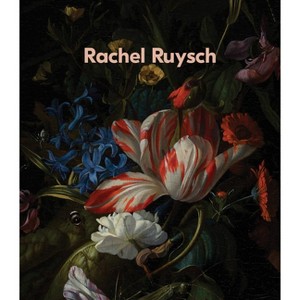
Rachel Ruysch: Nature Into Art - by Anna C Knaap & Bernd Ebert & Robert Schindler Hardcover
In Stock
Sponsored
About this item
Highlights
- The first monograph in over 70 years on the celebrated female protagonist of Dutch floral paintingWinner of Gold Medal in Art from the 2024 Foreword INDIES Book Awards.
- Foreword INDIES Book of the Year Awards (Art) 2024 3rd Winner
- Author(s): Anna C Knaap & Bernd Ebert & Robert Schindler
- 224 Pages
- Art, Individual Artists
Description
About the Book
"At the end of the 17th century and beginning of the 18th, Rachel Ruysch was celebrated across Europe for her sumptuous floral still lifes, admired both for their artistry and for their accurate depictions of flowers, fruit and insects. Often placed on stone ledges and against dark backgrounds, her sumptuous bouquets seem to spill over with all manner of colorful flowers and plants, as bees and butterflies flit to and from their petals. Ruysch's star faded after the close of the Dutch Golden Age, but late 20th- and early 21st-century interest in women artists has returned her to the forefront of the art historical canon."--
Book Synopsis
The first monograph in over 70 years on the celebrated female protagonist of Dutch floral painting
Winner of Gold Medal in Art from the 2024 Foreword INDIES Book Awards.
Winner of the ARLIS/NA 2024 George Wittenborn Memorial Book Award.
At the end of the 17th century and beginning of the 18th, Rachel Ruysch was celebrated across Europe for her sumptuous floral still lifes, admired both for their artistry and for their accurate depictions of flowers, fruit and insects. Often placed on stone ledges and against dark backgrounds, her sumptuous bouquets seem to spill over with all manner of colorful flowers and plants, as bees and butterflies flit to and from their petals. Ruysch's star faded after the close of the Dutch Golden Age, but late 20th- and early 21st-century interest in women artists has returned her to the forefront of the art historical canon.
Nature into Art introduces today's audiences to Ruysch's achievements while also exploring the pioneering role of women artists and scientists in the Dutch Republic in the 17th and 18th centuries. Brilliantly illustrated with detailed reproductions of Ruysch's intricate paintings, the essays touch upon Ruysch's career and her immediate legacy while also widening their scope to consider the role of botany in the early modern era and the storied tradition of botanical illustration. The catalog also includes an index of the various flora and fauna depicted within Ruysch's work, which feature both native and nonnative species.
Rachel Ruysch (1664-1750) produced hundreds of the floral still lifes for which she is best known. She was an apprentice in the studio of Willem van Aelst and the daughter of famed scientist Frederick Ruysch, meaning she had access to a wider world of Dutch flower painters and botanists. From 1708 until 1716 she served as court painter to Johann Wilhelm, Elector Palatine.
Review Quotes
As the book notes, this rich vernacular tradition of folk art and self-expression is becoming rarer, with mass-produced decorations often replacing the hand-painted originals and legislation banning some of the more outrageous designs. A frozen moment in time, Trucks and Tuks delves into a vibrant aspect of global automotive subculture.--Natasha Seaman "Hyperallergic"
Each of these paintings presents a burst of brightness against a brooding dark background, and each is mysterious.--Cullen Murphy "Air Mail"
[The] show is more than an anthophile's delight. It's an invitation to get inside the worldview of the artist and her educated, inquisitive circle and to reflect on questions that feel just as relevant today: Can the life of mortal things be artificially prolonged? What is natural, what artificial? What separates art from science? And what role do dominance and exploitation play in the advancement of both?--Sebastian Smee "The Washington Post"
The first major show devoted to Ruysch, which arrived at the Museum of Fine Arts Boston in August (after opening in the United States at the Toledo Museum of Art, in Ohio, in the spring), is one of the most intelligently curated and sensory-rich shows a museumgoer could ask for.--Zachary Fine "The Atlantic"
The exhibition positions Ruysch as an artist who both defied and defined her times, and makes the case that she should be a household name.--Katie White "Artnet"
[The] paintings are a sustained fusion of the fanciful with the natural, highly stylised but wholly realistic. And the combination, decade after decade, is a marvel.--J.S. Marcus "The Art Newspaper"
Shipping details
Return details
Frequently bought together
Guests also viewed



Discover more options