Sponsored
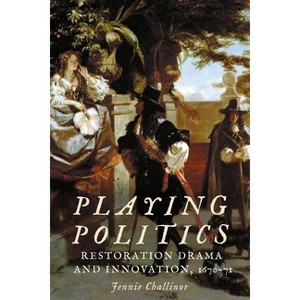
Playing Politics - by Jennie Challinor (Hardcover)
Pre-order
Sponsored
About this item
Highlights
- This study focuses on the 1670-71 season in the Restoration playhouses, an exciting and formative moment in theatrical and political history.
- About the Author: Jennie Challinor is a Teaching Fellow in Early Modern Literature at the University of Birmingham
- 288 Pages
- Non-Classifiable
Description
About the Book
Playing politics explores a single theatrical season in Restoration drama, examining the interaction between the playhouses, print, manuscript, and court cultures. Each of this formative season's new and revived plays is examined, tracing the literary and political tensions that fuelled creative production and experimentation.
Book Synopsis
This study focuses on the 1670-71 season in the Restoration playhouses, an exciting and formative moment in theatrical and political history. The year proved to be difficult and damaging to King Charles II, as political, religious, and personal matters provoked controversy and disquiet, and the country teetered on the brink of major constitutional problems. My research sets drama against this backdrop. Theatrical records for this period are patchy and, for the most part, frustratingly incomplete: this book does not attempt to reconstruct the day-to-day operations of the playhouses, but rather it uses the available evidence of the extant new and revived plays we know (or believe) to have been performed in the 1670-71 theatrical season, and argues that this was the period in which serious and far-reaching political and dramatic questions began to be seriously asked and (tentatively) answered.
From the Back Cover
Playing politics explores the formative 1670-71 season in the Restoration playhouses, analysing the new and developing creative and ideological impulses that emerged in the season's works, both canonical and neglected.
This richly contextualised study traces the crystallisation of ideas and innovations that would dominate political and literary discourse over the next decade. As concerns about royal (and dramatic) succession became increasingly pressing, the political influence of the royal mistresses preoccupied dramatists and political commentators alike, and the contentious forces of the libertine mythology became apparent in the playhouses and in the streets and parks of London, drama reached a turning point. Responding to a fractured political landscape, the theatres experimented with novelty, spectacle, and a range of generically and tonally uncertain works. In this critical season the first professional female playwright emerged alongside an influx of other new voices that contributed to attempts to forge new dramatic directions. Challinor's interdisciplinary approach explores these tensions onstage and within the playhouses, but it also considers their presence in the preliminaries to the printed drama, in contemporary manuscript satires, in parliamentary debates, newsletters, sermons, pamphlets, letters, and diaries.
While recognising the patchy nature of the period's theatrical records, this book uses the available evidence of the season's extant new and revived drama to examine the circumstances of the plays' creation, production, performance, and reception. The scope of Playing politics ultimately reaches beyond one year, tracking the latent and developing dramatic trends and political arguments that would come to define the 1670s.
About the Author
Jennie Challinor is a Teaching Fellow in Early Modern Literature at the University of Birmingham
Shipping details
Return details
Frequently bought together

Trending Book Pre-Orders



Discover more options