Sponsored
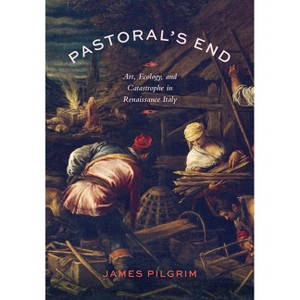
Pastoral's End - by James Pilgrim (Hardcover)
Pre-order
Sponsored
About this item
Highlights
- How early modern Italian painting addressed the ways humans shape and are shaped by their environments.
- About the Author: James Pilgrim is assistant professor of early modern art history at the University of Illinois Urbana-Champaign.
- 256 Pages
- Art, History
Description
About the Book
"How early modern Italian painting addressed the ways humans shape and are shaped by their environments. In the sixteenth century, Italian artist Jacopo Bassano painted pictures of herdsmen and animals moving through dark and muddy landscapes. But he also participated in the agricultural development of the region in which he lived, producing topographical maps of local mountains and forests, inventing new methods of drainage and irrigation, and studying the latest techniques of crop rotation and fertilization. The relationship between Bassano's rustic art and his participation in environmental transformation has, however, never been explored. One of the first studies of Italian Renaissance art to grapple with the connections between visual culture and the environment, Pastoral's End explores this crucial, formative relationship. James Pilgrim looks at Bassano's career holistically, demonstrating how his involvement in a world marked by agricultural expansion, industrialization, resource extraction, environmental degradation, social transformation, and radical philosophical development informed his paintings of country life. Introducing new archival and visual evidence of Bassano's knowledge of hydrology, agronomy, husbandry, and architecture, Pastoral's End argues that he transformed the more placid rustic imagery of previous Renaissance artists into visions of dangerous ecological instability"-- Provided by publisher.
Book Synopsis
How early modern Italian painting addressed the ways humans shape and are shaped by their environments.
In the sixteenth century, Italian artist Jacopo Bassano painted pictures of herdsmen and animals moving through dark and muddy landscapes. But he also participated in the agricultural development of the region in which he lived, producing topographical maps of local mountains and forests, inventing new methods of drainage and irrigation, and studying the latest techniques of crop rotation and fertilization. The relationship between Bassano's rustic art and his participation in environmental transformation has, however, never been explored.
One of the first studies of Italian Renaissance art to grapple with the connections between visual culture and the environment, Pastoral's End explores this crucial, formative relationship. James Pilgrim looks at Bassano's career holistically, demonstrating how his involvement in a world marked by agricultural expansion, industrialization, resource extraction, environmental degradation, social transformation, and radical philosophical development informed his paintings of country life. Introducing new archival and visual evidence of Bassano's knowledge of hydrology, agronomy, husbandry, and architecture, Pastoral's End argues that he transformed the more placid rustic imagery of previous Renaissance artists into visions of dangerous ecological instability.
Review Quotes
"Offering a terrific new study of the work of Jacopo Bassano, a relatively overlooked northern Italian painter of the later sixteenth century, Pastoral's End is one of the best first books by an art historian that I've had the opportunity to read in a long time. Providing new ways of thinking 'ecocritically' about the early modern period, Pilgrim persuasively shows that Bassano was engaging with environmental issues of his time and that he and his contemporaries were well aware of how human activity caused harm to the environment. Pastoral's End makes an important contribution in its own right and also has methodological lessons for the field at large."--Rebecca Zorach, author of "Temporary Monuments"
About the Author
James Pilgrim is assistant professor of early modern art history at the University of Illinois Urbana-Champaign.
Shipping details
Return details
Frequently bought together




Guests also viewed




Discover more options