New ArrivalsValentine’s DayHealth & WellnessClothing, Shoes & AccessoriesHomeKitchen & DiningGroceryHousehold EssentialsFurnitureOutdoor Living & GardenBabyToysVideo GamesElectronicsMovies, Music & BooksBeautyPersonal CareGift IdeasParty SuppliesCharacter ShopSports & OutdoorsBackpacks & LuggageSchool & Office SuppliesPetsUlta Beauty at TargetTarget OpticalGift CardsBullseye’s PlaygroundDealsClearanceTarget New Arrivals Target Finds #TargetStyleStore EventsAsian-Owned Brands at TargetBlack-Owned or Founded Brands at TargetLatino-Owned Brands at TargetWomen-Owned Brands at TargetLGBTQIA+ ShopTop DealsTarget Circle DealsWeekly AdShop Order PickupShop Same Day DeliveryRegistryRedCardTarget CircleFind Stores
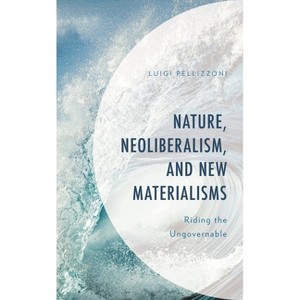
Nature, Neoliberalism, and New Materialisms - (The Frankfurt School in New Times) by  Luigi Pellizzoni (Hardcover) - 1 of 1

Nature, Neoliberalism, and New Materialisms - (The Frankfurt School in New Times) by Luigi Pellizzoni (Hardcover)

$97.99Save $7.01 (7% off)

In Stock

Eligible for registries and wish lists

About this item

Highlights

  • This book explores the blurred boundaries between language and matter, cognition and thing, living and inanimate, technology and nature, which is the neoliberal way of governing the unpredictable.
  • About the Author: Luigi Pellizzoni is professor of environmental sociology and political ecology at Scuola Normale Superiore di Pisa.
  • 220 Pages
  • Social Science, Sociology
  • Series Name: The Frankfurt School in New Times

Description


About the Book


This book explores the blurred boundaries between language and matter, cognition and thing, living and inanimate, technology and nature, which is the neoliberal way of governing the unpredictable. Adorno and the concept of form of life provide a way to claim the irreducibility of reality to its description and of nature to mere environment.


Book Synopsis


This book explores the blurred boundaries between language and matter, cognition and thing, living and inanimate, technology and nature, which is the neoliberal way of governing the unpredictable. Adorno and the concept of form of life provide a way to claim the irreducibility of reality to its description and of nature to mere environment.


Review Quotes


Nature, Neoliberalism, and New Materialisms: Riding the Ungovernable critically exposes the limits of the ontological turn in social theory and its entanglement with neoliberal rationalities. Mobilizing a rich theoretical apparatus from Adorno to Foucault, Luigi Pellizzoni explores the ground for a new ontological politics that promises to overcome the world of instrumental reason.

Drawing on a rich source of theoretical literature, and by analyzing a wealth of contemporary examples ndash; such as carbon markets, geoengineering, biotechnology, and human enhancement ndash; this book shows how traditional distinctions have broken down, such as descriptive and normative, real and virtual, predictable and indeterminate, society and nature. But it does not stop at critically examining perspectives and concepts; it also shows new theoretical and practical ways of orienting ourselves and acting in this complex world.

For our turbulent times Luigi Pellizzoni has written a guide or a rough map for our dynamically changing worlds, social and natural. While we are lsquo;fluxedrsquo; in this time of what might be called the highpoint of the neoliberal death cult, where death, slow or otherwise (human and nonhuman) is the price of lsquo;neoliberal biopoliticsrsquo;, lsquo;economic growthrsquo;, lsquo;globalisationrsquo; and the stabilisation of capitalism as a regime of truth, nature and life. In Nature, Neoliberalism, and New Materialisms: Riding the Ungovernable, we confront neoliberalismrsquo;s dreams of planetary scale geo-engineering down to the micro-level of DNA-qua-resource via biotechnology, and thus neoliberalism has rendered the entire world, all life, as resource as the planet itself is transformed into a giant, integrated factory floor.

Capitalist modernity having overcome, for example with globalisation, time and space, has under neoliberalism now turned its attention to managing the planet and all life. However, Nature, Neoliberalism, and New Materialisms is not an elegy, though it rightly touches upon what has been lost and is being lost, but is a lsquo;wake uprsquo; call rather than an invitation to a wake. The planetary management of all life under the neoliberalisation of nature, people and places, also opens up emancipatory possibilities. As the creature that nature did not specialise, humanity by virtue, and by its labouring and creative capacities, can view and reinhabit the earth as a whole as lsquo;homersquo;. After all, even capitalism does not merely lsquo;dominatersquo; nature but lsquo;producesrsquo; it, and this suggests new natures, more sustainable, and just and life-supporting are possible. Pellizzonirsquo;s emancipatory promise rests on recognising the potential and necessity, but also the limits of, a politics founded on a lsquo;critical ontology of the presentrsquo;, but one informed by a Foucauldian awareness of the always provisional lsquo;stabilisingrsquo; of any and all ontological efforts. But is also quintessentially within the Critical Theory/Frankfurt school tradition in being open-ended about possible post-capitalist futures based on lsquo;impure reasonrsquo; and emancipatory objective of knowledge production. In this, the book is hopeful rather than optimistic. Unlike either naiuml;ve and status quo maintaining techno-optimism or dogmatic Marxism, both of which trade on a guarantee of success, Pellizzoni instead offers hope. A hope for more sustainable and just futures that requires agency (including taking inspiration from non-western indigenous ontologies of distributed agency between humans and nonhumans) in a way optimism does not, but also fully recognises hopersquo;s lsquo;shadowrsquo;. Namely that hope, if it to be genuine, must allow the possibility of failure, otherwise it is not hope.

If lsquo;In wildness lies the salvation of the worldrsquo;, Pellizzoni suggests emancipation rests in recognising unpredictability, uncertainty, flux and flows, and remembering the wisdom of St Thomas Aquinas lsquo;That it is better for a blind horse that it is slowrsquo;. And that progress can also be found in the acknowledgement of limits, lacks, flaws and vulnerabilities that are constitutive of the human condition, and not merely in transcending or ignoring limits. Pellizzoni eloquently teases out the philosophical and ontological questions we need to consider when reflecting on the lsquo;human conditionrsquo; in our present turbulent, rambunctious and unruly world. We are part of an apart from nature, and not just like animals, we are animals, and therefore both subject to and limited by the biophysical realities that govern all life.
Ethically Pellizzoni, following Steve Vogel to a great extent, rightly in my view rejects calls for a deep ecological connection or submersion of the human and the nonhuman, but, recognising our labouring n


About the Author


Luigi Pellizzoni is professor of environmental sociology and political ecology at Scuola Normale Superiore di Pisa.
Dimensions (Overall): 9.0 Inches (H) x 6.0 Inches (W) x .63 Inches (D)
Weight: 1.01 Pounds
Suggested Age: 22 Years and Up
Number of Pages: 220
Genre: Social Science
Sub-Genre: Sociology
Series Title: The Frankfurt School in New Times
Publisher: Lexington Books
Theme: Social Theory
Format: Hardcover
Author: Luigi Pellizzoni
Language: English
Street Date: February 26, 2025
TCIN: 1007271418
UPC: 9781666967432
Item Number (DPCI): 247-50-3049
Origin: Made in the USA or Imported
If the item details aren’t accurate or complete, we want to know about it.

Shipping details

Estimated ship dimensions: 0.63 inches length x 6 inches width x 9 inches height
Estimated ship weight: 1.01 pounds
We regret that this item cannot be shipped to PO Boxes.
This item cannot be shipped to the following locations: American Samoa (see also separate entry under AS), Guam (see also separate entry under GU), Northern Mariana Islands, Puerto Rico (see also separate entry under PR), United States Minor Outlying Islands, Virgin Islands, U.S., APO/FPO

Return details

This item can be returned to any Target store or Target.com.
This item must be returned within 90 days of the date it was purchased in store, shipped, delivered by a Shipt shopper, or made ready for pickup.
See the return policy for complete information.

Additional product information and recommendations

Get top deals, latest trends, and more.

Privacy policy

Footer

About Us

About TargetCareersNews & BlogTarget BrandsBullseye ShopSustainability & GovernancePress CenterAdvertise with UsInvestorsAffiliates & PartnersSuppliersTargetPlus

Help

Target HelpReturnsTrack OrdersRecallsContact UsFeedbackAccessibilitySecurity & FraudTeam Member ServicesLegal & Privacy

Stores

Find a StoreClinicPharmacyTarget OpticalMore In-Store Services

Services

Target Circle™Target Circle™ CardTarget Circle 360™Target AppRegistrySame Day DeliveryOrder PickupDrive UpFree 2-Day ShippingShipping & DeliveryMore Services
PinterestFacebookInstagramXYoutubeTiktokTermsCA Supply ChainPrivacy PolicyCA Privacy RightsYour Privacy ChoicesInterest Based AdsHealth Privacy Policy