Sponsored
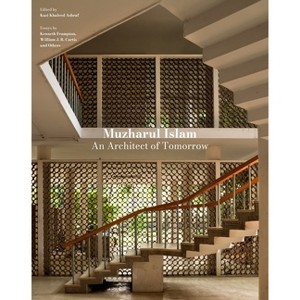
Muzharul Islam: An Architect of Tomorrow - by Kazi Khaleed Ashraf Hardcover
Pre-order
Sponsored
About this item
Highlights
- Muzharul Islam was one of the principal stalwarts of South Asia who established the norms and practices of modernity.
- Author(s): Kazi Khaleed Ashraf
- 520 Pages
- Architecture, Individual Architects & Firms
Description
Book Synopsis
Muzharul Islam was one of the principal stalwarts of South Asia who established the norms and practices of modernity.
Uniquely passionate about architecture and political engagement, Muzharul Islam's life and legacy contributed to the building up of a vibrant architectural culture in Bangladesh, with an impact beyond the boundaries of that country. The book "Muzharul Islam: An Architect of Tomorrow" is the first comprehensive book on the architect featuring his works and texts, and essays by notable figures from across the world. Muzharul Islam (1923-2013) was active from the early 1950s in defining the scope and form of modern architecture, first in Pakistan and then, after 1971, in Bangladesh. His task was an enormous one: to create a modern yet Bengali paradigm for architecture.
For Muzharul Islam, modernism meant more than an architectural vocabulary; it was part of an ethical and rational approach for addressing social inequities of the region. His steadfast commitment to a modernist ideology stemmed from an optimistic vision for transforming society. Consequently, his commitment for establishing a strong design culture in Bangladesh is paralleled by a deep engagement with the political and ethical dimension of society, with building the nation, so to speak.
Review Quotes
"[Muzharul Islam] was acknowledged in his lifetime as the one Bengali master architect and as the founder of modern architecture in Bangladesh, primarily through his built works, and especially through the Chetana seminars and publications, which enabled him to cultivate a critical discourse in architecture." -Kenneth Frampton
"[Muzharul] Islam became in effect a link in a chain running back to certain essentials of 'masters' such as Le Corbusier and Kahn, and to the investigation of a culture of architecture appropriate to the rapid urbanization, natural and social conditions of Bangladesh. He supplied some of the foundation stones of modern architecture in his own country... His quest also involved a response to climate, to people and landscape, and a search for roots, architectural and philosophical. Here he was guided by intuition and by a broader visual culture of the period which sought links between folk crafts and high art, between notions of social representation in images, and the inheritance of European and North American avant-gardes, including those embracing abstraction." --William Curtis
Shipping details
Return details






Guests also viewed



Discover more options